Table of Contents
Dog Shedding Scale · Coat & Grooming Guide
How much will your dog actually shed? A Poodle and a Siberian Husky live on opposite ends of the dog shedding scale, and knowing where a dog falls helps you choose a breed, plan grooming, and set realistic expectations for your home. The dog shedding scale rates shedding from 1 (minimal) to 5 (very heavy), so you can compare breeds quickly and tell normal fluff from a coat problem.
5 Levels
From minimal (1) to very heavy (5) shedding
2×/Year
Typical heavy coat changes (“blowing coat”) in double-coated dogs
Year-Round
Most dogs shed some hair all year, especially indoors
1–2×/Week
Typical brushing for short, low-shedding coats
Daily
Ideal brushing for thick double coats during a coat change
No Breed
Is truly non-shedding or guaranteed hypoallergenic
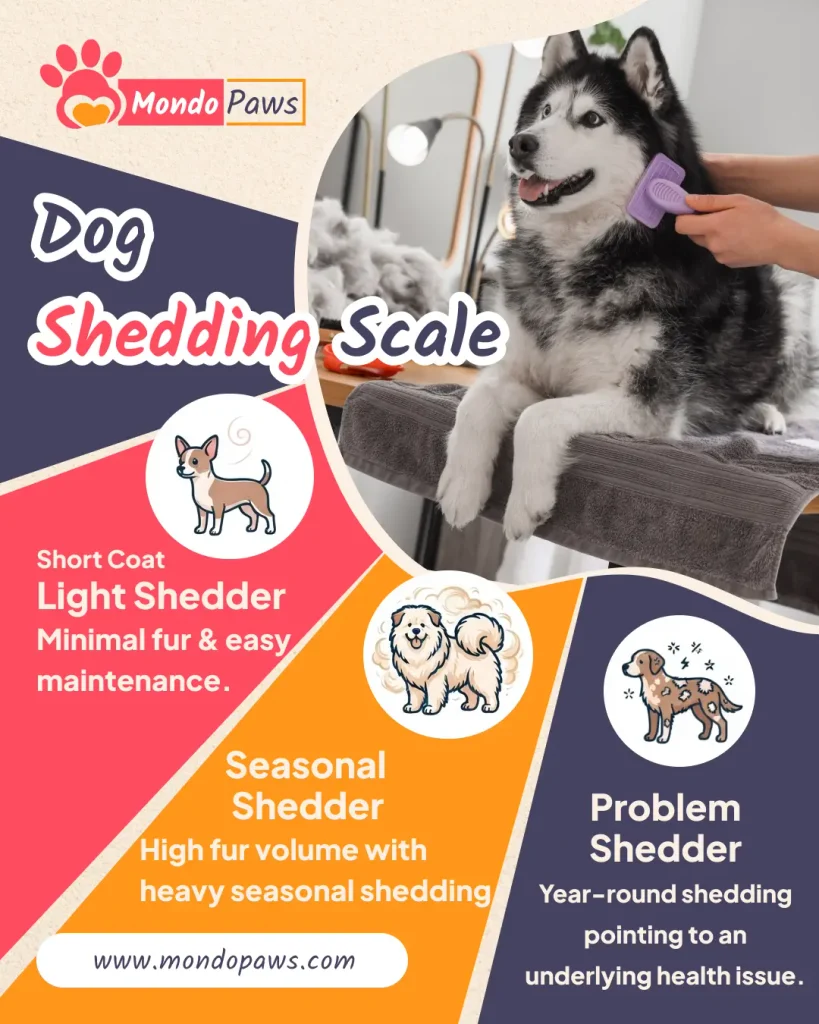
Whether you are picking a puppy, fighting fur on every surface, or wondering if your dog’s coat is changing for a health reason, a clear scale helps. Our interactive Dog Shedding Scale Calculator below estimates a 1 to 5 shedding level based on coat type, size, season, lifestyle, and health factors, then suggests how often to brush and with which tool.
Interactive Dog Shedding Scale Calculator
Choose your dog’s coat type, size, season, lifestyle, and grooming habits to see an estimated shedding level and a brushing plan in real time.
The Dog Shedding Scale Explained (Levels 1 to 5)
There is no official veterinary shedding scale, so the 1 to 5 rating used here is an informal guide based on coat type and typical breed behavior, consistent with general coat-care information from organizations such as the American Kennel Club. Use it to compare breeds and plan grooming, not to diagnose a problem.
| Level | Label | What You Typically See | Example Breeds | Grooming Guide |
|---|---|---|---|---|
| 1 | MiniMal | Very little loose hair around the home. | Poodle, Bichon Frise, Maltese, hairless breeds | Brush every other day or so and trim or groom regularly to prevent mats. |
| 2 | Light | Occasional hairs on clothing and furniture. | Whippet, Boston Terrier, Basenji | Brush once or twice a week. |
| 3 | Moderate | Regular hair on clothes and bedding, with seasonal bumps. | Boxer, French Bulldog, Cocker Spaniel | Brush two to three times a week. |
| 4 | Heavy | Hair on most surfaces and noticeable coat changes twice a year. | Bernese Mountain Dog, Pug, Australian Shepherd | Brush four to five times a week, more during coat changes. |
| 5 | Very Heavy | Constant hair and dramatic "coat blowouts" in spring and fall. | Siberian Husky, Alaskan Malamute, Samoyed | Daily brushing and undercoat raking, especially during blowouts. |
Clinical Note: A high level on the scale describes how much a healthy dog of that coat type naturally sheds. It is different from excessive shedding, which is sudden, patchy, or paired with skin changes. As described in the Merck Veterinary Manual, hair loss in dogs can have many medical causes, so a dog whose coat changes unexpectedly should be examined rather than just brushed.
Dog Coat Types and How They Shed
Coat type predicts shedding better than size or hair length alone. A short coat can shed far more than a long one, which is why Labradors and Pugs surprise many owners.
| Coat Type | How It Sheds | Example Breeds | Care Notes |
|---|---|---|---|
| Double Coat | Dense undercoat plus longer guard hairs; sheds steadily with two heavy coat changes a year. | Husky, Labrador, Golden Retriever, German Shepherd, Corgi | Undercoat raking during blowouts; avoid shaving. |
| Single Coat (curly or wavy) | Hair grows continuously and sheds little, but loose hair tangles into the coat instead of falling out. | Poodle, Bichon Frise, Portuguese Water Dog | Frequent brushing and regular professional clips to prevent mats. |
| Single Coat (silky, long) | Low to moderate shedding; coat needs upkeep to stay tangle-free. | Maltese, Yorkshire Terrier, Shih Tzu | Daily or near-daily combing; regular trims. |
| Short Smooth Coat | Fine, short hairs that shed lightly to moderately year-round. | Whippet, Greyhound, Boxer, Doberman | Rubber curry brush or mitt weekly. |
| Wire Coat | Coarse hair that sheds little but may need hand-stripping or professional grooming. | West Highland White Terrier, Wire Fox Terrier | Ask a groomer about stripping versus clipping. |
| Hairless | Little to no shedding; skin is exposed. | Xoloitzcuintli, Chinese Crested (hairless variety) | Skin care and sun protection as advised by your vet. |
Top 10 Dogs That Shed the Most
These breeds sit at the top of the shedding scale, mostly thanks to thick double coats. Rankings vary between sources and between individual dogs, so treat this as a general order rather than an exact list. For the full list, see the breed shedding table below.
| Rank | Breed | Shedding Level | Why They Shed So Much |
|---|---|---|---|
| 1 | Siberian Husky | 5 | Very dense double coat with dramatic seasonal blowouts. |
| 2 | Alaskan Malamute | 5 | Thick, coarse double coat built for extreme cold. |
| 3 | Samoyed | 5 | Long, fluffy double coat that sheds heavily twice a year. |
| 4 | Pembroke Welsh Corgi | 5 | Dense double coat on a small body, which surprises many owners. |
| 5 | Great Pyrenees | 5 | Large dog with a thick double coat and heavy seasonal shed. |
| 6 | German Shepherd | 4–5 | Medium double coat that sheds all year, with strong coat changes. |
| 7 | Labrador Retriever | 4–5 | Short, dense, water-resistant double coat that sheds constantly. |
| 8 | Golden Retriever | 4–5 | Feathered double coat with steady shedding and seasonal peaks. |
| 9 | Akita | 4–5 | Thick double coat that blows heavily in spring and fall. |
| 10 | Chow Chow | 4–5 | Dense, plush double coat with heavy seasonal shedding. |
Medium Shedding Dogs (Level 3)
Moderate shedders are the middle ground: you will see hair on clothes and furniture, but regular brushing keeps it manageable. These breeds are a good fit for owners who want a low-fuss coat without needing a low-shedding breed.
| Breed | Coat | What to Expect |
|---|---|---|
| Boxer | Short, smooth | Fine short hairs that cling to fabric; a weekly rubber brush helps. |
| French Bulldog | Short, smooth | Steady light-to-moderate shedding year-round. |
| English Bulldog | Short, smooth | Moderate shedding; skin folds need cleaning too. |
| Cocker Spaniel | Medium, silky | Moderate shedding with mat-prone ears and feathering. |
| Doberman Pinscher | Short, smooth | Short coat with steady, moderate shedding. |
| Jack Russell Terrier | Smooth or broken | Moderate shedding that varies with coat type. |
| Great Dane | Short, smooth | Short coat but large body, so total hair adds up. |
| Cavalier King Charles Spaniel | Medium, silky | Moderate shedding and regular combing for feathering. |
| Chihuahua | Short or long | Light to moderate shedding depending on coat length. |
Dogs That Shed the Least
Low-shedding breeds either grow hair continuously, like human hair, or have very little coat. That means less loose hair around the house, but it also means regular brushing and professional grooming to prevent mats. Be careful with the word "hypoallergenic": allergens come mainly from dander, saliva, and urine proteins, not hair alone, so no breed is guaranteed allergy-safe.
| Breed | Coat | Shedding Level | Care Note |
|---|---|---|---|
| Poodle (Toy, Miniature, Standard) | Curly, continuously growing | 1 | Brush several times a week and clip every 4 to 8 weeks. |
| Bichon Frise | Curly, fluffy | 1 | Daily brushing and regular grooming to prevent mats. |
| Maltese | Long, silky | 1 | Daily combing or a shorter "puppy cut." |
| Yorkshire Terrier | Long, silky | 1 | Daily brushing; many owners keep a shorter clip. |
| Portuguese Water Dog | Curly or wavy | 1 | Needs regular brushing and clipping. |
| Chinese Crested | Hairless or powderpuff | 1 | Skin care for hairless; brushing for powderpuffs. |
| Xoloitzcuintli | Hairless or short | 1 | Skin care and sun protection as advised by your vet. |
| Miniature Schnauzer | Wiry with soft undercoat | 1–2 | Regular brushing and professional grooming or stripping. |
| Shih Tzu | Long, silky | 1–2 | Daily combing, especially if kept long. |
| Basenji | Short, fine | 2 | Weekly rubber brush; naturally clean, cat-like grooming habits. |
Dog Shedding Season and "Blowing Coat"
Double-coated dogs typically "blow" their undercoat twice a year, releasing it in large clumps over two to four weeks. Spring sheds the dense winter undercoat, and fall swaps in a thicker one for winter. Single-coated and hairless dogs show little seasonal change.
| Season | What Happens | What Helps |
|---|---|---|
| Winter | Thicker coat grows in; indoor heating can dry skin and coat. | Brush regularly and watch for flaky skin or dandruff. |
| Spring | Heaviest coat blowout as the winter undercoat comes out. | Brush daily with an undercoat rake or deshedding tool, and consider a professional de-shedding bath. |
| Summer | Lighter, steadier shedding. | Keep up routine brushing and always provide shade and water. Never shave a double coat for "cooling" without advice. |
| Fall | Second blowout as the coat prepares for winter. | Step up grooming again and check the coat and skin condition. |
Causes of Excessive Shedding in Dogs and What to Do
Treatment for excessive shedding depends entirely on the cause, which is why a vet exam is the first step. The table lists common causes, what you may notice, and typical next steps. Your vet will decide the right diagnosis and treatment for your dog.
| Possible Cause | What You May Notice | Typical Next Step |
|---|---|---|
| Fleas, Ticks, or Mites | Itching, scratching, scabs, and hair loss, sometimes in patches. | See your vet for safe, dog-specific parasite control and testing for mange. |
| Allergies | Itchy skin, paw licking, ear problems, and patchy or thinning coat. | Vet exam to identify food or environmental triggers and manage them. |
| Hot Spots or Skin Infections | Red, moist, painful sores, crusting, or a bad smell. | Prompt vet care, since these can worsen quickly. |
| Hormonal Problems | Symmetrical thinning on the flanks, a dull coat, weight or energy changes, or increased thirst. | Bloodwork and an exam can check for conditions such as hypothyroidism or Cushing's disease. |
| Ringworm (Fungal Infection) | Circular bald patches with scaling. It can spread to people. | Vet diagnosis and treatment, plus careful hygiene at home. |
| Stress or Anxiety | Increased shedding after a move, boarding, or a vet visit, sometimes with licking or chewing. | Restore routine, add exercise and enrichment, and talk to your vet if it persists. |
| Poor Nutrition | Dull, dry, brittle coat and flaky skin. | Review the diet with your vet. Complete and balanced food supports coat health. |
| Pregnancy / Nursing | Heavy shedding a few weeks after a litter arrives. | Provide good nutrition and rest, and mention it to your vet if the coat looks unhealthy. |
| Age or Reduced Mobility | Matting or a rough coat because the dog can't be groomed or groom itself well. | Gentle regular grooming help and a vet check for pain or arthritis. |
Dog Shedding Scale by Breed (Most to Least)
Below is our reference table listing 44 popular dog breeds ordered from heaviest to lightest shedding, with coat type and a typical position on the 1 to 5 scale. These are general tendencies. Individual dogs, mixed breeds, diet, health, and season all affect real-world shedding, and no dog is truly "no-shed."
| Breed | Coat Type | Typical Shedding Level | Notes |
|---|---|---|---|
| Siberian Husky | Long, thick double | 5 | Dramatic spring and fall blowouts; undercoat rake is essential. |
| Alaskan Malamute | Thick double | 5 | Large dog with a large amount of hair to match. |
| Samoyed | Long, thick double | 5 | Fluffy coat that needs frequent combing. |
| Pembroke Welsh Corgi | Medium double | 5 | Sheds far more than its size suggests. |
| Great Pyrenees | Long, thick double | 5 | Heavy seasonal shed on a large frame. |
| German Shepherd | Medium double | 4–5 | Sheds year-round with strong coat changes. |
| Labrador Retriever | Short double | 4–5 | Short hairs shed constantly and weave into fabric. |
| Golden Retriever | Long double | 4–5 | Steady shedding with seasonal peaks. |
| Akita | Thick double | 4–5 | Heavy blowouts in spring and fall. |
| Chow Chow | Dense double | 4–5 | Plush coat needs regular brushing. |
| Shiba Inu | Short-medium double | 4–5 | Clean but sheds heavily during coat changes. |
| Bernese Mountain Dog | Long double | 4 | Heavy year-round shedding for a large dog. |
| Saint Bernard | Short or long double | 4 | Giant breed; expect large volumes of hair. |
| Australian Shepherd | Medium double | 4 | Steady shedding with spring and fall peaks. |
| Pomeranian | Long double | 4 | Small body, big coat that needs regular brushing. |
| Pug | Short double | 4 | Short fawn or black hairs shed surprisingly heavily. |
| Dalmatian | Short, dense | 4 | Stiff short hairs shed year-round and cling to fabric. |
| Newfoundland | Long double | 4 | Giant dog with heavy shedding and drooling. |
| Beagle | Short double | 3–4 | Steady shedding; weekly brushing helps. |
| Rottweiler | Short double | 3–4 | Moderate to heavy, with a spring and fall peak. |
| Border Collie | Medium or rough | 3–4 | Moderate to heavy shedding; brush regularly. |
| Boxer | Short, smooth | 3 | Fine hairs cling to fabric; weekly brushing is enough. |
| French Bulldog | Short, smooth | 3 | Steady light-to-moderate shedding. |
| English Bulldog | Short, smooth | 3 | Moderate shedding; clean skin folds regularly. |
| Cocker Spaniel | Medium, silky | 3 | Needs combing to prevent mats in ears and feathering. |
| Doberman Pinscher | Short, smooth | 3 | Short coat with steady, moderate shedding. |
| Jack Russell Terrier | Smooth or broken | 3 | Moderate shedding that varies by coat type. |
| Great Dane | Short, smooth | 3 | Short coat on a giant body. |
| Cavalier King Charles Spaniel | Medium, silky | 3 | Moderate shedding with feathering that needs combing. |
| Chihuahua | Short or long | 3 | Moderate shedding depending on coat length. |
| Boston Terrier | Short, smooth | 2 | Light shedding; weekly brushing is enough. |
| Whippet | Short, fine | 2 | Light shedding and easy to maintain. |
| Greyhound | Short, fine | 2 | Light shedding; a quick weekly brush works well. |
| West Highland White Terrier | Wire double | 2 | Low shedding but may need professional grooming. |
| Basenji | Short, fine | 2 | Light shedding and cat-like grooming habits. |
| Miniature Schnauzer | Wiry with soft undercoat | 1–2 | Needs professional grooming rather than just brushing. |
| Shih Tzu | Long, silky | 1–2 | Daily combing, especially if kept long. |
| Poodle | Curly, continuous growth | 1 | Low shedding; regular clips and brushing needed. |
| Bichon Frise | Curly, fluffy | 1 | Daily brushing to prevent mats. |
| Maltese | Long, silky | 1 | Daily combing or a shorter clip. |
| Yorkshire Terrier | Long, silky | 1 | Daily brushing or a shorter clip. |
| Portuguese Water Dog | Curly or wavy | 1 | Regular brushing and clipping. |
| Chinese Crested | Hairless or powderpuff | 1 | Skin care for hairless; brushing for powderpuffs. |
| Xoloitzcuintli | Hairless or short | 1 | Skin care and sun protection as advised by your vet. |
How to Reduce Dog Shedding at Home
You cannot stop a dog from shedding, and you should not want to, since shedding is how the coat renews itself. These steps keep the coat healthy and cut down on the hair that ends up on your furniture:
| Step | Why It Helps | Tips |
|---|---|---|
| Brush Regularly | Removes loose hair before it spreads and keeps skin healthy. | Match the tool to the coat, and brush more during spring and fall. |
| Feed a Complete, Balanced Diet | Skin and coat health depend on good nutrition. | Choose a food labeled complete and balanced. Ask your vet before adding supplements such as omega-3s. |
| Keep Your Dog Hydrated | Good hydration supports healthy skin. | Offer fresh water at all times. See our Water Intake Calculator for Dogs. |
| Control Fleas and Ticks | Parasites cause itching and hair loss. | Use only dog-safe products recommended by your vet. |
| Reduce Stress | Stress can increase shedding. | Keep routines steady and give your dog daily exercise and enrichment. |
| Bathe Appropriately | A bath can help loosen dead hair, especially before a coat blowout. | Use dog-safe shampoo only, and avoid over-bathing, which dries the skin. Ask your groomer about a de-shedding treatment. |
| Skip the Shave on Double Coats | Shaving does not stop shedding and can damage the coat's insulation and regrowth. | Ask a groomer or vet before clipping a double-coated dog. |
| Clean Smart at Home | Removes hair that has already fallen. | Use washable covers, a rubber squeegee or lint roller, and a vacuum made for pet hair. |
Best Dog Shedding Brush by Coat Type
The right tool makes grooming faster and more comfortable. Use this table as a starting point, and stop if your dog shows pain or skin irritation.
| Tool | Best For | Notes |
|---|---|---|
| Grooming Glove / Rubber Curry Brush | Short, smooth coats and dogs new to brushing | Gentle, lifts loose hair, and can double as a massage tool in the bath. |
| Bristle Brush | Short coats and finishing | Adds shine and removes surface hair. |
| Slicker Brush | Medium and long coats, curly coats | Removes loose hair and small tangles. Use light pressure so it doesn't irritate skin. |
| Undercoat Rake | Thick double coats during a blowout | Reaches the dense undercoat. Use gently to avoid pulling or irritating skin. |
| Deshedding Tool | Short and medium double coats | Removes loose undercoat quickly. Use sparingly and avoid over-brushing one area. |
| Metal Comb (wide and fine tooth) | Long coats, feathering, and finishing | Checks for tangles and mats a brush can miss. |
| Pin Brush | Long, silky coats | Gently detangles without removing too much coat. |
| Soft Cloth or Wipe | Hairless dogs | Helps manage skin oil. Ask your vet about bathing and sun protection. |
Signs You Need a Vet
Shedding that changes suddenly, or that comes with these signs, deserves a veterinary exam rather than more brushing:
Bald or Thinning Patches
Circular, symmetrical, or spreading hair loss, or a coat that looks visibly thin, needs a vet check to find the cause.
Skin Changes or Itching
Redness, scabs, hot spots, a bad smell, dandruff, constant scratching, or paw licking point to parasites, allergies, or infection.
Other Changes Alongside Shedding
Weight changes, appetite changes, more thirst, lethargy, or a pot-bellied look together with coat changes should prompt a prompt vet visit.
A Weekly Grooming Routine
Small, consistent sessions work better than occasional marathon grooming. Adjust the frequency using your dog's shedding level above:
Start Short:
Begin with five to ten minute sessions when your dog is relaxed, such as after a walk. Reward calm behavior with treats.
Brush With the Coat:
Work in the direction of hair growth, covering the back, sides, chest, and legs. Go carefully around the belly, armpits, and behind the ears, where mats form.
Check Skin and Coat:
Part the hair as you go and look for redness, scabs, fleas, ticks, or lumps. Run a comb through long or curly coats to find tangles.
Step Up During Coat Changes:
In spring and fall, add extra sessions per week for double-coated dogs, and consider a professional de-shedding treatment.
Track Changes:
Note how much hair comes off and how the skin looks. Mention any sudden increase to your vet.
Frequently Asked Questions
The dog shedding scale is an informal 1 to 5 rating of how much a dog sheds, where 1 means minimal shedding (such as Poodles and hairless breeds) and 5 means very heavy shedding (such as Siberian Huskies and Samoyeds during a coat change). It is a general guide for comparing breeds and planning grooming, not a clinical measurement.
Dogs with thick double coats generally shed the most, including the Siberian Husky, Alaskan Malamute, Samoyed, Pembroke Welsh Corgi, Great Pyrenees, German Shepherd, Labrador Retriever, Golden Retriever, Akita, and Chow Chow. Rankings vary by source and by individual dog.
Breeds with continuously growing hair or very little coat shed the least, such as Poodles, Bichon Frises, Maltese, Yorkshire Terriers, Portuguese Water Dogs, and hairless breeds. Low-shedding dogs still need regular grooming to prevent mats, and no breed is truly non-shedding or guaranteed hypoallergenic.
Shaving generally does not reduce shedding, and for double-coated breeds it can damage the coat's insulation and change how it grows back. Regular brushing and de-shedding sessions are usually the better approach, and a groomer or vet can advise if a clip is medically needed.
Common normal causes are seasonal coat changes, a thick double coat, and indoor living that keeps shedding going year-round. Heavier or sudden shedding can also come from stress, fleas or mites, allergies, poor nutrition, hormonal problems, or skin infections, so see a vet if it comes with bald patches, redness, itching, or other changes.
Behind the Research: How We Built This Dog Shedding Scale & Guide
At Mondo Paws, our mission is to empower pet owners with scientifically accurate, veterinary-reviewed tools. To create this calculator and canine coat guide:
- Built an Informal 1–5 Scale: There is no official clinical shedding scale, so levels are based on coat type, with adjustments for size, season, lifestyle, and coat-health factors. Results are general estimates, not measurements or diagnoses.
- Cross-Referenced Veterinary and Breed Literature: Coat care, seasonal shedding, and causes of hair loss were checked against resources from the American Kennel Club, the Merck Veterinary Manual, and the American Veterinary Medical Association.
- Compiled Breed Shedding Overview: Summarized typical coat types and general shedding tendencies for 44 recognized dog breeds, ordered from heaviest to lightest, noting that individual dogs, diet, health, and season can all shift real-world results.
Final Thoughts
The dog shedding scale gives you a simple way to set expectations, choose a breed that fits your lifestyle, and decide how often to groom. Use our Dog Shedding Scale Calculator to find your dog's likely level, then watch for changes in coat quality, skin, and behavior as part of your routine.
Remember that every dog is different. If you notice bald patches, red or scabby skin, hot spots, sudden heavy shedding, or coat changes alongside weight, appetite, or energy changes, contact your veterinarian rather than waiting to see if it resolves on its own.