Table of Contents
Sporting Breed · Scotland
The Golden Retriever is the world’s best-known family gundog a sturdy, feathered, sweet-faced companion developed in the Scottish Highlands in the 1860s to retrieve waterfowl over rough country. Bred for a soft mouth and a willing brain, it is friendly, endlessly trainable, and famous for the golden coat that gives the breed its name.
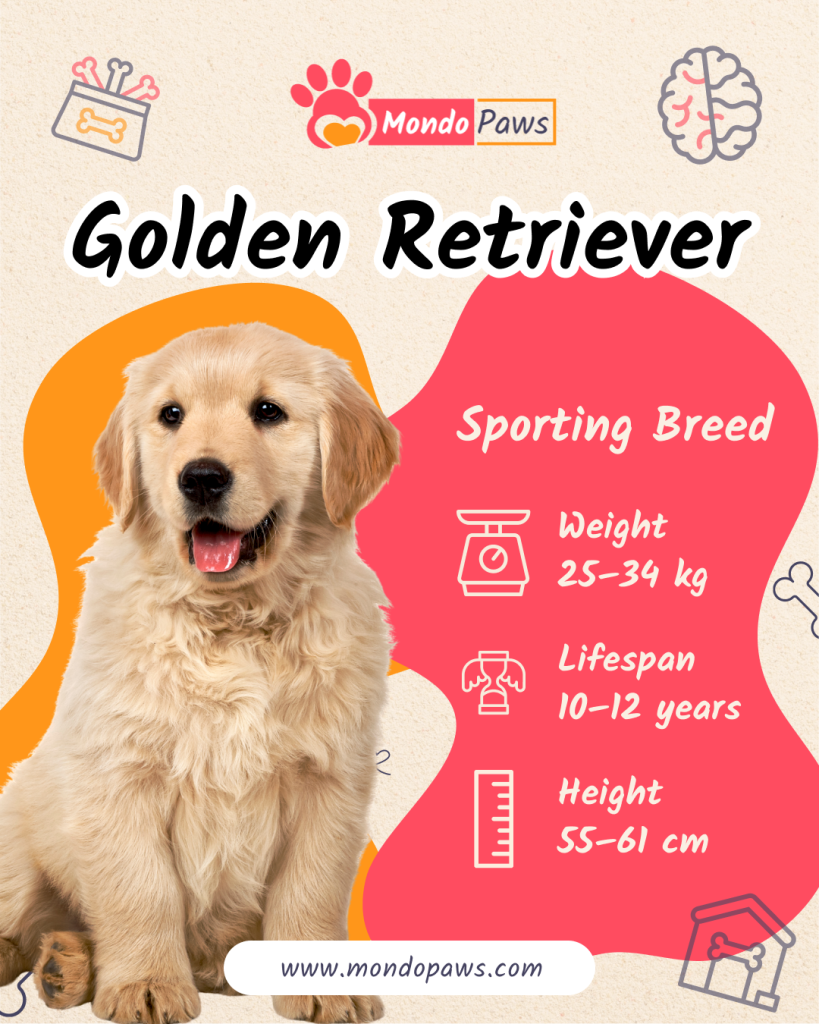
55–75 lbs
Weight
21.5–24″
Height
10–12 years
Lifespan
35 mph
Top Speed
1860s
Origin Era
Rank #4
Intelligence
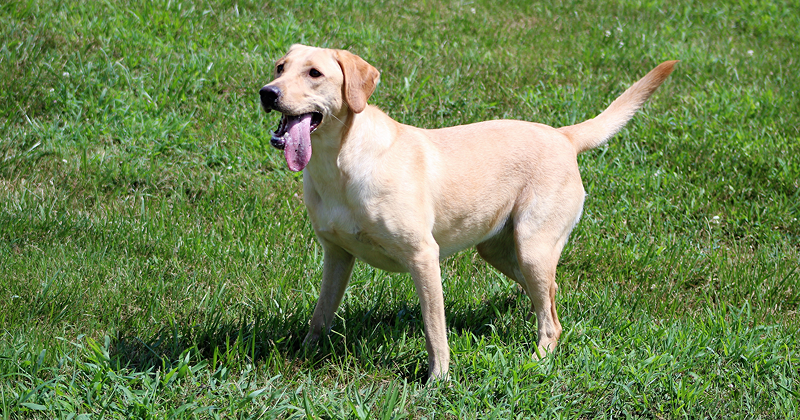
Golden Retrievers have a balanced, athletic build a level topline, deep chest, powerful hindquarters, and a water-repellent double coat with feathering on the chest, legs, and tail. The broad head, dark friendly eyes, and gently waving tail give the breed its unmistakable open expression.
They are people-first dogs: sociable, biddable, and happiest with a job to do, whether that is fetching a bumper from a pond, carrying a toy around the kitchen, or lying at your feet after a long walk. They ask for company constantly and repay an active household with steady, good-humoured loyalty.
Temperament & Personality
The Golden Retriever personality is best described as friendly, eager, and emotionally tuned-in. They are outgoing with strangers, patient with children, soft in the mouth, and famously slow to anger but they stay puppyish until around three years old and can be boisterous in adolescence. Females often mature a little earlier and are slightly more independent, while males tend to stay goofier and more openly affectionate for longer.
Real Owner Insights: What Daily Life with a Golden Retriever Is Actually Like
“Nobody warns you about the hair. Our Golden, ‘Maple,’ leaves a golden tumbleweed in every corner brushing three times a week and vacuuming daily is just life now. Skip a week of brushing in spring and the undercoat comes out in handfuls.”
— As shared by a Golden Retriever owner on r/goldenretrievers on Reddit
“He is the easiest dog I’ve ever trained and the hardest to tire out in his first two years. Two proper walks plus fetch or a sniffy hike, and he’s an angel. Miss that and he redecorates the garden.”
— Shared by a Golden Retriever owner in a breed group on Facebook
Core Performance Metrics
Breed comparison data breakdown Golden Retriever vs. standard breed benchmark.
With Family
Devoted Family Dog
Wants to be in the room with you, always
With Strangers
Openly Friendly
Greets visitors like old friends a poor guard dog
Energy Level
High
Needs 60–120 mins daily exercise
Trainability
Exceptional
One of the easiest breeds to teach food and praise motivated
Behind the famous smile is a working retriever that asks for very little except exercise, company, and something to carry.
Calm, positive routines are highly recommended. Resources from the American Society for the Prevention of Cruelty to Animals emphasize reward-based training for best results.
Trait Ratings
Personality Traits
Care Requirements
Golden Retriever Summary Table
| Category | Verdict | Best for |
|---|---|---|
| Families with kids | Excellent | Patient, soft-mouthed and tolerant of noisy homes |
| First-time owners | Excellent | Forgiving, eager to please, easy to train |
| Apartment living | Moderate | Possible only with 1–2 hours of daily outdoor exercise |
| Allergy sufferers | Not Suitable | Heavy shedding water-repellent double coat |
| Guard / watchfulness | Poor | Will happily greet an intruder with a toy |
| Active outdoor lifestyles | Excellent | Built for hiking, swimming, fetch and dog sports |
| Multi-pet households | Good | Sociable with dogs and, when raised together, cats |
| Long hours home alone | Not Ideal | Prone to separation anxiety and boredom chewing |
Golden Retriever Living Needs
Goldens suit almost any home as long as it is active, sociable, and willing to put in daily outdoor time.
Space
Yard Preferred
Daily walks matter more than square footage, but space helps
Children
Great With Kids
Gentle and patient; supervise the bouncy adolescent stage
Heat Tolerance
Moderate
Dense double coat means shade, water and early-morning walks in summer
Other Pets
Very Sociable
Low prey drive for a gundog; usually easy with other animals
A Golden does not need a big house it needs a tired body, a full water bowl, and someone home most of the day.
Training and Exercise Needs
Golden Retrievers are among the most trainable dogs in the world they learn recall, retrieve, obedience routines, and assistance-dog tasks quickly when rewarded with food, praise, and play. Because they are high-energy and prone to weight gain, aim for 60–120 minutes of daily exercise split between walks, fetch or swimming, and 10–15 minutes of scent games or training that tires the brain as well as the legs.
Exercise Allocation Profile (Weekly Ideal)
Puppy Stage
Mouthy Months
Retrievers carry things redirect to toys instead of hands
Adolescence
Teen Brain (8–18 mo)
Recall gets shaky keep long-line practice going
Grooming & Coat Care
The Golden’s coat is the everyday commitment of the breed: a dense, water-repellent double coat that sheds moderately all year and heavily twice a year. Most owners settle into brushing three to four times a week daily during the spring and autumn blowouts plus a bath every six to eight weeks and a light tidy of the feet, ears, and tail feathering.
Coat Type
Double & Water-Repellent
Brush with a slicker plus undercoat rake never shave it
Coat Colors
Three Shades
Light golden, golden, and dark golden cream in English lines
Shedding
Year-Round + Blowouts
Moderate daily, very heavy in spring and autumn
Other Needs
Ears, Nails & Teeth
Dry the drop ears after swimming, trim nails monthly, brush teeth weekly
Ten minutes of brushing every other day is cheaper and kinder than one de-matting session at the groomer.
Calm, positive handling routines are highly recommended. Resources from the American Society for the Prevention of Cruelty to Animals emphasize low-stress grooming for best results.
Health & Common Concerns
The Golden Retriever is a generally robust breed, but its popularity and closed gene pool have concentrated some predictable problems. The main watch-points are joints, cancer risk, eyes, and weight all of which are far easier to manage with a health-tested puppy from screened parents and a lean body condition throughout life.
Hip & Elbow Dysplasia
Orthopaedic · Screening Advised
Cancer (Haemangiosarcoma, Lymphoma)
Oncology · Breed-Elevated Risk
Eye Disease & PRA
Ocular · DNA Testing Advised
Obesity & Ear Infections
Lifestyle · Care-Sensitive
AKC & The Kennel Club Standards
According to official breed standards from the American Kennel Club (AKC) and The Kennel Club (UK), the Golden Retriever is defined by its powerful, symmetrical body, level topline, broad skull, kindly expression, and dense water-repellent coat in any shade of gold or cream.
Veterinary Genetics & Health Screening
Canine health resources such as the Cornell Riney Canine Health Center and the Morris Animal Foundation Golden Retriever Lifetime Study note that cancer accounts for a large share of adult deaths in the breed. Responsible breeders screen hips, elbows, hearts, and eyes, so puppies from tested lines should come with documented OFA or BVA results for both parents.
Relative Health Risk by Condition
Regular veterinary checkups, lean body weight, and responsible breeding help reduce these risks.
Nutrition & Feeding
Goldens are enthusiastic eaters with a genuine tendency to gain weight, so portion control, joint-supporting nutrients, and controlled puppy growth matter more than for most breeds.
High-quality protein
Omega-3 & joint support
Large-breed puppy growth control
Adult Goldens typically eat 2–3 cups of quality dry food a day, split into two measured meals free-feeding is the fastest route to an overweight retriever.
Large-breed puppy formulas with controlled calcium help joints develop safely, and deep-chested dogs should rest for an hour after eating to reduce bloat risk. According to PetMD, measured meals, omega-rich fats, and constant fresh water support coat quality, joint comfort, and long-term weight control.
to find out more about dogs weight visit Dog Weight Calculator.
Ownership Cost Calculator
Golden Retriever puppies from registered breeders typically sell for $1,500–$3,500, with field and show lines from fully health-tested parents running higher food, insurance, and veterinary care are the real long-term costs, not the purchase price. Adjust the inputs below for a personalized annual running-cost estimate. All figures are in USD and reflect US market averages.
Pros & Cons
Strengths
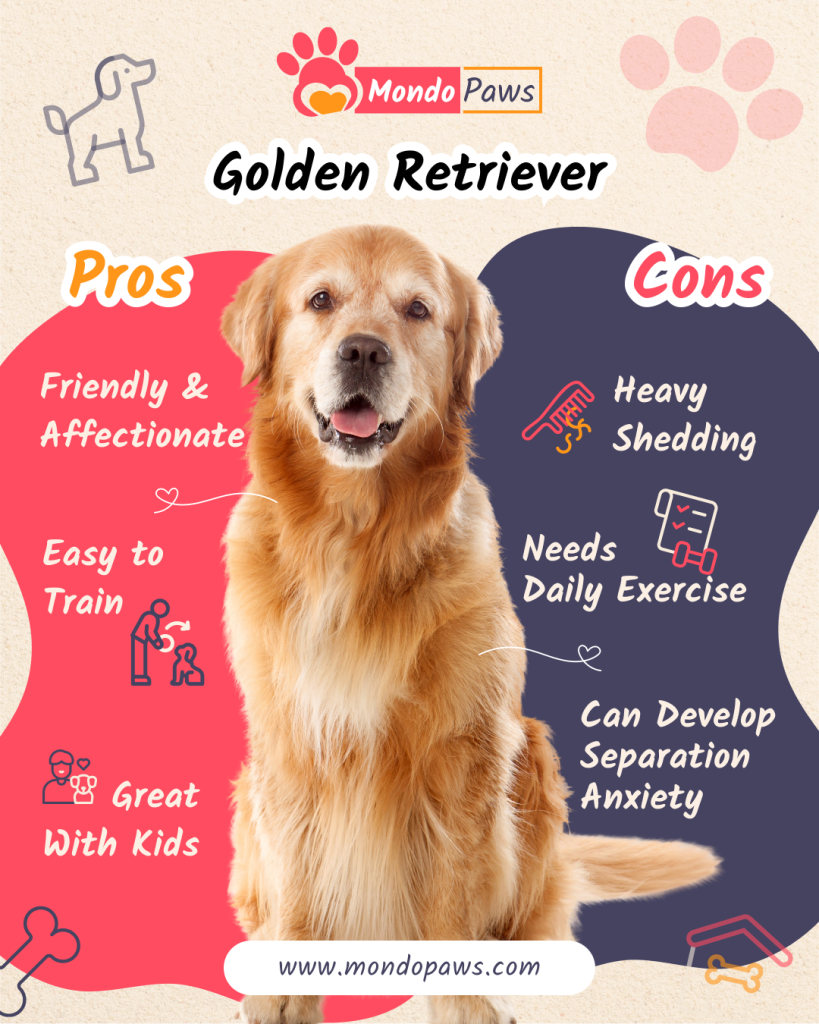
- Exceptionally friendly superb with children and visitors
- One of the most trainable breeds in the world
- Brilliant partner for hiking, swimming, and dog sports
- Soft-mouthed, low prey drive, easy with other pets
- Forgiving of first-time owner mistakes
Challenges
- Heavy year-round shedding with two big seasonal blowouts
- Needs 1–2 hours of daily exercise, every day
- Elevated cancer and joint-disease risk in the breed
- Gains weight easily and dislikes being left alone
History of the Golden Retriever
The Golden Retriever’s origins trace back to the Scottish Highlands, where Dudley Marjoribanks, the first Lord Tweedmouth, set out in the 1860s to build a gundog that could retrieve reliably on land and in cold water on his Guisachan estate.
His kennel records, kept from 1835 to 1890, show the breed was created from a small, deliberate mix. Historians generally credit:
A yellow Wavy-Coated Retriever named Nous, the now-extinct Tweed Water Spaniel, plus Irish Setter, Bloodhound, and later black retriever crosses
Refined in Britain and later in America, the Golden became the defining all-purpose family dog of the modern era. Twentieth-century breeding split the breed into heavier, paler show lines and lighter, darker field lines, both of which keep the same trademark temperament.
Here is a brief timeline of the Golden Retriever’s history:
1868
Lord Tweedmouth breeds Nous, a yellow retriever, to Belle, a Tweed Water Spaniel the founding litter of the breed.
1908
Golden Retrievers are first exhibited in Britain, shown as “flat coats golden”.
1913
The Kennel Club recognises the breed as a separate variety; the Golden Retriever Club is founded.
1925
The American Kennel Club officially registers the Golden Retriever, and the breed spreads rapidly across North America.
1970s–1990s
Goldens dominate obedience competition and become a first-choice breed for guide, service, and search-and-rescue work.
Today:
The Golden Retriever is consistently one of the three most popular dogs in the United States, working as a family companion, therapy dog, and detection dog worldwide.
Modern breeding increasingly favours health-tested lines and long-term studies of cancer risk, keeping the classic temperament while improving longevity.
Fun Facts
Three Types
American, British (cream, blockier) and Canadian Goldens differ in coat shade and build all one breed
Obedience Royalty
Goldens won the first three AKC Obedience Champion titles ever awarded, in 1977
Presidential Dogs
Liberty, President Gerald Ford’s Golden, lived in the White House and became one of America’s most photographed dogs
Born Swimmers
Webbed feet, a water-repellent coat and a rudder-like tail make them natural swimmers
Top 3 Breed
The Golden has sat in the AKC’s top three most-registered breeds for decades and is a leading guide-dog breed
Frequently Asked Questions
Golden Retriever puppies from registered, health-tested breeders usually cost between $1,500 and $3,500. Budget a further $2,000–$3,000 a year for food, insurance, grooming, and veterinary care food and vet bills are the biggest ongoing expenses.
Around 60–120 minutes a day for a healthy adult, split between walks, off-lead running, swimming, or fetch, plus short training and sniffing games. Puppies need far less structured exercise roughly five minutes per month of age, twice a day to protect growing joints.
Yes. They shed moderately all year and heavily during the spring and autumn coat blowouts. Brushing three to four times a week daily in shedding season with a slicker brush and undercoat rake keeps most of the hair out of your home. Never shave the double coat.
They are the same breed under different national standards. British-type Goldens are usually blockier with a broader head and paler, cream coat; American-type Goldens are leaner with a darker golden coat. Claims that cream Goldens live longer or never get cancer are marketing, not evidence always ask for health test results instead.
Excellent for first-time owners they are forgiving, sociable, and quick to train. Apartments work only if you commit to one to two hours of daily outdoor exercise and don’t leave them alone for long stretches, since Goldens are prone to separation anxiety.
Behind the Research: How We Created This Golden Retriever Guide
At Mondopaws, we believe pet guides should be grounded in both hard science and real-world care. To compile this Golden Retriever profile, our editorial team:
- Cross-referenced official breed standards: Analyzed official documentation and care guidelines directly from the American Kennel Club (AKC), The Kennel Club (UK), and long-established Golden Retriever breed clubs.
- Consulted veterinary & clinical research: Verified breed-relevant conditions (such as hip and elbow dysplasia, haemangiosarcoma and lymphoma, and hereditary eye disease) using material from the Cornell Riney Canine Health Center and the Morris Animal Foundation Golden Retriever Lifetime Study, along with clinical insights from the ASPCA and PetMD.
- Gathered authentic owner experiences: Evaluated real feedback, training routines, and temperament observations shared by verified Golden Retriever owners across active pet forums and social media communities.
Final Thoughts
The Golden Retriever is one of the friendliest, most trainable dogs you can live with: patient with children, brilliant on the trail or in the water, and endlessly willing to work with you. The trade-offs are real constant shedding, one to two hours of daily exercise, a strong need for company, and the joint and cancer risks that run through the breed.
For people who want an active, affectionate companion and genuinely enjoy training and outdoor time, a health-tested Golden Retriever from parents with documented hip, elbow, heart, and eye clearances is one of the most rewarding dogs in the world.
Written by the Mondo Paws Team
At Mondo Paws, we simply love pets! For this guide, we gathered and cross-checked key data on this breed from across the web, organizing everything in the clearest, most practical way possible so you can find what you need at a glance.