Table of Contents
Dogs Alone-Time Calculator · How Long Is Too Long?
How long can your dog really be left alone? There is no single magic number, because the answer depends on age, bladder control, exercise, temperament, health, and the home itself. As a general guide, healthy adult dogs are comfortable for roughly 4 to 6 hours, puppies need far less (about one hour per month of age), and some UK animal charities advise no more than about 4 hours at a time. A dogs alone-time calculator turns those variables into a realistic limit for your dog and shows what a long workday needs.
1 Hr/Month
Common rule of thumb for puppies, up to a sensible cap
4–6 Hrs
Typical comfortable stretch for a healthy adult dog
~8 Hrs
Upper end for a well-adjusted adult, best with a midday break
~4 Hrs
Cautious maximum advised by some UK animal charities
Minutes First
Where anxious dogs should start when learning to be alone
Never
Leave a dog in a parked car, even briefly in warm weather
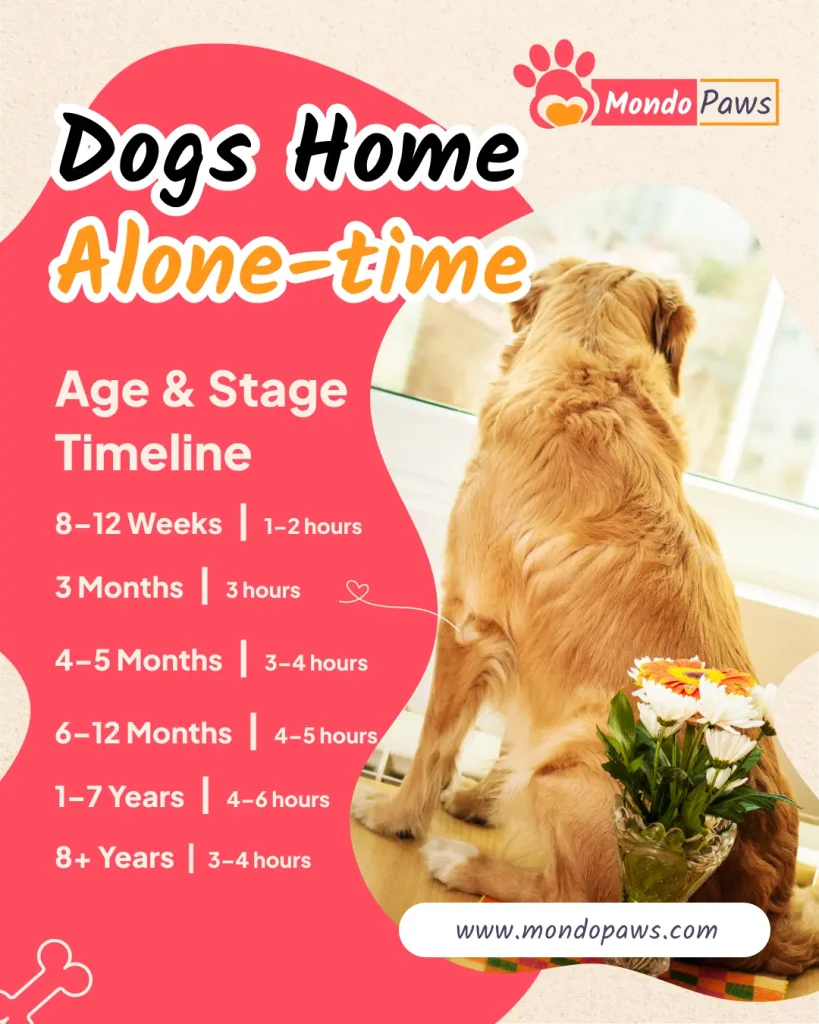
Whether you are heading back to the office, bringing home a new puppy, or worrying about a senior dog, precision helps. Our interactive Dogs Alone-Time Calculator below estimates a recommended maximum alone time from your dog’s age, potty training, exercise, behavior when alone, health, and home conditions, then compares it with how long your dog will actually be by themselves.
Interactive Dogs Alone-Time Calculator
Enter your dog’s age and answer a few questions to see a recommended maximum alone time and how many midday breaks your schedule needs.
How Long Can Dogs Be Left Alone by Age?
Guidance varies between organizations, and animal welfare charities such as the RSPCA tend to be more cautious than some owner-focused sources. The chart below shows typical comfortable stretches for a healthy dog at each stage, and the calculator above adjusts these for your own dog.
| Life Stage | Age | Typical Comfortable Alone Time | Notes |
|---|---|---|---|
| Very Young Puppy | 8 – 12 weeks | ~1 – 2 hrs | Needs frequent toilet breaks, meals, and company. |
| Puppy | 3 months | ~2 – 3 hrs | Roughly one hour per month of age as a ceiling. |
| Puppy | 4 – 5 months | ~3 – 4 hrs | Bladder control improves, but alone-time skills are still developing. |
| Adolescent | 6 – 12 months | ~4 – 5 hrs | High energy; exercise and enrichment matter a lot. |
| Adult | 1 – 7 years | ~4 – 6 hrs | Up to about 8 hrs for a well-adjusted dog with breaks; some charities advise about 4. |
| Senior | 8 – 10 years | ~4 – 6 hrs | Shorter if there are joint, bladder, or other health issues. |
| Geriatric | 11+ years | ~3 – 4 hrs | Often needs frequent breaks and comfort support. |
Clinical Note: A healthy adult dog can often physically hold urine for much longer than the figures above, especially overnight. The limits here are about welfare as well as bladder control, because long stretches of isolation without exercise, company, or stimulation can lead to stress, boredom, and behavior problems. Dogs with medical conditions may need breaks sooner than any general guideline suggests, so follow your vet’s advice.
How Long Can a Puppy Be Left Alone?
The usual rule of thumb is about one hour per month of age, so a 3-month-old puppy can manage roughly 3 hours at most. In practice, many puppies should be left for less, and the goal in the early weeks is to build positive alone time in tiny steps, not to test limits.
Bladder Limits
Small bladders and developing control mean puppies need to go out soon after eating, drinking, playing, and waking.
Social Needs
Young puppies are used to constant company from their litter, so sudden long isolation can be distressing.
Gradual Training
Start with seconds, then minutes, rewarding calm behavior, so being alone feels safe and boring rather than scary.
Alone Time in Special Situations
Some dogs need shorter stretches or extra planning. Keeping hydration in mind during longer days also matters, so check our Water Intake Calculator for Dogs to make sure fresh water is always available.
| Situation | Typical Effect on Alone Time | Key Guidance |
|---|---|---|
| Puppies | Much shorter stretches | About one hour per month of age as a ceiling, with frequent breaks and gradual training. |
| Senior Dogs | Often shorter | More frequent toilet breaks, an orthopedic bed, and easy access to water. |
| Recently Adopted or Rescue Dogs | Start very short | Give time to settle in and build alone time slowly, since the first weeks are a big adjustment. |
| Separation Anxiety | Time limit is minutes at first | Needs a structured, gradual plan and often professional help. Avoid leaving the dog longer than they can cope with. |
| Medical Conditions | Often shorter | Diabetes, kidney or urinary problems, incontinence, and GI issues can require frequent breaks or medication timing. Follow your vet’s advice. |
| Post-Surgery or Recovery | Shorter and supervised | Ask your vet before leaving your dog alone for long, and follow recovery instructions. |
| Hot or Cold Weather | Shorter, with extra safety checks | Make sure the home is a safe temperature, and never leave a dog in a parked car. |
| Big Life Changes | May regress temporarily | A move, new baby, or change in schedule can bring back old problems, so ease back into routines. |
Boredom vs Separation Anxiety: What’s Going On?
Destruction and barking while you are out are not always separation anxiety. Telling boredom and anxiety apart changes the fix: boredom needs more exercise and enrichment, while anxiety needs training and often professional support. A pet camera is the best way to see what really happens.
| Sign | More Likely Boredom | More Likely Separation Anxiety |
|---|---|---|
| Timing | Can happen at any point while you are out. | Starts soon after you leave, often within minutes. |
| Destruction | Chews toys, furniture, or random items. | Focuses on doors, windows, and exits, sometimes injuring teeth or paws. |
| Vocalizing | Barks at sights and sounds, then settles. | Howls, whines, or barks continuously. |
| Body Language | Seems energetic or restless. | Pacing, panting, drooling, or trembling. |
| Toilet Accidents | Less common in a house-trained dog. | Accidents even in a house-trained dog. |
| When You Return | Greets you normally and quickly settles. | Frantic or very intense greeting, and follows you everywhere at home. |
| Best First Step | More exercise, enrichment, and a midday break. | A vet check, a gradual training plan, and a qualified behavior professional. |
Dog Breed Alone-Time Tendencies Reference Table
Breed has less influence on alone-time comfort than a dog’s history, socialization, training, and temperament, and detailed breed research is limited. The table below lists 24 popular dog breeds with general tendencies to show who often finds solitude easier and who may need more support. Treat these as rough guides, not predictions.
| Breed | General Tendency | Typical Alone-Time Comfort | Notes |
|---|---|---|---|
| Basset Hound | Laid-back | Often easier | Low energy, but can howl; still needs exercise and enrichment. |
| Greyhound | Calm, sleeps a lot | Often easier | Needs regular toilet breaks and a soft bed. |
| Shiba Inu | Independent | Often easier | Can be escape-prone, so a secure setup matters. |
| Chow Chow | Aloof, independent | Often easier | Needs safe heat management in warm weather. |
| Akita | Independent, loyal | Often easier | Strong-willed; needs early socialization and training. |
| English Bulldog | Easygoing | Often easier | Very sensitive to heat, so keep the home cool. |
| Labrador Retriever | Social, high energy | Moderate | Needs plenty of exercise to avoid chewing. |
| Golden Retriever | Social, people-loving | Moderate | Can struggle if left too long without company. |
| Beagle | Social, scent-driven | Moderate | Prone to howling and bored behavior if under-stimulated. |
| Boxer | Playful, people-oriented | Moderate | High energy; exercise before you leave. |
| Standard Poodle | Smart, social | Moderate | Needs mental stimulation and company. |
| Pembroke Welsh Corgi | Alert, energetic | Moderate | Can be vocal; needs structure and activity. |
| Dachshund | Bold, vocal | Moderate | Can bark when bored and is prone to digging. |
| German Shepherd | Loyal, working breed | Moderate | Needs jobs, exercise, and good socialization. |
| Great Dane | Gentle, people-oriented | Moderate | Large dogs still need regular breaks and company. |
| Rottweiler | Confident, loyal | Moderate | Needs training, exercise, and clear routines. |
| Cavalier King Charles Spaniel | Affectionate companion | Often needs more support | Bred for company and may struggle alone. |
| Bichon Frise | Very people-oriented | Often needs more support | Can be prone to distress if left for long periods. |
| Vizsla | Velcro, high energy | Often needs more support | Needs lots of exercise and company. |
| Border Collie | Intense, high energy | Often needs more support | Needs a job and mental stimulation to avoid boredom. |
| Australian Shepherd | Energetic, herding | Often needs more support | Needs daily exercise and mental work. |
| Siberian Husky | Energetic, escape artist | Often needs more support | Often destructive or escape-prone when bored. |
| Jack Russell Terrier | Energetic, determined | Often needs more support | Needs outlets for energy and a secure home. |
| French Bulldog | Companion-focused | Often needs more support | Can be clingy; also very heat-sensitive. |
How to Train Your Dog to Be Comfortable Alone
Being alone is a skill dogs learn, and it is best taught in small, successful steps. This works for puppies, newly adopted dogs, and mildly anxious dogs, and it is a starting point for dogs with severe separation anxiety who need professional help.
1. Create a Safe Space:
Set up a comfortable bed, crate, or pen your dog likes, with water and a safe chew. Introduce it with treats so it feels positive, never as punishment.
2. Start Tiny:
Practice leaving the room for a few seconds, then return before your dog gets upset. Gradually extend to minutes, and only increase when your dog stays relaxed.
3. Keep Comings and Goings Calm:
Skip dramatic goodbyes and greetings, since big emotions can make being alone feel like a big deal.
4. Exercise First, Then Enrich:
Give a walk or play session before you leave, then offer a safe chew or food puzzle that your dog only gets when you are out.
5. Watch and Adjust:
Use a pet camera to see how your dog really copes. If you see panic, step back to shorter absences, never punish accidents or destruction, and ask a vet or behavior professional for help.
Options for Long Workdays
If the calculator shows your day is longer than your dog’s limit, these options can bridge the gap. A midday visit does more than a toilet break: it gives your dog company, movement, and a reset in the middle of a long day.
| Option | Best For | Notes |
|---|---|---|
| Midday Dog Walker or Sitter | Most dogs on long workdays | Gives a toilet break, exercise, and company. Check references and insurance. |
| Dog Daycare | Social, energetic dogs | Good for high-energy dogs, but not every dog enjoys it, so watch for stress signs. |
| Friend, Family, or Neighbor | Short or occasional gaps | A reliable, familiar person can be ideal for a quick midday visit. |
| Hybrid or Flexible Schedule | Owners who can shift hours | Even a couple of days at home a week can make a big difference. |
| Pet Camera With Treat Dispenser | Monitoring and mild reassurance | Useful for checking in, but it does not replace a break or a visit. |
| Safe Dog Door or Yard Access | Trained, secure setups | Only for dogs who are safe and reliable outside unsupervised, with shade and water. |
Signs You Need a Vet or Behavior Professional
Some problems that show up while you are away are medical or serious behavioral issues rather than a simple training gap. These signs call for professional help:
Panic or Self-Injury
Broken teeth, torn nails, or cuts from trying to escape a crate or room signal severe distress. See a vet and a qualified behavior professional.
New Toilet Accidents
Sudden accidents in a house-trained dog, straining, or very frequent urination can be a medical issue such as an infection and should be checked by a vet.
Heat or Health Emergency
Heavy panting, drooling, vomiting, weakness, or collapse, especially in a warm home, is an emergency. Seek veterinary care immediately.
A Daily Routine for a Dog Who Is Home Alone
A predictable routine helps dogs relax, because they know what is coming next:
Morning:
Take a toilet break and a proper walk, then breakfast. Exercise and a meal both make dogs more likely to settle and rest.
Before You Leave:
Do a final toilet break, set out fresh water, and give a safe chew or food puzzle. Keep your goodbye low-key.
Midday:
If your day is long, arrange a walker, sitter, or neighbor for a break, a bit of play, and company.
Return Home:
Greet calmly, take your dog out for a toilet break straight away, then spend time together with a walk or play.
Evening:
Add exercise, training, and attention, then a last toilet break before bed. Quality time makes the next day’s alone time easier.
Frequently Asked Questions
Most healthy adult dogs can comfortably be left alone for about 4 to 6 hours with enough exercise and enrichment, and some well-adjusted dogs manage up to 8 hours with breaks. Puppies, seniors, dogs with health needs, and dogs with separation anxiety need much shorter stretches, and some UK animal charities advise no more than about 4 hours at a time.
A common rule of thumb is about one hour per month of age, so a 3-month-old puppy can usually manage around 3 hours at most, and many puppies should be left for less. Very young puppies need frequent meals, toilet breaks, and company, so alone time should be built up gradually in short sessions.
Eight hours is the upper end of what is generally considered acceptable for a healthy, well-adjusted adult dog, and it is better broken up with a midday walker, daycare, or a neighbor. It is too long for puppies, senior dogs, dogs with medical needs, and dogs that get anxious when alone.
A dog that is coping well tends to settle, rest, and greet you calmly when you return. Signs of distress include howling or barking for long periods, pacing, drooling, destructive behavior around doors and windows, and toilet accidents in a house-trained dog, and a pet camera can show what happens while you are out.
Start by treating alone time as training, with very short absences that build up gradually, and avoid leaving your dog for longer than they can cope with. Ask your vet to rule out medical causes and consider a qualified behavior professional, because severe separation anxiety usually needs a structured plan.
Behind the Research: How We Built This Dogs Alone-Time Calculator & Guide
At Mondo Paws, our mission is to empower pet owners with scientifically accurate, veterinary-reviewed tools. To create this calculator and alone-time guide:
- Applied Widely Cited Alone-Time Guidelines: Limits start from commonly published ranges by life stage, including the one-hour-per-month puppy rule of thumb and the 4 to 6 hour adult range, then adjust for potty training, exercise, enrichment, behavior, health, and home conditions. Organizations differ, so results are general estimates, not rules.
- Cross-Referenced Welfare and Behavior Resources: Guidance on alone time, separation-related problems, and heat safety was checked against resources from the RSPCA, the ASPCA, and the American Veterinary Society of Animal Behavior.
- Compiled Breed Tendency Overview: Summarized general temperament tendencies for 24 recognized dog breeds, noting that individual history, training, and temperament matter far more than breed.
Final Thoughts
Knowing how long your dog can comfortably be alone makes it easier to plan workdays, arrange midday breaks, and spot problems before they grow. Use our Dogs Alone-Time Calculator to find a realistic limit, then watch your dog’s behavior, energy, and toilet habits as part of your routine.
Remember that every dog is different. If your dog shows panic, injures themselves, has sudden accidents, or seems distressed when left, contact your veterinarian or a qualified behavior professional rather than waiting to see if it resolves on its own.