Table of Contents
Cat Shedding Scale · Coat & Grooming Guide
How much should your cat actually be shedding? Every cat sheds, but a sleek Siamese and a fluffy Maine Coon live on very different parts of the shedding scale. The cat shedding scale rates shedding from 1 (minimal) to 5 (very heavy), which makes it easier to compare breeds, plan grooming, and spot the point where “normal fluff” turns into something worth a vet visit.
5 Levels
From minimal (1) to very heavy (5) shedding
Year-Round
Indoor cats tend to shed steadily all year
Spring & Fall
Typical seasonal peaks as daylight changes
1–2×/Week
Typical brushing for short, low-shedding coats
Daily
Ideal brushing for long, thick double coats
Bald Patches
A red flag that calls for a vet, not just a brush
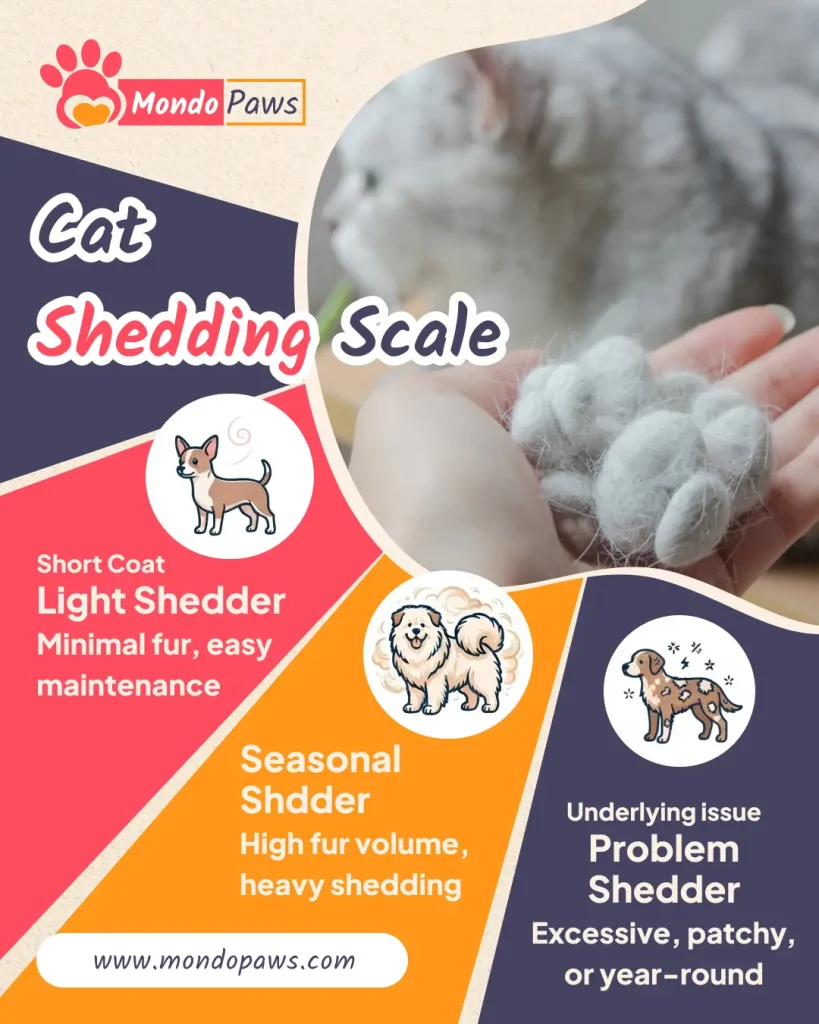
Whether you are choosing a breed, battling fur on every surface, or wondering if your cat’s coat is changing for a health reason, a clear scale helps. Our interactive Cat Shedding Scale Calculator below estimates a 1 to 5 shedding level based on coat type, season, lifestyle, and health factors, then suggests how often to brush and with which tool.
Interactive Cat Shedding Scale Calculator
Choose your cat’s coat type, season, lifestyle, and grooming habits to see an estimated shedding level and a brushing plan in real time.
The Cat Shedding Scale Explained (Levels 1 to 5)
There is no official veterinary shedding scale, so the 1 to 5 rating used here is an informal guide based on coat type and typical behavior, in line with general feline coat-care information from resources such as International Cat Care. Use it to compare cats and plan grooming, not to diagnose a problem.
| Level | Label | What You Typically See | Example Coats | Grooming Guide |
|---|---|---|---|---|
| 1 | Minimal | Almost no loose hair around the home. | Hairless, rex coats | Weekly wipe-down or bath for skin oil. |
| 2 | Light | Occasional hairs on furniture or clothing. | Short, sleek single coats | Brush once or twice a week. |
| 3 | Moderate | Regular fur on clothes and bedding, with seasonal bumps. | Medium coats, many domestic shorthairs | Brush two to three times a week. |
| 4 | Heavy | Fur on most surfaces, with large seasonal coat changes. | Dense or long double coats | Brush four to five times a week, more at peak season. |
| 5 | Very Heavy | Constant fur and big seasonal “blowouts” in thick coats. | Very dense, long double coats at peak season | Daily brushing and comb-outs to prevent mats. |
Clinical Note: A high level on the scale describes how much a healthy cat of that coat type naturally sheds. It is different from excessive shedding, which is sudden, patchy, or paired with skin changes. As described in the Merck Veterinary Manual, hair loss in cats can have many medical causes, so a cat that looks different from its usual self should be examined rather than just brushed.
Cat Shedding Season: Indoor vs Outdoor Cats
Coat changes are driven largely by daylight and temperature. Outdoor cats follow natural seasonal cycles, with a heavy shed as winter coats come out in spring and a second adjustment in fall. Indoor cats live under artificial light and steady temperatures, so their shedding is often spread more evenly through the year, with smaller peaks in spring and fall.
| Season | Outdoor Cat | Indoor Cat | What Helps |
|---|---|---|---|
| Winter | Thicker coat grows in; shedding is usually lowest. | Steady shedding; dry indoor air can cause flaky skin. | Brush regularly and consider a humidifier for dry air. |
| Spring | Heaviest shed as the winter coat comes out. | Noticeable increase in loose fur. | Brush more often and use a comb on thick coats. |
| Summer | Lighter coat; moderate, steady shedding. | Steady, moderate shedding. | Keep up routine brushing and provide cool resting spots. |
| Fall | Second peak as the coat prepares for winter. | Smaller increase than outdoor cats. | Step up grooming again and check coat condition. |
Normal vs Excessive Cat Shedding
Knowing your own cat’s usual pattern is the best way to tell the difference. Here is how normal shedding and excessive shedding generally compare:
Normal Shedding
Even, gradual loose fur, healthy skin underneath, a glossy coat, and seasonal increases that settle down after a few weeks.
Shedding in Clumps
Can be a heavy seasonal coat change or a loosened mat. If bare, red, or irritated skin is left behind, have it checked.
Excessive Shedding
Sudden, patchy, or thinning hair, often with itching, scabs, dandruff, over-grooming, or changes in appetite, weight, or energy.
Causes of Excessive Shedding in Cats and What to Do
Treatment for excessive shedding depends entirely on the cause, which is why a vet exam is the first step. The table lists common causes, what you may notice, and typical next steps. Your vet will decide on the right diagnosis and treatment for your cat.
| Possible Cause | What You May Notice | Typical Next Step |
|---|---|---|
| Fleas or Mites | Itching, scratching, small scabs, flea dirt, hair loss near the tail base or neck. | See your vet for safe, cat-specific parasite control. Never use dog products on cats. |
| Allergies | Itchy skin, over-grooming, patchy hair loss, sometimes ear or skin infections. | Vet exam to identify food or environmental triggers and manage them. |
| Stress or Anxiety | Increased shedding or over-grooming after a move, new pet, or routine change. | Restore routine, add hiding and vertical spaces, and talk to your vet if it persists. |
| Poor Nutrition | Dull, dry, brittle coat and flaky skin. | Review the diet with your vet. Complete and balanced food supports coat health. |
| Hormonal Problems | Coat changes with weight loss, increased thirst, or changes in appetite and energy. | Bloodwork and an exam can check for conditions such as hyperthyroidism. |
| Ringworm or Skin Infections | Circular bald patches, crusting, redness, or scaling. Ringworm can spread to people. | Prompt vet diagnosis and treatment, plus careful hygiene at home. |
| Pain-Related Over-Grooming | Licking one area repeatedly, causing thin or missing fur. | Vet exam to find and treat the underlying discomfort. |
| Pregnancy / Nursing | Noticeable shedding in the weeks after kittens arrive. | Provide good nutrition and rest. Mention it to your vet if the coat looks unhealthy. |
| Age, Weight, or Mobility | Matting or greasy fur because the cat can’t groom well. | Gentle regular grooming help and a vet check for pain or arthritis. |
Cat Shedding Scale by Breed
Below is our reference table listing 24 popular cat breeds with their coat type and a typical position on the 1 to 5 shedding scale. These are general tendencies. Individual cats, mixed breeds, diet, health, and season all affect real-world shedding, and no cat is truly “no-shed.”
| Breed | Coat Type | Typical Shedding Level | Notes |
|---|---|---|---|
| Sphynx | Hairless / peach-fuzz | 1 | Little fur to shed, but skin oils build up and need regular wipe-downs or baths. |
| Devon Rex | Short, soft, wavy | 1–2 | Delicate coat; brush very gently. |
| Cornish Rex | Very short, curly | 1–2 | Fine, close coat that sheds little. |
| Siamese | Short, fine | 2 | Sleek coat; light weekly grooming is enough. |
| Oriental Shorthair | Short, fine | 2 | Very low-maintenance coat. |
| Burmese | Short, satiny | 2 | Easy-care coat that benefits from a quick weekly brush. |
| Bengal | Short, pelt-like | 2 | Sleek coat; a mitt or soft brush keeps it glossy. |
| Abyssinian | Short, ticked | 2 | Fine coat; moderate seasonal changes. |
| Savannah | Short, dense | 2 | Short coat with light to moderate shedding. |
| Russian Blue | Short, plush double | 3 | Dense coat; shedding rises seasonally. |
| Scottish Fold | Short or long, dense | 3 | Weekly brushing for short coats; more for long. |
| American Shorthair | Short, dense | 3 | Steady shedding with spring and fall increases. |
| Domestic Shorthair | Short, varies | 3 | Wide variation from cat to cat. |
| Turkish Angora | Long, silky | 3 | Silky coat that mats less than thick coats but still needs combing. |
| Birman | Medium-long, silky | 3 | Single-layered feel with moderate shedding. |
| Munchkin | Short or long | 3 | Depends on coat length. |
| Ragdoll | Semi-long, soft | 3–4 | Soft coat; brush several times a week, more during spring and fall. |
| Maine Coon | Long, thick, shaggy | 4 | Heavy seasonal shed; comb through the undercoat. |
| Norwegian Forest Cat | Long, thick double | 4 | Very heavy spring coat change. |
| Siberian | Long, thick triple coat | 4 | Dense coat needing regular combing. |
| British Shorthair | Short, very dense | 4 | Plush coat sheds heavily despite short length. |
| Exotic Shorthair | Short, plush | 4 | Dense coat that needs more brushing than it looks. |
| Manx | Short or long, double | 4 | Thick double coat with notable seasonal shedding. |
| Persian | Long, thick, flowing | 4–5 | Needs daily combing to prevent mats and manage loose fur. |
How to Reduce Cat Shedding at Home
You cannot stop a cat from shedding, and you should not want to, since shedding is how the coat renews itself. These home steps keep the coat healthy and cut down on the fur that ends up on your furniture:
| Step | Why It Helps | Tips |
|---|---|---|
| Brush Regularly | Removes loose fur before it spreads and reduces swallowed hair and hairballs. | Keep sessions short and positive, with treats. Brush in the direction of hair growth. |
| Feed a Complete, Balanced Diet | Skin and coat health depend on good nutrition. | Choose a food labeled complete and balanced. Ask your vet before adding supplements such as omega-3s. |
| Keep Your Cat Hydrated | Good hydration supports healthy skin. | Offer fresh water and wet food. See our Cat Water Intake Calculator. |
| Control Fleas Year-Round | Parasites cause itching and hair loss. | Use only cat-safe products recommended by your vet. |
| Reduce Stress | Stress can increase shedding and over-grooming. | Keep routines steady and give your cat hiding spots and high perches. Healthy rest also matters, so check our Cat Sleep Calculator. |
| Bathe Only When Needed | Most cats groom themselves and rarely need baths. | Use a cat-safe shampoo only, never human products, and ask your vet before regular bathing. |
| Clean Smart at Home | Removes fur that has already fallen. | Use washable throws, a rubber squeegee or lint roller on fabric, and vacuum regularly. |
Best Cat Shedding Brush by Coat Type
The right tool makes grooming faster and more comfortable. Use this table as a starting point, and stop if your cat shows pain or skin irritation.
| Tool | Best For | Notes |
|---|---|---|
| Grooming Mitt / Glove | Short, fine coats and cats new to brushing | Gentle and feels like petting. A good starter tool. |
| Rubber Curry Brush | Short, dense coats | Lifts loose fur and stimulates skin without scratching. |
| Soft Bristle Brush | Short, sleek coats and finishing | Adds shine and removes surface fur. |
| Slicker Brush | Medium and long coats | Removes loose fur and small tangles. Use light pressure so it doesn’t irritate skin. |
| Metal Comb (wide and fine tooth) | Long coats and finishing | Checks for tangles and mats that a brush can miss. |
| Undercoat Rake / Deshedding Tool | Thick double coats during heavy shedding | Removes dense undercoat quickly. Use gently and sparingly to avoid thinning the coat or irritating skin. |
| Soft Cloth or Wipe | Hairless cats | Helps manage skin oil. Ask your vet about bathing frequency. |
Signs You Need a Vet
Shedding that changes suddenly, or that comes with these signs, deserves a veterinary exam rather than more brushing:
Bald or Thinning Patches
Circular, symmetrical, or spreading hair loss, or a coat that looks visibly thin, needs a vet check to find the cause.
Skin Changes or Itching
Redness, scabs, crusts, dandruff, constant scratching, or over-grooming point to parasites, allergies, or infection.
Other Changes Alongside Shedding
Weight loss, appetite changes, more thirst, lethargy, or vomiting together with coat changes should prompt a prompt vet visit.
A Weekly Grooming Routine
Small, consistent sessions work better than occasional marathon grooming. Adjust the frequency using your cat’s shedding level above:
Start Short:
Begin with two to five minute sessions when your cat is relaxed, such as after a meal or play. Stop before your cat gets annoyed.
Brush With the Coat:
Work in the direction of hair growth, gently covering the back, sides, and chest. Go carefully around the belly, armpits, and behind the ears, where mats form.
Check for Mats and Skin:
Run a comb through long coats to find tangles, and look at the skin for redness, scabs, or fleas as you go.
Step Up in Peak Season:
During spring and fall, add a few extra sessions per week, especially for dense or long coats.
Reward and Track:
Finish with a treat or play. Note any change in how much fur comes off, and mention sudden increases to your vet.
Frequently Asked Questions
The cat shedding scale is an informal 1 to 5 rating of how much a cat sheds, where 1 means minimal shedding (such as hairless and rex coats) and 5 means very heavy shedding (such as dense, long double coats at peak season). It is a general guide to help owners plan grooming and compare breeds, not a clinical measurement.
Normal causes include seasonal coat changes, a dense coat type, and indoor lighting that keeps shedding going year-round. Heavier or sudden shedding can also come from stress, fleas or mites, allergies, poor nutrition, hormonal problems, or skin infections, so it is worth seeing a vet if it comes with bald patches, redness, itching, or other changes.
Clumps can occur during a heavy seasonal coat change in dense or long-haired cats, or when a mat comes loose. However, clumps that leave bald, red, scabby, or irritated skin behind, or that appear suddenly with other symptoms, should be checked by a veterinarian.
Cats that spend time outdoors typically have shedding peaks in spring and fall as daylight changes. Indoor cats, exposed to artificial light and steady temperatures, tend to shed more evenly through the year, often with smaller spring and fall increases.
You cannot stop shedding, but regular brushing with the right tool, a complete and balanced diet, good hydration, flea prevention, and low-stress routines all keep the coat healthy and reduce loose fur around the home. Ask your vet before adding supplements, and see them if shedding is excessive or patchy.
Behind the Research: How We Built This Cat Shedding Scale & Guide
At Mondo Paws, our mission is to empower pet owners with scientifically accurate, veterinary-reviewed tools. To create this calculator and feline coat guide:
- Built an Informal 1–5 Scale: There is no official clinical shedding scale, so levels are based on coat type, with adjustments for season, lifestyle, and coat-health factors. Results are general estimates, not measurements or diagnoses.
- Cross-Referenced Feline Care Literature: Coat care, seasonal shedding, and causes of hair loss were checked against resources from International Cat Care, the Merck Veterinary Manual, and the American Association of Feline Practitioners.
- Compiled Breed Shedding Overview: Summarized typical coat types and general shedding tendencies for 24 recognized cat breeds, noting that individual cats, diet, health, and season can all shift real-world results.
Final Thoughts
The cat shedding scale gives you a simple way to set expectations, choose the right brush, and decide how often to groom. Use our Cat Shedding Scale Calculator to find your cat’s likely level, then watch for changes in coat quality, skin, and behavior as part of your routine.
Remember that every cat is different. If you notice bald patches, red or scabby skin, sudden heavy shedding, or coat changes alongside weight, appetite, or energy changes, contact your veterinarian rather than waiting to see if it resolves on its own.