Table of Contents
Cat Sleep Calculator · Daily Sleep Guide
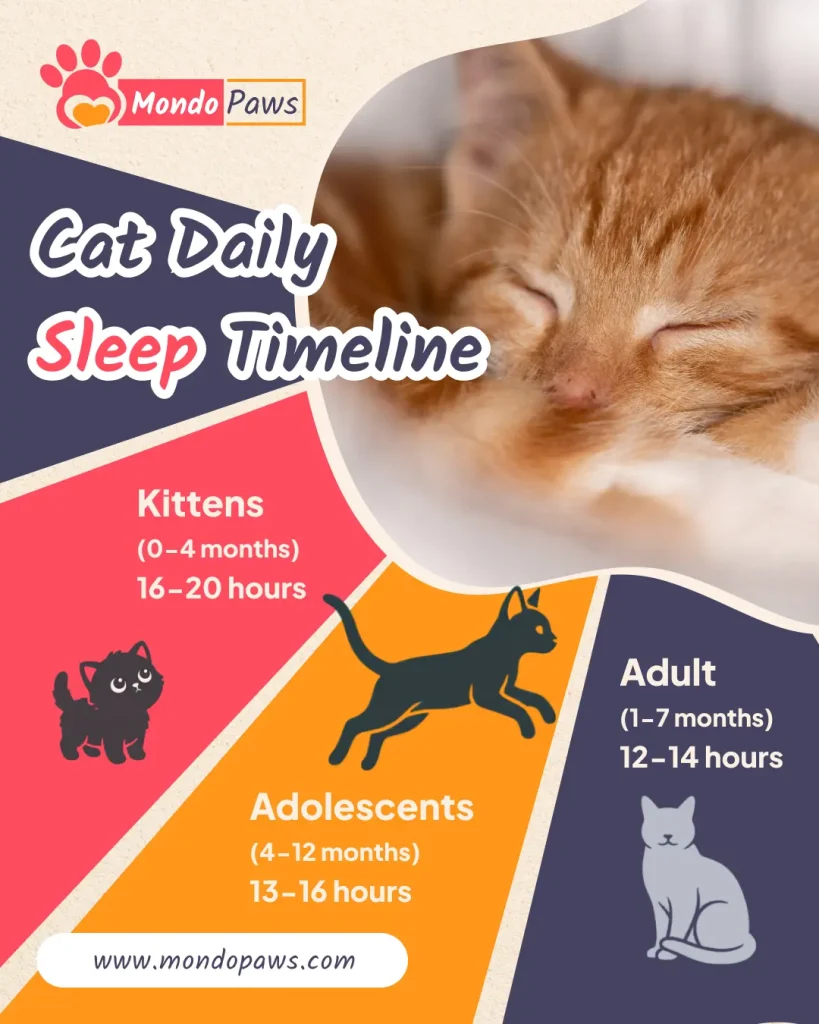
How many hours should your cat actually be sleeping each day? Most healthy adult cats sleep 12 to 16 hours, kittens and seniors often sleep 16 to 20, and the exact number shifts with age, lifestyle, activity, and health. Because cats are masters at hiding illness, a clear picture of what is normal for your cat makes it much easier to notice when sleep changes in a way that matters.
12–16 Hrs
Typical daily sleep for a healthy adult cat
16–20 Hrs
Typical daily sleep for growing kittens
14–20 Hrs
Common range for senior and geriatric cats
60–70%
Share of the day an average adult cat spends asleep
~25%
Rough share of cat sleep that is deep sleep, the rest is light dozing
Dawn & Dusk
When cats are naturally most active (crepuscular)
Whether you have a new kitten, an aging companion, or a cat who suddenly seems to nap more than usual, precision helps. Our interactive Cat Sleep Calculator below estimates a daily sleep range based on age, lifestyle, activity, and special situations, then compares it with how much your cat is actually sleeping.
Interactive Cat Sleep Calculator
Choose your cat’s life stage, lifestyle, activity level, and any special situation to see an expected sleep range in real time. Optionally enter how many hours your cat actually sleeps to compare.
How Many Hours Do Cats Sleep by Age?
Cat sleep is usually described in ranges rather than exact numbers, as noted in feline care resources such as International Cat Care. The chart below shows typical daily sleep for a healthy cat at each life stage, with the matching awake time. Use it as a reference point, then use the calculator above to adjust for your own cat.
| Life Stage | Age | Typical Daily Sleep | Approx. Awake Time | Notes |
|---|---|---|---|---|
| Newborn | 0 – 8 weeks | ~19 – 22 hrs | 2 – 5 hrs | Wakes mainly to nurse and needs warmth. |
| Kitten | 2 – 6 months | 16 – 20 hrs | 4 – 8 hrs | Short bursts of play between long naps. |
| Junior | 6 – 12 months | 13 – 17 hrs | 7 – 11 hrs | Energy peaks while sleep patterns settle. |
| Adult | 1 – 6 years | 12 – 16 hrs | 8 – 12 hrs | Most active around dawn and dusk. |
| Mature | 7 – 10 years | 13 – 17 hrs | 7 – 11 hrs | May start resting a little more. |
| Senior | 11 – 14 years | 14 – 18 hrs | 6 – 10 hrs | Watch mobility, appetite, and weight. |
| Geriatric | 15+ years | 16 – 20 hrs | 4 – 8 hrs | Regular vet check-ups matter most here. |
Clinical Note: These ranges are general guidelines, not strict rules. The most useful signal is a change from your own cat's normal pattern. Resources such as the Merck Veterinary Manual emphasize that sudden behavior changes, including sleeping much more or much less, are a common early sign of illness in cats.
Why Do Cats Sleep So Much?
Cats are built as ambush predators. In the wild, hunting means short, intense bursts of effort followed by rest, so their bodies are designed to conserve energy between hunts. Several factors explain all that sleeping:
Energy Conservation
Sprinting, pouncing, and climbing are energy-expensive. Long rests recharge cats for the next burst of activity.
Light Sleep Readiness
Most cat sleep is light dozing, which lets a cat wake instantly at a sound. Only a smaller share is deep sleep.
Crepuscular Rhythm
Cats are naturally most active at dawn and dusk, when prey is active, and they nap through much of the rest of the day.
Indoor cats can add boredom to the mix. With no hunting to do, some nap simply because there is little else going on, which is why play and enrichment matter.
How Long Do Cats Sleep at Night?
Cats do not sleep in one long human-style block. Their sleep comes in many short cycles spread across the 24 hours, so a cat may rest for several hours overnight but wake in bursts, often with a surge of activity around dawn. The table shows a typical pattern for a healthy indoor adult cat.
| Time of Day | Typical Behavior | What Helps |
|---|---|---|
| Early Morning (dawn) | Active burst, wants food and attention | A scheduled breakfast so your cat doesn't learn to wake you. |
| Midday | Long naps, mostly light dozing | Sunny, quiet resting spots and perches. |
| Late Afternoon / Dusk | Second active burst, playful and alert | An interactive play session before dinner. |
| Evening | Settling down after play and a meal | Play, then feed, to mimic a hunt-eat-sleep cycle. |
| Overnight | Several hours of rest broken into stretches | A comfortable bed and a calm, dark room. |
Sleep Needs by Life Stage and Lifestyle
A cat's sleep shifts with growth, aging, environment, and life events.
Kittens
Highest Sleep Needs. Growth and brain development use enormous energy, so kittens sleep 16 to 20 hours and often drop off mid-play.
Healthy Adults
Standard Baseline. 12 to 16 hours is typical, mostly light dozing split across the day and night.
Senior Cats
Watch More Closely. Sleep tends to rise with age, but pain, arthritis, and illness can also look like "just sleeping more."
Indoor Cats
More Napping Likely. Less to explore and hunt can mean more sleep, so play and puzzle feeders help keep a healthy balance.
Outdoor Cats
Often a Bit Less. Roaming, patrolling, and hunting fill more of the day, though they often catch up with long naps at home.
Pregnant & Nursing
More Rest. Pregnancy and nursing are demanding, so queens usually rest more. Give them a quiet, warm, low-traffic spot.
Sleep Changes in Special Health Situations
Changes in sleep are one of the most common early signs that something is wrong. Cat owners who also track hydration may find our Cat Water Intake Calculator useful alongside this one.
| Situation | Typical Effect on Sleep | Key Guidance |
|---|---|---|
| Pain / Arthritis | More resting, less jumping and play | A cat that stops jumping onto favorite spots may be hurting, so mention it to your vet. |
| Illness or Fever | Often increases, with low energy | Sleeping more with poor appetite, hiding, or vomiting needs prompt veterinary attention. |
| Hyperthyroidism | Restlessness, less settled sleep | Weight loss despite a good appetite, plus restlessness or extra thirst, should prompt a vet visit. |
| Cognitive Decline (senior cats) | Disrupted sleep-wake cycle | Night-time wandering and yowling are common signs, so ask your vet about support options. |
| Stress / Anxiety | Either more hiding and sleeping, or poor sleep | Look for triggers such as moves, new pets, or noise, and provide quiet retreat spots. |
| Obesity | More sleeping, less activity | Extra weight and low activity feed each other, so talk to your vet about a safe plan. |
| Post-Surgery | Increases while healing | Provide a quiet space and follow your vet's recovery instructions. |
| Hot Weather | More resting in cool spots | Make sure cool shade and fresh water are always available. |
Cat Breed Sleep Tendencies Reference Table
Breed has less influence on sleep than age and lifestyle, and detailed breed-by-breed sleep research is limited. The table below lists 20 popular cat breeds with their general energy level, to show where a cat may land within the typical adult range. Individual personality varies widely within every breed.
| Breed | General Energy Level | Likely Place in Typical Range | Notes |
|---|---|---|---|
| Domestic Shorthair | Moderate | Middle | Highly variable; follows the standard baseline. |
| Ragdoll | Low to moderate | Middle to higher end | Calm, relaxed breed that enjoys lounging. |
| Persian | Low | Higher end | Laid-back; indoor life tends to suit it. |
| Exotic Shorthair | Low to moderate | Middle to higher end | Quiet and easygoing; similar to the Persian. |
| British Shorthair | Low to moderate | Middle to higher end | Easygoing; watch weight if very sedentary. |
| Maine Coon | Moderate | Middle | Playful but gentle; large size means large naps. |
| Birman | Low to moderate | Middle to higher end | Sweet-natured and calm. |
| Norwegian Forest Cat | Moderate | Middle | Enjoys climbing and exploring. |
| Scottish Fold | Low to moderate | Middle | Mobility changes may show up as less jumping, so mention these to your vet. |
| American Shorthair | Moderate | Middle | Adaptable and steady. |
| Russian Blue | Moderate | Middle | Reserved with strangers, content with routine. |
| Munchkin | Moderate | Middle | Playful despite short legs. |
| Sphynx | High | Lower to middle | Very social; often seeks warm spots and curls up in them. |
| Devon Rex | High | Lower to middle | Energetic and people-oriented. |
| Siamese | High | Lower to middle | Vocal and active; thrives on interaction. |
| Oriental Shorthair | High | Lower to middle | Social and playful; dislikes being alone. |
| Burmese | Moderate to high | Lower to middle | Playful and people-loving. |
| Abyssinian | Very high | Lower end | Curious and athletic; needs lots of stimulation. |
| Bengal | Very high | Lower end | Needs lots of play and climbing; bored Bengals can become destructive. |
| Savannah | Very high | Lower end | Very active and athletic; needs space and enrichment. |
How to Track Your Cat's Sleep
Because cats nap in short, scattered stretches, an exact number is hard to get. A simple three-day average gives a reliable enough picture to compare with the calculator:
1. Pick Check-In Times:
Every 1 to 2 hours during the day, note whether your cat is asleep, resting awake, or active. A phone note or a pet-camera clip works well.
2. Count Dozing Too:
Include light dozing with eyes closed or half-closed, since most cat sleep is light.
3. Estimate the Night:
If you sleep through the night, a camera or a quick glance when you wake can show roughly how long your cat rested versus roamed.
4. Average Over 3 Days:
Add up the sleeping time for each day and average them. Single days can be misleading because weather, visitors, and routines all shift sleep.
5. Compare With Their Normal:
Enter the average in the calculator above, and pay most attention to changes from your own cat's usual pattern.
Signs You Need a Vet
Both sleeping far more and sleeping far less than usual can signal an underlying problem. These three signs, especially in combination, warrant a same-week or same-day vet visit depending on severity:
Sleeping Much More + Lethargy
A sudden jump in sleep with low energy, hiding, reduced appetite, or not eating for 24 hours needs prompt veterinary attention.
Restless or Night Wandering
Pacing, loud night-time yowling, or an inability to settle, especially in older cats, can point to pain, hyperthyroidism, or cognitive changes.
Fast or Labored Breathing
A resting or sleeping cat breathing consistently faster than about 30 breaths per minute, or breathing with effort or an open mouth, warrants an urgent vet visit.
A cat that cannot be roused, or collapses or seems unresponsive, is an emergency. Seek veterinary care immediately.
A Daily Routine for Healthier Cat Sleep
Because cats are creatures of habit, a predictable routine helps them settle into steadier sleep:
Morning:
Feed breakfast at a consistent time and offer a short play session to burn off the dawn energy burst.
Daytime:
Provide cozy resting spots, a sunny window perch, and quiet corners where your cat won't be disturbed.
Early Evening:
Run an interactive play session with a wand or toy, so your cat can "hunt," then follow it with a meal.
Bedtime:
Keep the room calm and dim, and offer a comfortable bed. If night-time waking is a problem, talk to your vet before assuming it is just habit, especially in senior cats.
Frequently Asked Questions
Healthy adult cats typically sleep 12 to 16 hours a day, with an average of around 15 hours. Kittens and senior cats often sleep more, sometimes up to 18 to 20 hours.
Kittens usually sleep 16 to 20 hours a day because they use huge amounts of energy for growth. Newborn kittens sleep even more, waking mainly to nurse.
Cats are predators descended from animals that hunt in short, intense bursts, so they conserve energy by resting between hunts. Most of their sleep is light dozing, which lets them wake quickly, and they are naturally most active around dawn and dusk.
Some increase in sleep is normal as cats age, but a sudden jump, along with reduced appetite, weight loss, hiding, or difficulty jumping, can signal pain, illness, or other health problems and is worth a vet visit.
Cats do not sleep in one long block. Many rest for several hours overnight but wake in bursts, and they tend to be most active around dawn and dusk. Play and a meal in the evening can help shift more sleep into the night.
Behind the Research: How We Built This Cat Sleep Calculator & Guide
At Mondo Paws, our mission is to empower pet owners with scientifically accurate, veterinary-reviewed tools. To create this calculator and feline sleep guide:
- Applied Standard Sleep Ranges: Daily sleep estimates start from widely cited ranges by life stage (about 12 to 16 hours for adults and 16 to 20 hours for kittens), with small adjustments for lifestyle, activity, and special situations. These are general guidelines, not clinical measurements.
- Cross-Referenced Feline Care Literature: Sleep patterns, behavior changes, and warning signs were checked against resources from International Cat Care, the Merck Veterinary Manual, and the American Association of Feline Practitioners.
- Compiled Breed Energy Overview: Summarized general energy levels for 20 recognized cat breeds to show where a cat may fall within the typical range, noting that individual personality matters more than breed.
Final Thoughts
Knowing how much your cat should sleep makes it easier to tell cozy normal napping from a change that deserves attention. Use our Cat Sleep Calculator to set a baseline, then keep an eye on energy, appetite, mobility, and night-time behavior as part of your routine.
Remember that every cat is different. If you notice a sudden, unexplained change in sleep, fast breathing at rest, night-time restlessness, or any sign of pain or illness, contact your veterinarian rather than waiting to see if it resolves on its own.