Table of Contents
Cat Weight Calculator · Is Your Cat at a Healthy Weight?
How much should your cat weigh? Most healthy adult domestic cats weigh about 2.7 to 5.4 kg (6 to 12 lb), females are usually lighter than males, and large breeds such as the Maine Coon can reach 6 to 11 kg. A cat weight calculator compares your cat’s weight with the typical range for its breed, sex, and age, estimates how big a kitten will get, and checks body fat with a cat BMI formula, in kg or lb.
2.5–11 kg
Range of healthy adult weights across 25 popular breeds
~50%
Share of adult weight many kittens reach by about 16 weeks
12–18 Mo
When most cats reach adult weight, with large breeds slower
4–5 of 9
Ideal body condition score on the 9-point scale
10–20%
Above ideal weight is when a cat is considered overweight
Feel Ribs
You should easily feel the ribs under a thin layer of fat
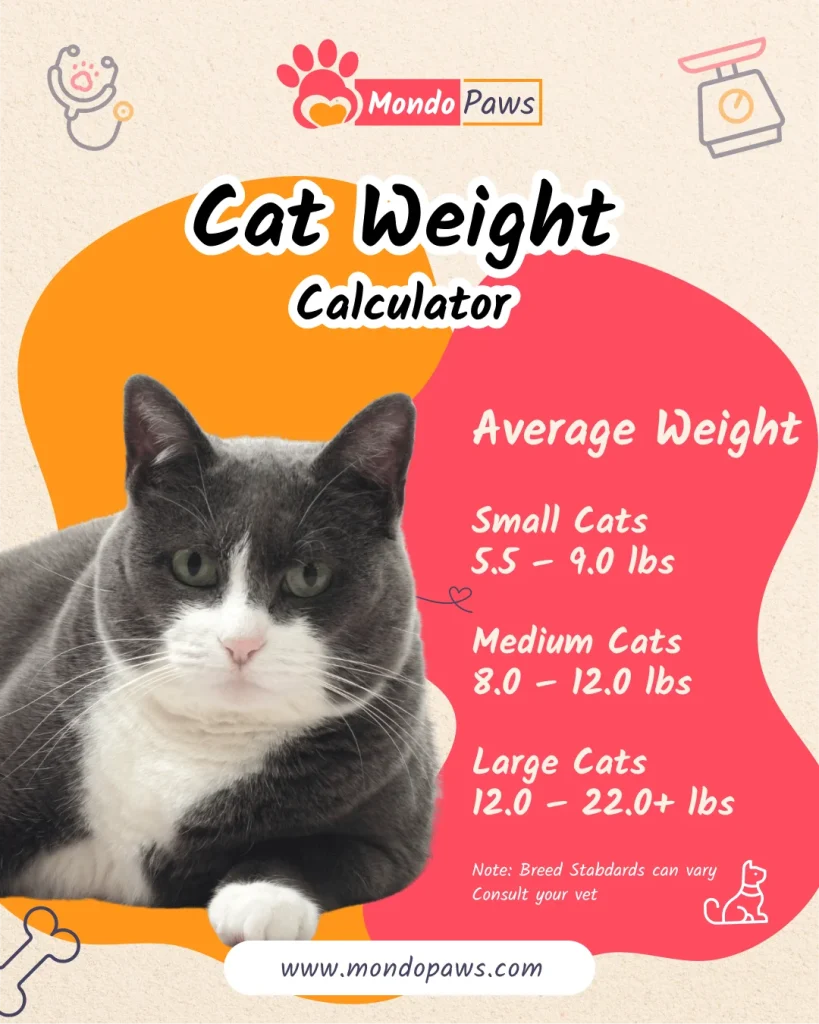
Whether you are checking an adult cat, tracking a growing kitten, or wondering how big your new kitten will get, one number is rarely enough. Our interactive Cat Weight Calculator below has three tools in one: a healthy weight check by breed, sex, and age, a kitten adult weight calculator, and a cat BMI calculator. Use it in kg or lb.
Interactive Cat Weight Calculator (Kitten and Adult)
Pick a tool, enter your cat’s details, and switch between metric (kg, cm) and imperial (lb, in) any time.
Cat Weight Chart by Age: Male and Female (kg and lb)
Kittens grow fastest in their first six months, then slow down as they approach adult size. A simple rule of thumb is that a healthy kitten gains roughly 100 g (about 3.5 oz) a week, or about 1 lb a month, for the first six months. The chart below shows typical ranges for an average-sized domestic cat, and males run heavier than females. Large breeds such as the Maine Coon grow slower and end up bigger, so use the calculator above for your breed.
| Age | Male Weight | Female Weight |
|---|---|---|
| 4 Weeks | 0.3 – 0.6 kg (0.7 – 1.3 lb) | 0.3 – 0.6 kg (0.7 – 1.3 lb) |
| 2 Months | 0.8 – 1.1 kg (1.8 – 2.4 lb) | 0.7 – 0.9 kg (1.5 – 2.0 lb) |
| 3 Months | 1.4 – 1.9 kg (3.1 – 4.2 lb) | 1.1 – 1.5 kg (2.4 – 3.3 lb) |
| 4 Months | 1.9 – 2.6 kg (4.2 – 5.7 lb) | 1.5 – 2.1 kg (3.3 – 4.6 lb) |
| 5 Months | 2.3 – 3.2 kg (5.1 – 7.1 lb) | 1.9 – 2.5 kg (4.2 – 5.5 lb) |
| 6 Months | 2.8 – 3.7 kg (6.2 – 8.2 lb) | 2.2 – 3.0 kg (4.9 – 6.6 lb) |
| 9 Months | 3.4 – 4.6 kg (7.5 – 10.1 lb) | 2.7 – 3.6 kg (6.0 – 7.9 lb) |
| 12 Months | 3.7 – 5.0 kg (8.2 – 11.0 lb) | 2.9 – 4.0 kg (6.4 – 8.8 lb) |
| Adult (1.5 Years+) | 3.6 – 5.4 kg (7.9 – 11.9 lb) | 2.7 – 4.5 kg (6.0 – 9.9 lb) |
Clinical Note: These are estimates built from typical growth patterns, not strict rules. Steady gain matters more than any single number, and a kitten that stops gaining or loses weight should be seen by a vet. Under 4 weeks, weight estimates are unreliable, so ask your vet for guidance.
How Big Will My Cat Get? Kitten Adult Weight Calculator
There is no way to know a kitten's exact adult weight, but you can get a useful estimate. Many kittens reach about half their adult weight by around 16 weeks (4 months), and most finish growing between 12 and 18 months. The second tab of the calculator above uses your kitten's age and current weight to predict a likely adult weight range, then compares it with the typical range for the breed.
| Method | How It Works | How Reliable |
|---|---|---|
| The 16-Week Rule | Double your kitten's weight at about 16 weeks, since many kittens are near half their adult weight by then. | A quick rough guide. Example: 2.2 kg at 16 weeks points to about 4.4 kg (9.7 lb). |
| Growth Curve (Calculator) | Divide the current weight by the share of adult weight typical at that age, for example about 72% at 6 months. | Better than a single rule, but best from about 12 weeks onward. |
| Breed Range | Compare the prediction with the typical range for the breed and sex. | Helpful for purebreds. Mixed-breed kittens vary a lot. |
| Vet Growth Chart | Your vet plots regular weigh-ins on a growth chart to spot trends. | The most reliable option, especially if growth looks unusual. |
Genetics and Breed
Parents, breed, and sex have the biggest influence on adult size. If you know the parents' sizes, they are a good clue.
Slow-Maturing Breeds
Maine Coons, Ragdolls, Norwegian Forest Cats, Siberians, and British Shorthairs keep filling out until about 3 years, so early estimates run low.
Feeding and Neutering
Overfeeding can push a kitten above its natural size, and weight gain often speeds up after neutering. Check portions with our Cat Food Calculator.
Cat Healthy Weight by Breed (kg and lb)
The table below lists typical healthy adult weights for 25 popular cat breeds, split by male and female. These are general breed ranges, and individual cats vary with frame size, muscle, and age, so use them as a guide alongside body condition.
| Breed | Male Weight | Female Weight |
|---|---|---|
| Domestic Shorthair | 3.6 – 5.4 kg (7.9 – 11.9 lb) | 2.7 – 4.5 kg (6.0 – 9.9 lb) |
| Maine Coon | 6 – 11 kg (13.2 – 24.3 lb) | 4 – 6 kg (8.8 – 13.2 lb) |
| Siamese | 4 – 6 kg (8.8 – 13.2 lb) | 3 – 5 kg (6.6 – 11.0 lb) |
| Persian | 4 – 6 kg (8.8 – 13.2 lb) | 3 – 5 kg (6.6 – 11.0 lb) |
| Bengal | 5 – 7 kg (11.0 – 15.4 lb) | 3.5 – 5.5 kg (7.7 – 12.1 lb) |
| Ragdoll | 6 – 9 kg (13.2 – 19.8 lb) | 4 – 6 kg (8.8 – 13.2 lb) |
| British Shorthair | 5 – 8 kg (11.0 – 17.6 lb) | 4 – 6 kg (8.8 – 13.2 lb) |
| Sphynx | 3.5 – 5.5 kg (7.7 – 12.1 lb) | 3 – 4.5 kg (6.6 – 9.9 lb) |
| Abyssinian | 3 – 5 kg (6.6 – 11.0 lb) | 2.5 – 4 kg (5.5 – 8.8 lb) |
| Scottish Fold | 4 – 6 kg (8.8 – 13.2 lb) | 3 – 5 kg (6.6 – 11.0 lb) |
| Russian Blue | 4.5 – 6 kg (9.9 – 13.2 lb) | 3 – 4.5 kg (6.6 – 9.9 lb) |
| Norwegian Forest Cat | 5 – 9 kg (11.0 – 19.8 lb) | 4 – 6 kg (8.8 – 13.2 lb) |
| Birman | 4 – 6 kg (8.8 – 13.2 lb) | 3 – 5 kg (6.6 – 11.0 lb) |
| Oriental Shorthair | 3 – 5 kg (6.6 – 11.0 lb) | 2.5 – 4 kg (5.5 – 8.8 lb) |
| Himalayan | 4 – 6 kg (8.8 – 13.2 lb) | 3 – 5 kg (6.6 – 11.0 lb) |
| Turkish Angora | 3.5 – 5 kg (7.7 – 11.0 lb) | 2.5 – 4 kg (5.5 – 8.8 lb) |
| American Shorthair | 4 – 6 kg (8.8 – 13.2 lb) | 3 – 5 kg (6.6 – 11.0 lb) |
| Devon Rex | 3 – 4 kg (6.6 – 8.8 lb) | 2.5 – 3.5 kg (5.5 – 7.7 lb) |
| Cornish Rex | 3 – 4.5 kg (6.6 – 9.9 lb) | 2.5 – 3.5 kg (5.5 – 7.7 lb) |
| Burmese | 4 – 6 kg (8.8 – 13.2 lb) | 3 – 5 kg (6.6 – 11.0 lb) |
| Tonkinese | 3 – 5 kg (6.6 – 11.0 lb) | 2.5 – 4 kg (5.5 – 8.8 lb) |
| Siberian | 5 – 8 kg (11.0 – 17.6 lb) | 3.5 – 5.5 kg (7.7 – 12.1 lb) |
| Chartreux | 4 – 7 kg (8.8 – 15.4 lb) | 3 – 5 kg (6.6 – 11.0 lb) |
| Exotic Shorthair | 4 – 6 kg (8.8 – 13.2 lb) | 3 – 5 kg (6.6 – 11.0 lb) |
| Somali | 3.5 – 5 kg (7.7 – 11.0 lb) | 3 – 4 kg (6.6 – 8.8 lb) |
Large-framed cats can sit at the top of their breed range and still be a healthy weight, while a small-framed cat at the same number may be carrying extra fat. That is why body shape, covered next, matters as much as the scale.
Is My Cat Overweight? Body Condition Score and Cat BMI
A number on the scale does not show how much of your cat is fat and how much is muscle or frame. Vets use a body condition score (BCS) alongside weight. On the common 9-point scale, 1 is very thin, 4 to 5 is ideal, and 9 is severely obese, and cats are generally considered overweight when they are 10 to 20 percent above their ideal weight. You can score your cat at home by looking and feeling.
1. Feel the Ribs
At an ideal weight, you can easily feel each rib under a thin layer of fat, a bit like the knuckles of a flat hand.
2. Look From Above
A cat at a healthy weight has a visible waist behind the ribs, giving a slight hourglass shape.
3. Look From the Side
The belly should tuck up behind the rib cage. A belly that hangs or sags suggests extra fat, although some cats have a loose skin pouch.
| Body Condition Score (9-Point) | Category | What You See and Feel |
|---|---|---|
| 1 – 3 | Underweight | Ribs, spine, and hip bones are easy to see or feel with little or no fat cover, and the waist is very pronounced. |
| 4 – 5 | Ideal | Ribs are easy to feel under a thin fat layer, the waist is visible from above, and the belly tucks up. |
| 6 – 9 | Overweight to Obese | Ribs get harder to feel under fat, the waist fades or disappears, and the belly rounds out or hangs. |
Cat BMI Calculator: How the Formula Works
The third tab of the calculator above estimates a cat's feline body mass index (FBMI), which is not the same as human BMI. Instead of weight and height, it uses the rib cage circumference (at the 9th rib) and the lower back leg length (knee to ankle), both in centimeters, to estimate body fat. The formula is:
FBMI = ((rib cage ÷ 0.70622) − leg length) ÷ 0.9156 − leg length
| Feline BMI (Approx.) | Screening Band | Next Step |
|---|---|---|
| Under 15 | Lean, possibly underweight | Check ribs, spine, and hips, and see a vet if your cat looks thin. |
| 15 – 29 | Healthy range | Confirm with a body condition score and keep weighing regularly. |
| 30 – 39 | Overweight | Ask your vet about a gradual plan, with portion control and play. |
| 40 and Over | Obese | Book a vet visit for a safe weight-loss plan and a health check. |
Treat cat BMI as a screening estimate. Chest movement and uneven measuring make it easy to be a little off, and bands differ slightly between sources, so use it alongside the body condition score. One study of indoor neutered cats also found that cats scoring 5 averaged about 32 percent body fat, so some researchers suggest that a score of 4 may be a better target for inactive indoor cats. Your vet can advise what is best for yours.
What to Do If Your Cat Is Overweight or Underweight
Extra weight raises the risk of problems such as diabetes and joint trouble, while unexplained thinness can point to illness. Either way, the safest first step is a vet check before changing food.
| Situation | Common Contributors | What to Do |
|---|---|---|
| Overweight or Obese | Too many calories or treats, free feeding, low activity, and neutering. | Ask your vet for a gradual plan. Measure portions (see our Cat Food Calculator), cut treats, and add short play sessions. Never crash diet, because rapid weight loss can seriously harm a cat's liver. |
| Underweight | Dental pain, parasites, stress, or medical conditions such as thyroid, kidney, or digestive disease. | See your vet to find the cause first. Then follow their feeding plan, and track weight weekly. |
| Kitten Gaining Slowly | Worms, too little food, illness, or competition from littermates. | Weigh weekly and see your vet if gain stalls or weight drops. |
| Kitten Gaining Fast | Overfeeding or free feeding. | Check portions for age and weight, and ask your vet about the best food and amounts. |
| Senior Cat Losing Weight | Dental, kidney, thyroid, or other age-related conditions. | Unexplained loss in an older cat deserves a vet check even if appetite seems fine. |
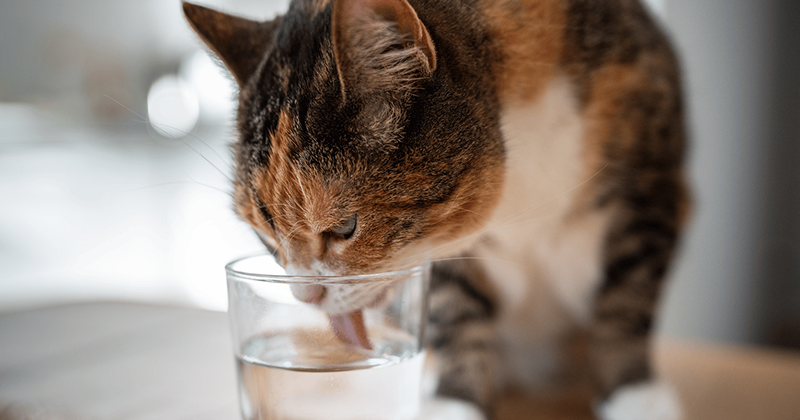
Water matters for weight and health too, so check our Cat Water Intake Calculator to make sure your cat is drinking enough.
How to Weigh Your Cat at Home
Regular weigh-ins catch changes early, and the trend matters more than any single reading. For kittens and small cats, a kitchen or baby scale gives the most accurate result. For bigger cats, weigh yourself holding your cat, then subtract your own weight. Weigh at the same time of day, ideally before a meal, and write the number down.
Kittens: Weekly
Steady weekly gain is the best sign of healthy growth, so weigh at the same time each week.
Adults: Monthly
A monthly check is enough to spot slow creep or loss before it becomes a problem.
Seniors: Monthly, Watch Closely
Older cats can lose weight slowly, and loss is often a first sign of illness, so track it carefully.
Signs You Need a Vet
Weight changes can be the first visible sign of a health problem. Contact your vet if you notice any of these:
Sudden Weight Change
Noticeable loss or gain over a few weeks without a change in food needs a vet check, even if your cat seems well.
Kitten Not Gaining
A kitten that loses weight or stops gaining while still growing should be seen promptly.
Appetite or Thirst Changes
Eating a lot but losing weight, drinking much more than usual, or a cat that won't eat for 24 hours needs prompt veterinary attention.
Frequently Asked Questions
Most healthy adult domestic cats weigh about 2.7 to 5.4 kg (6 to 12 lb), with females usually lighter than males. Large breeds such as the Maine Coon can reach 6 to 11 kg (13 to 24 lb) for males, while small breeds such as the Devon Rex may top out near 3 to 4 kg. Body shape matters as much as the number, so check that you can feel the ribs and see a waist.
Many kittens reach about half their adult weight by roughly 16 weeks, so doubling the weight at 16 weeks gives a rough estimate of adult size. Most cats finish growing between 12 and 18 months, while slow-maturing breeds such as the Maine Coon can keep filling out until about three years. Use the kitten adult weight calculator above for an estimate based on age and current weight.
Divide your kitten's current weight by the share of adult weight cats usually reach at that age, for example about 50 percent at 16 weeks or about 70 to 75 percent at 6 months. For a 2.2 kg kitten at 16 weeks, that points to roughly 4.4 kg as an adult. Treat the result as a range, because genetics, breed, and feeding all change the outcome.
A healthy adult male domestic shorthair usually weighs about 3.6 to 5.4 kg (8 to 12 lb). Males of large breeds run heavier, with Maine Coon males commonly 6 to 11 kg (13 to 24 lb).
A healthy adult female domestic shorthair usually weighs about 2.7 to 4.5 kg (6 to 10 lb). Female cats are generally lighter than males of the same breed.
Check that you can feel the ribs easily under a thin layer of fat, see a waist from above, and see the belly tuck up behind the ribs from the side. Cats are generally considered overweight when they are 10 to 20 percent above their ideal weight, and a vet can confirm a body condition score. The weight check and cat BMI tabs in the calculator are screening tools, not diagnoses.
Feline BMI estimates body fat from the chest (rib cage) circumference and the lower back leg length instead of weight alone. It is a helpful screening estimate, but measurements are easy to get wrong, so it works best alongside a body condition score and a vet's opinion.
Weigh kittens about once a week, since steady gain matters, and adult and senior cats about once a month. Sudden changes in either direction are worth a vet visit.
One kilogram is about 2.2 pounds, so a 4.5 kg cat weighs about 9.9 lb. Use the Metric/Imperial switch on the calculator to enter and see weights in either unit.
Behind the Research: How We Built This Cat Weight Calculator & Guide
At Mondo Paws, our mission is to give pet owners clear, evidence-based tools. To create this calculator and weight guide:
- Built the Kitten Growth Curve From Published Charts: The adult weight predictor uses widely published kitten growth patterns, including about half of adult weight by roughly 16 weeks and most cats reaching adult size by 12 to 18 months, with a slower curve for slow-maturing breeds. Kittens vary, so results are estimates, not promises.
- Used General Breed Weight Ranges: Healthy adult ranges for 25 popular breeds come from general breed standards and are split by male and female. Individual cats vary with frame, muscle, and age.
- Cross-Referenced Body Condition Resources: Body condition guidance was compared with veterinary resources such as VCA Animal Hospitals and Royal Canin, alongside a 2011 study of body condition scoring in indoor cats and the American Veterinary Medical Association.
- Applied the Published Feline BMI Formula: The cat BMI tab uses the published equation based on rib cage circumference and lower back leg length, with screening bands that differ slightly between sources.
Final Thoughts
A cat's weight is one of the most useful health indicators you can track. Use our Cat Weight Calculator to see whether your cat is in a healthy range, to estimate how big your kitten will get, and to screen body fat with cat BMI, then pair the numbers with a quick look at the ribs and waist.
Remember that every cat is different. If your cat is losing or gaining weight without explanation, your kitten has stopped gaining, or the numbers worry you, talk to your veterinarian rather than waiting to see if it resolves on its own.