Table of Contents
How much exercise does your dog actually need? A Border Collie and a Bulldog can live in the same neighborhood and need completely different days. This free dog exercise calculator estimates a daily activity target from your dog’s age, breed energy group, size, weight, health, and the weather, then shows how to split it between walks, play, and mental work.
5 Levels
From low (1) to very high (5) daily exercise needs
30–120+ Min
Typical daily range for healthy adult dogs, depending on breed
2–3×/Day
Splitting activity into sessions is easier on most dogs than one long outing
5 Min/Month
Common puppy rule of thumb per session, up to twice a day
Mind + Body
Training, sniffing, and puzzle games tire a dog out too
No Two Alike
Age, health, weight, and weather all change the right amount
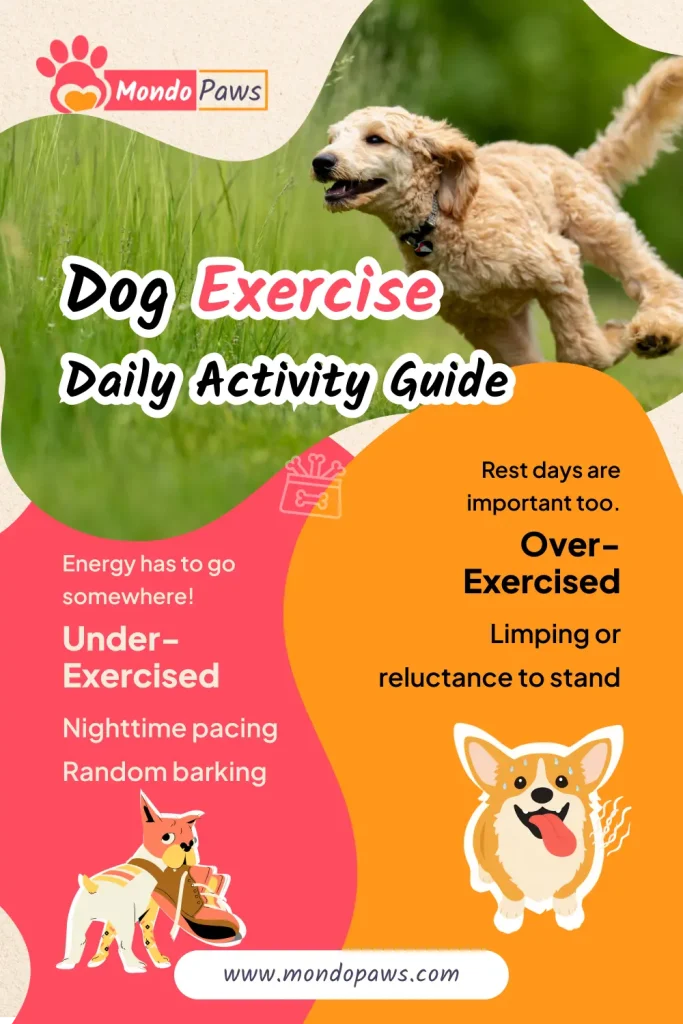
Whether you are wondering how much exercise a dog needs a day, planning around a new puppy, or adjusting for a senior dog who is slowing down, a clear starting point helps. Our interactive Dog Exercise Calculator below gives a daily range in minutes, suggests how to split it, and flags when a vet check should come first. Exercise also pairs closely with feeding and hydration, so try our Dog Calorie Calculator, Dog Weight Calculator, and Water Intake Calculator for Dogs alongside it.
Free Interactive Dog Exercise Calculator
Choose your dog’s age, breed energy group, size, weight, health, and the current weather to see a daily exercise range and a plan in real time.
How Much Exercise Does a Dog Need a Day? (By Age)
There is no single official number, so the ranges below are general guidelines drawn from common veterinary and kennel-club advice, such as that from the American Kennel Club. Age changes both how much a dog can handle and what kind of activity is safe. Use this as a starting point and let your dog’s energy, joints, and recovery guide the details.
| Life Stage | Typical Daily Activity | What Works Best | What to Avoid |
|---|---|---|---|
| Puppy (8 weeks to 6 months) | About 5 minutes of structured exercise per month of age, up to twice a day, plus free play and many naps. | Short walks, gentle play, socialization outings, and brief training games. | Forced running, long hikes, and repetitive jumping while joints are growing. |
| Adolescent (6 to 18 months) | Close to adult amounts for the breed, built up gradually. | Varied activity, training, and play that burns off teenage energy. | High-impact repetition in large and giant breeds until your vet confirms growth is complete. |
| Adult (1.5 to 7 years) | Roughly 30 minutes to 2 hours, depending on breed energy. | A mix of walks, active play, and mental work. | Sudden jumps in intensity, such as a long run after weeks of little activity. |
| Senior (8 to 10 years) | Often about three-quarters of adult amounts, in shorter, more frequent sessions. | Easy walks, sniffing games, and low-impact movement. | Hard stops, slippery floors, and long weekend-warrior outings. |
| Older Senior (11+ years) | Often around half of adult amounts, guided by comfort. | Short gentle walks, light puzzle games, and swimming if your vet agrees. | Pushing through stiffness, pain, or heavy panting. |
Clinical Note: The “5 minutes per month of age” puppy rule is a popular informal guideline, not a veterinary standard, and it does not include free play. Growth timing varies by breed and size, so ask your vet when it is safe to add running, jumping, and long hikes. As noted in the Merck Veterinary Manual, exercise needs also change with conditions affecting the heart, joints, and breathing, so a dog with a health problem needs a vet-guided plan.
Dog Exercise Levels Explained (Levels 1 to 5)
Breed purpose is the best single predictor of exercise needs. Dogs bred to herd, hunt, or pull all day carry that stamina into the living room, while dogs bred for companionship or guarding tend to be content with less. This informal 1 to 5 scale groups dogs by typical need so you can compare breeds and plan your week.
| Level | Label | Typical Daily Activity | Example Breeds | What It Looks Like |
|---|---|---|---|---|
| 1 | Low | 20 to 30 minutes | Pug, English Bulldog, Chihuahua, Maltese | Short, easy walks and a little play. Flat-faced dogs need extra heat caution. |
| 2 | Light | 30 to 45 minutes | Basset Hound, Boston Terrier, Greyhound, Shih Tzu | Two relaxed walks and some indoor play. |
| 3 | Moderate | 45 to 60 minutes | Beagle, Cocker Spaniel, Corgi, Rottweiler | Daily walks, active play, and light training. |
| 4 | High | 60 to 90 minutes | Labrador, Golden Retriever, Boxer, German Shepherd | Brisk walks or running, fetch, swimming, and regular mental work. |
| 5 | Very High | 90 to 120+ minutes | Border Collie, Siberian Husky, Belgian Malinois, Vizsla | Long outings plus a “job”: training, agility, or scent games. |
| Dog Type | How Exercise Needs Show Up | Example Breeds | Care Notes |
|---|---|---|---|
| Herding Dogs | High stamina and a strong need for mental work; can become destructive when bored. | Border Collie, Australian Shepherd, Australian Cattle Dog | Add training, agility, or herding-style games to physical exercise. |
| Sporting and Hunting Dogs | Built to run, retrieve, and swim for long periods. | Labrador, Golden Retriever, Vizsla, Weimaraner | Fetch, swimming, and off-leash running in safe areas. |
| Working and Sled Dogs | Endurance athletes that need serious daily outlets. | Siberian Husky, Alaskan Malamute, Belgian Malinois | Take extra care in heat, and use secure fencing or leashes. |
| Terriers | Short bursts of intense energy and strong prey drive. | Jack Russell Terrier, Miniature Schnauzer | Mix play and training, and expect digging if under-exercised. |
| Flat-Faced Breeds | Lower stamina and a higher risk of breathing trouble and overheating. | Pug, French Bulldog, English Bulldog, Boston Terrier | Short cool outings, a harness instead of a collar, and no hard exercise in the heat. |
| Giant and Large Companions | Moderate needs, with joints that take a lot of strain. | Great Dane, Saint Bernard, Newfoundland, Bernese Mountain Dog | Steady low-impact walks; avoid repetitive jumping and hard running. |
| Toy Companions | Small bodies tire quickly, but many are surprisingly spirited. | Chihuahua, Maltese, Yorkshire Terrier, Pomeranian | Short walks and indoor play; mind cold weather and slippery floors. |
Top 10 Dogs That Need the Most Exercise
These breeds sit at the top of the exercise scale, mostly because they were bred for hours of daily work. Ranges vary between sources and between individual dogs, so treat this as a general order rather than an exact list. For the full list, see the breed exercise table below.
| Rank | Breed | Typical Daily Exercise | Why They Need So Much |
|---|---|---|---|
| 1 | Border Collie | 120+ min | Herding stamina plus a sharp mind that needs daily jobs. |
| 2 | Belgian Malinois | 120+ min | Working-line drive that thrives on training and structured tasks. |
| 3 | Siberian Husky | 120+ min | Bred to run long distances; needs safe outlets and secure fencing. |
| 4 | Australian Cattle Dog | 90–120 min | Tireless herder that gets destructive when bored. |
| 5 | Vizsla | 90–120 min | Athletic hunting dog that stays close and needs lots of activity. |
| 6 | German Shorthaired Pointer | 90–120 min | High-drive sporting dog built for running and retrieving. |
| 7 | Weimaraner | 90–120 min | Powerful hunting breed with strong stamina. |
| 8 | Australian Shepherd | 90–120 min | Herding energy that needs both exercise and mental work. |
| 9 | Alaskan Malamute | 90–120 min | Strong sled-pulling heritage; do best with long, steady outings. |
| 10 | Jack Russell Terrier | 60–90 min | Small body, big drive; short bursts of intense play add up. |
Moderate-Energy Dogs (Level 3)
Moderate-energy dogs are the middle ground: they enjoy a good outing and a game of fetch, but they will happily settle at home afterward. These breeds suit owners who want an active companion without needing a marathon partner.
| Breed | Typical Daily Exercise | What to Expect |
|---|---|---|
| Beagle | About 60 min | Nose-driven; loves long sniff walks. Use a secure leash or fence. |
| Rottweiler | 45–60 min | Strong and sturdy; likes walks plus structured training. |
| Cocker Spaniel | 45–60 min | Happy to walk and play; enjoys scent games. |
| Shetland Sheepdog | 45–60 min | Herding brain that enjoys training as much as exercise. |
| Pembroke Welsh Corgi | 45–60 min | Surprisingly energetic; watch the long back and weight. |
| Shiba Inu | 45–60 min | Independent and agile; best on a secure leash. |
| Akita | 45–60 min | Steady walks suit them; can be reserved with other dogs. |
| Miniature Schnauzer | About 45 min | Alert and lively; enjoys walks and games. |
| Miniature Poodle | About 45 min | Smart and playful; thrives on walks plus training. |
Dogs That Need the Least Exercise
Low-energy breeds are happy with shorter, calmer days, but “low” is not “none.” Daily movement keeps weight, joints, and mood in check, and these breeds are often prone to gaining weight quickly. Flat-faced breeds in particular need short, cool outings rather than hard exercise, since breathing and overheating are real risks. Track portions with our Dog Calorie Calculator and check progress with the Dog Weight Calculator.
| Breed | Type | Exercise Level | Care Note |
|---|---|---|---|
| English Bulldog | Flat-faced | 1 | Short, cool walks only; avoid heat and hard exercise. |
| Pug | Flat-faced | 1 | Use a harness, keep it short, and watch for noisy or labored breathing. |
| French Bulldog | Flat-faced | 1 | Gentle play indoors and brief walks in cool weather. |
| Chihuahua | Toy | 1 | Short walks and indoor play; keep warm in cold weather. |
| Maltese | Toy | 1 | Short outings and indoor games are plenty. |
| Yorkshire Terrier | Toy | 1 | Spirited but small; short walks and play. |
| Basset Hound | Low energy | 2 | Slow sniff walks; protect the back and watch weight. |
| Saint Bernard | Giant | 2 | Easy, steady walks; avoid heat and hard running. |
| Greyhound | Sighthound | 2 | Short sprints in a secure area, then plenty of lounging. |
| Shih Tzu | Toy | 2 | Two short walks and indoor play. |
Exercising Your Dog in Hot and Cold Weather
Weather changes how long, how hard, and when you should exercise your dog. Heat is the most serious risk because dogs cool themselves mainly by panting, which works poorly in humid weather, for flat-faced breeds, and for overweight or thick-coated dogs. Move activity indoors rather than pushing through a hot day.
| Condition | What Changes | What Helps |
|---|---|---|
| Mild (5–25°C / 40–77°F) | Best conditions for most dogs and most activities. | Normal routine, split between morning and evening, with water available. |
| Cold (below 0°C / 32°F) | Small, short-coated, thin, young, and older dogs lose heat fast; ice and salt can hurt paws. | Shorter outings, a coat for vulnerable dogs, and a paw wipe after walks. Thick-coated breeds often love it. |
| Hot (27°C / 80°F or above) | Overheating risk rises, and pavement can burn paws. | Walk early or late, stay in shade, carry water, and test pavement with the back of your hand. |
| Very Hot (32°C / 90°F or above) | Serious heat illness risk, especially for flat-faced, overweight, thick-coated, and older dogs. | Keep outings to quick bathroom breaks and swap exercise for indoor games and puzzle feeders. |
| Rain and Humidity | Humidity makes cooling harder; wet ground raises slipping risks. | Choose cooler hours, keep sessions shorter, and dry your dog afterward. |
| Hydration Year-Round | Active dogs lose more water through panting. | Offer fresh water before and after activity. See our Water Intake Calculator for Dogs. |
Signs Your Dog Needs More Exercise and What to Do
Under-exercised dogs often show it through behavior before any physical change. The same behaviors can also come from medical problems, anxiety, or boredom that more walking will not fix, so use this table as a prompt to look closer, not as a diagnosis. Your vet can help rule out a health cause.
| Possible Sign | What You May Notice | Typical Next Step |
|---|---|---|
| Destructive Chewing or Digging | Shredded cushions, chewed shoes, or holes in the yard, often when left alone. | Add exercise and mental work before you leave, and rule out anxiety with your vet if it persists. |
| Excessive Barking or Whining | Frequent attention-seeking noise, especially in the evening. | Schedule play and training earlier in the day and add puzzle feeders. |
| Pacing and Restlessness | Unable to settle, circling, or waking you at night. | Build in an evening walk and calm wind-down time. Check with your vet if sudden. |
| Weight Gain | Thicker waist, harder-to-feel ribs, and slowing down. | Review portions with our Dog Calorie Calculator, check progress with the Dog Weight Calculator, and talk to your vet. |
| Hyperactive “Zoomies” and Mouthiness | Wild bursts indoors, nipping at ankles, or jumping on guests. | Offer structured outlets like fetch, training games, and sniff walks. |
| Attention-Seeking Behavior | Stealing items, nudging, and following you from room to room. | Give regular one-on-one activity and teach an “off switch” with calm rewards. |
| Depressed or Withdrawn Behavior | Low interest, sleeping more, and little response to play. | Not always about exercise. Mention it to your vet, since pain and illness can look similar. |
Dog Exercise Requirements by Breed (Most to Least)
Below is our reference table listing 47 popular dog breeds ordered from highest to lowest exercise needs, with energy group and a typical daily range for a healthy adult. These are general tendencies. Individual dogs, mixed breeds, age, health, weight, and weather all change real-world needs, so use the calculator above for a personalized estimate.
| Breed | Energy Group | Typical Daily Exercise | Notes |
|---|---|---|---|
| Border Collie | Very high | 120+ min | Needs mental work as much as miles. |
| Belgian Malinois | Very high | 120+ min | Thrives on structured training and tasks. |
| Siberian Husky | Very high | 120+ min | Secure fencing or leash is essential. |
| Australian Cattle Dog | Very high | 90–120 min | Gets destructive when bored. |
| Vizsla | Very high | 90–120 min | Athletic and people-focused. |
| German Shorthaired Pointer | Very high | 90–120 min | Loves running, retrieving, and swimming. |
| Weimaraner | Very high | 90–120 min | Strong, high-stamina hunting breed. |
| Australian Shepherd | Very high | 90–120 min | Needs a job as well as exercise. |
| Alaskan Malamute | Very high | 90–120 min | Do best in cool weather. |
| Jack Russell Terrier | High | 60–90 min | Short bursts of intense play. |
| Labrador Retriever | High | 60–90 min | Loves fetch and swimming; prone to weight gain. |
| Golden Retriever | High | 60–90 min | Friendly and eager; enjoys retrieving games. |
| English Springer Spaniel | High | 60–90 min | Bounces back fast and loves the outdoors. |
| Standard Poodle | High | 60–90 min | Athletic and smart; enjoys swimming and training. |
| German Shepherd | High | 60–90 min | Needs both exercise and training. |
| Boxer | High | 60–90 min | Playful; mind heat since the muzzle is short. |
| Doberman Pinscher | High | 60–90 min | Athletic and focused; likes structured activity. |
| Dalmatian | High | 60–90 min | Endurance runner that needs regular outlets. |
| Samoyed | High | 60–90 min | Cold-weather lover; careful in the heat. |
| Beagle | Moderate | About 60 min | Sniff walks satisfy their nose. |
| Rottweiler | Moderate | 45–60 min | Steady walks plus training; watch weight. |
| Cocker Spaniel | Moderate | 45–60 min | Enjoys scent games and moderate walks. |
| Shetland Sheepdog | Moderate | 45–60 min | Enjoys training and agility. |
| Pembroke Welsh Corgi | Moderate | 45–60 min | Watch the back and weight. |
| Shiba Inu | Moderate | 45–60 min | Agile and independent; keep on leash. |
| Akita | Moderate | 45–60 min | Steady walks; may be selective with other dogs. |
| Miniature Schnauzer | Moderate | About 45 min | Lively and alert. |
| Miniature Poodle | Moderate | About 45 min | Smart and playful. |
| Dachshund | Moderate | 30–45 min | Protect the long back; limit jumping and stairs. |
| Whippet | Moderate | 30–60 min | Short sprints, then lots of lounging. |
| Bernese Mountain Dog | Low-moderate | 30–60 min | Prefers cool weather; avoid joint strain. |
| Great Dane | Low-moderate | 30–60 min | Gentle, steady activity for large joints. |
| Cavalier King Charles Spaniel | Low-moderate | 30–60 min | Happy walking, but prone to weight gain. |
| Boston Terrier | Flat-faced | 30–45 min | Short outings; avoid heat. |
| Greyhound | Low | 30–45 min | Short sprints in a secure area. |
| Basset Hound | Low | 30–45 min | Slow sniff walks; protect the back. |
| Saint Bernard | Low | 30–45 min | Easy walks; avoid heat. |
| Chow Chow | Low | 30–45 min | Moderate walks and cool weather. |
| Pomeranian | Toy | About 30 min | Spirited but small. |
| Shih Tzu | Toy | About 30 min | Short walks plus play. |
| Bichon Frise | Toy | 30–40 min | Playful and sociable. |
| French Bulldog | Flat-faced | 20–30 min | Gentle play; avoid heat. |
| Pug | Flat-faced | 20–30 min | Use a harness; watch breathing. |
| English Bulldog | Flat-faced | 20–30 min | Short, cool walks only. |
| Yorkshire Terrier | Toy | 20–30 min | Short walks and indoor play. |
| Maltese | Toy | 20–30 min | Short outings are plenty. |
| Chihuahua | Toy | 20–30 min | Keep warm in cold weather. |
Best Ways to Exercise Your Dog
Variety keeps exercise interesting for your dog and spreads the load across different muscles and joints. Here are the most reliable options and how to do them well:
| Activity | Why It Helps | Tips |
|---|---|---|
| Leashed Walks | Low-risk, flexible, and good for every age and fitness level. | Let your dog sniff. Sniffing is mental exercise and slows the pace in a useful way. |
| Fetch and Chase Games | Burns energy quickly and strengthens your bond. | Use soft ground and vary the direction. Avoid endless repetition and hard turns for puppies, seniors, and sore dogs. |
| Swimming | Low-impact and easy on joints, which suits seniors, overweight dogs, and those with stiffness. | Introduce water gradually, supervise closely, and consider a dog life jacket. Rinse off chlorine or salt afterward. |
| Hiking | Varied terrain, new smells, and a steady cardio workout. | Build up distance gradually, carry water, and check paws and ticks afterward. |
| Jogging or Running | Great for fit, fully grown adult dogs of suitable breeds. | Start slowly, avoid hot pavement, and skip it for puppies, flat-faced breeds, and dogs with joint problems. |
| Agility and Obedience Games | Combines movement with thinking and builds confidence. | Keep jumps low for puppies and large breeds, and keep sessions short and positive. |
| Playdates and Dog Parks | Social play can be a terrific workout. | Choose dogs with similar size and play style, and make sure vaccines are current. Leave if play turns rough. |
| Tug of War | Good for strength and impulse control. | Keep it gentle and teach a “drop it” cue. Avoid pulling hard on puppies’ growing teeth and necks. |
Indoor and Mental Exercise Ideas for Dogs
Mental work is real exercise. Ten minutes of focused thinking can tire a dog more than a short walk, which makes these ideas useful on hot, icy, or rainy days, for recovering dogs, and for breeds that never seem to run out of steam. Use them to add to physical exercise, not to replace it entirely.
| Activity | Best For | Notes |
|---|---|---|
| Puzzle Feeders and Slow Feeders | Dogs who eat too fast or get bored easily | Turns meals into a short brain workout. Count the food toward daily calories. |
| Snuffle Mat | Sniffers, seniors, and anxious dogs | Scatter kibble into the fabric. Calming and low-impact. |
| Find-It Scent Games | Scent hounds and every curious nose | Hide treats around a room and let your dog search. Gradually make it harder. |
| Short Training Sessions | Smart breeds like Border Collies and Poodles | Practice cues or learn a new trick for five to ten minutes. Keep it fun. |
| Hide and Seek | Dogs who love people | Hide and call your dog. Rewards recall and encourages movement. |
| Indoor Obstacle Course | Energetic dogs on bad-weather days | Use cushions and low objects. Keep floors non-slip and heights low. |
| Flirt Pole | High-energy, healthy adult dogs | Short sessions on a soft surface. Avoid sharp turns and high jumps, and add rest breaks. |
| Rotating Toys | Dogs who ignore the same old toys | Swap toys every few days to keep them new. |
Signs You Need a Vet
Stop exercise and call your vet if your dog shows any of these signs. Heavy panting with drooling, weakness, vomiting, or collapse in warm weather can be heatstroke, which is an emergency that needs immediate veterinary care.
Overheating or Exhaustion
Heavy panting that does not settle, thick drooling, bright red gums, stumbling, vomiting, or collapse is an emergency. Move to shade and call a vet right away.
Limping or Stiffness
Limping, reluctance to jump, difficulty rising, or lagging behind on walks can point to injury, arthritis, or pain that needs an exam.
Coughing, Fainting, or Labored Breathing
Coughing, noisy breathing, blue or pale gums, or fainting during activity can signal heart, airway, or lung problems and should be checked promptly.
A Weekly Dog Exercise Routine
Consistency beats weekend marathons, which can leave an unfit dog sore or injured. Adjust the times using your dog’s range from the calculator above:
Start With a Steady Base:
Aim for a similar amount of activity every day rather than a big push once or twice a week. Build up new activities a few minutes at a time.
Mix It Up:
Rotate walks, play, swimming, and training across the week so different muscles and the brain get a turn. Add one new place or smell each week.
Include Mental Work Daily:
Add a puzzle feeder, a scent game, or a short training session on top of physical exercise, especially on bad-weather days.
Warm Up, Cool Down, and Rest:
Start with a few minutes of easy walking and finish the same way. Offer water and give active dogs at least one lighter day each week.
Watch and Adjust:
Notice how your dog behaves after exercise. A relaxed, content dog that recovers quickly is on track. Sore, stiff, or exhausted means scale back and mention it to your vet.
Frequently Asked Questions
Most healthy adult dogs need roughly 30 minutes to 2 hours of activity a day, depending on breed, age, size, and health. Low-energy and flat-faced breeds sit near the bottom of that range, while herding, sporting, and working breeds often need 90 minutes or more, including mental exercise. Use the calculator for a personalized estimate.
A common rule of thumb is about 5 minutes of structured exercise per month of age, up to twice a day, with free play and plenty of naps on top. It is an informal guideline, not a rule, and large and giant breeds should avoid forced running and repetitive jumping while they are growing. Your vet can give a plan that fits your puppy.
Yes. Too much or too intense exercise can cause sore muscles, joint injuries, heat illness, and exhaustion, especially in puppies, seniors, overweight dogs, and flat-faced breeds. Signs include heavy panting that does not settle, limping, lagging behind, vomiting, and reluctance to continue. Build up gradually and contact your vet if these signs appear.
For low-energy breeds and many seniors, a couple of walks a day can be enough. For active breeds, walking alone usually is not; they also need running or play plus mental work such as training, scent games, or puzzle feeders. A bored dog can show chewing, barking, or restlessness even after a walk.
Senior dogs usually still benefit from daily movement, but in shorter, gentler, more frequent sessions, such as two or three easy walks and low-impact activity like swimming if your vet agrees. Stiffness, slowing down, or reluctance to walk can signal arthritis or another problem, so mention it to your vet.
Exercise supports weight loss and muscle tone, but diet does most of the work. Overweight dogs should build up slowly with low-impact activity and a vet-approved feeding plan, using tools like our Dog Calorie Calculator and Dog Weight Calculator to track progress.
Behind the Research: How We Built This Dog Exercise Calculator & Guide
At Mondo Paws, our mission is to empower pet owners with scientifically accurate, veterinary-reviewed tools. To create this calculator and exercise guide:
- Built an Informal 1–5 Scale: There is no official clinical exercise standard for dogs, so the levels start from typical breed energy groups and adjust for age, size, body condition, mobility, and weather. Results are general estimates, not prescriptions or diagnoses.
- Cross-Referenced Veterinary and Breed Literature: Age-based activity, heat safety, and warning signs were checked against resources from the American Kennel Club, the Merck Veterinary Manual, and the American Veterinary Medical Association.
- Compiled Breed Exercise Overview: Summarized typical energy groups and general daily exercise ranges for 47 popular dog breeds, ordered from highest to lowest, noting that individual dogs, age, health, and weather can all shift real-world needs.
Final Thoughts
The right amount of exercise keeps a dog fit, calm, and mentally satisfied. Use our Dog Exercise Calculator to find a starting range, pair it with good nutrition and hydration using our Dog Calorie Calculator, Dog Weight Calculator, and Water Intake Calculator for Dogs, then adjust based on how your dog looks, feels, and recovers.
Remember that every dog is different. If your dog limps, struggles to breathe, coughs, faints, overheats, or seems unusually tired or reluctant to move, contact your veterinarian rather than waiting to see if it resolves on its own. Always follow your vet’s plan if your dog has a health condition or is recovering from an injury.