Table of Contents
Cats Alone-Time Calculator · How Long Is Too Long?
How long can your cat really be left alone? Cats have a reputation for being independent, but the real answer depends on age, health, temperament, and how well the home is set up. As a general guide, healthy adult cats cope with about 8 to 12 hours, such as a working day, kittens need much shorter stretches, and many sources advise that no cat should go more than about 24 hours without someone checking in. A cats alone-time calculator turns those variables into a realistic limit for your cat and shows what a long day or a trip needs.
8–12 Hrs
Typical comfortable stretch for a healthy adult cat
≤ 4 Hrs
Common ceiling for healthy weaned kittens, and less for younger ones
~24 Hrs
Point where many sources say someone should check in
1×/Day
Minimum sitter visits on trips, more for kittens, seniors, and cats with health needs
N + 1
Litter boxes: one per cat plus a spare
No Lilies
Lilies are highly toxic to cats, so keep them out of the home
Whether you are heading back to the office, adopting a kitten, or planning a weekend away, precision helps. Our interactive Cats Alone-Time Calculator below estimates a recommended maximum alone time from your cat’s age, litter and feeding setup, enrichment, behavior, health, and home conditions, then compares it with how long your cat will actually be by themselves.
Interactive Cats Alone-Time Calculator
Enter your cat’s age and answer a few questions to see a recommended maximum alone time and how many check-ins your schedule or trip needs.
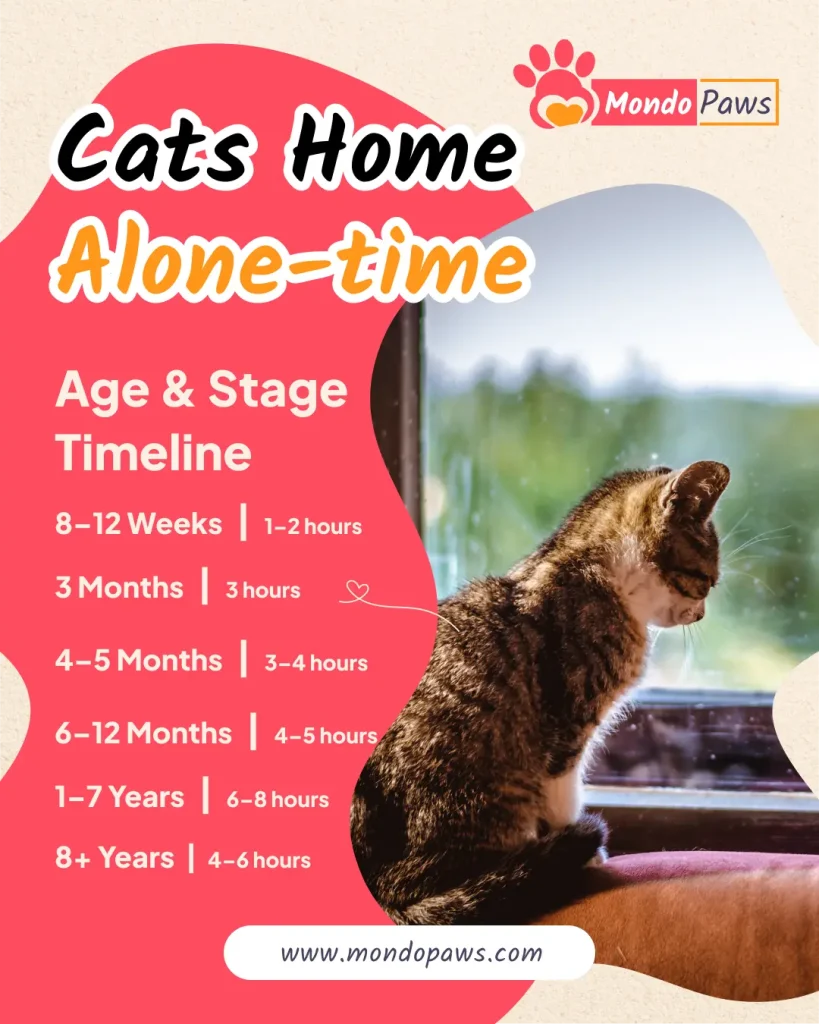
How Long Can Cats Be Left Alone by Age?
Guidance differs between sources, with some more cautious than others, and there is no official limit. Cat welfare organizations such as Cats Protection and International Cat Care emphasize meeting a cat’s needs for food, water, a clean toilet, safety, and company. The chart below shows typical comfortable stretches for a healthy cat at each stage, and the calculator above adjusts these for your own cat.
| Life Stage | Age | Typical Comfortable Alone Time | Notes |
|---|---|---|---|
| Very Young Kitten | Under 8 weeks | As little as possible (about 1 hr) | Needs frequent feeding and care, and is usually still with its mother. |
| Young Kitten | 8 – 12 weeks | ~1 – 2 hrs | Very short absences only, building up gradually. |
| Kitten | 3 – 6 months | ~2 – 4 hrs | Healthy weaned kittens are generally left no more than about 4 hours. |
| Junior | 6 – 12 months | ~4 – 8 hrs | High energy; enrichment and play matter a lot. |
| Adult | 1 – 10 years | ~8 – 12 hrs | A normal working day is generally fine with a good setup. Some adults tolerate up to 24 hrs occasionally, but daily check-ins are advised. |
| Senior | 10 – 14 years | ~6 – 8 hrs | Shorter if there are joint, kidney, or other health issues. |
| Geriatric | 14+ years | ~4 – 6 hrs | Often needs more frequent check-ins and comfort support. |
Clinical Note: These ranges are general guidelines, not strict rules, and they assume a healthy cat in a safe, comfortable home. Cats with medical conditions, especially those needing timed medication or insulin, should only be left for a few hours, and your vet’s advice always comes first. Because cats hide illness well, a change in how your cat behaves when you return is worth noting.
How Long Can a Kitten Be Left Alone?
Kittens are not small adult cats. They need frequent meals, play, and supervision, and sources differ on exact numbers. Some guidance says kittens still on milk replacement should not be alone for more than two to three hours, and that healthy weaned kittens should generally not be alone for more than about four hours. Others advise that kittens under 12 weeks should not be left for even a few hours, so the cautious approach is to keep absences short and build up gradually.
Frequent Meals
Young kittens eat small meals often, so long gaps between feedings can be a problem.
Safety First
Curious kittens chew cords, climb curtains, and squeeze into tight spaces. Use a kitten-proofed room while you are out.
Social Development
Kittens learn from play and company. Short, positive alone time, plus lots of interaction, builds confidence.
How Long Can Cats Be Left for a Trip or Weekend?
Leaving a cat for a working day is very different from leaving one for a weekend. Many cat charities and vets advise that cats should not go more than about 24 hours without someone checking in, even with plenty of food and an automatic feeder. Sources differ on how often sitters should visit, but at least once a day is the usual minimum.
| How Long | Healthy Adult Cat | Kitten, Senior, or Cat With Health Needs |
|---|---|---|
| A Working Day (8 – 12 hrs) | Generally fine with food, water, a clean litter box, and enrichment. | Needs a shorter stretch or a midday check-in. |
| Overnight (12 – 24 hrs) | Usually fine if the home is safe and well-stocked. | Not recommended without someone checking in. |
| 24 – 48 hrs | Arrange a visit at least once a day. | Arrange two or more visits a day, or a cattery. |
| A Weekend (2 – 3 days) | A friend, neighbor, or sitter visits daily, or twice for extra peace of mind. | Visits several times a day, or a cattery that can manage health needs. |
| A Week or More | Professional cat sitter or a reputable boarding cattery. | A professional sitter experienced with the cat’s needs, or boarding. |
A good sitter visit covers fresh food and water, a scooped litter box, a quick health and behavior check, and some play or attention. Leave the sitter your feeding instructions, medication details, your contact information, your vet’s number, and the number of a local emergency vet.
Alone Time in Special Situations
Some cats need shorter stretches or extra planning. Keeping hydration and schedule meal in mind during longer days also matters, so check our Cat Water Intake Calculator and Cat food calculator to make sure fresh water is always available.
| Situation | Typical Effect on Alone Time | Key Guidance |
|---|---|---|
| Kittens | Much shorter stretches | Frequent meals, play, and supervision, with absences built up gradually. |
| Senior Cats | Often shorter | Easy-access litter boxes, water, and warm resting spots, with more frequent check-ins. |
| Diabetes or Timed Medication | Only a few hours, tied to dosing | Insulin and other timed medications must be given on schedule, so follow your vet’s plan and arrange a trained sitter if you are away. |
| Kidney, Thyroid, or Urinary Conditions | Often shorter | Increased thirst and urination mean extra water and litter access, and a cat that strains to urinate is an emergency. |
| Newly Adopted Cats | Start very short | Give a new cat time to settle, with a safe room and hiding spots, before longer absences. |
| Multi-Cat Homes | Companions help, but don’t replace a visit | Provide a litter box per cat plus a spare, and separate feeding spots if cats don’t get along. |
| Anxious or Over-Attached Cats | Shorter, with gradual training | Rule out medical causes first, then add enrichment and build up alone time slowly. |
| Post-Surgery or Recovery | Shorter and supervised | Ask your vet before leaving your cat alone for long, and follow recovery instructions. |
| Hot or Cold Weather | Shorter, with extra safety checks | Ensure a safe temperature, shade, and plenty of water, and never leave a cat in a parked car. |
Boredom vs Separation Distress: What’s Going On?
Many cats seem unbothered when you leave, but cats can be stressed by being alone, and the signs are easy to miss. Telling boredom and distress apart changes the fix: boredom needs more play and enrichment, while distress needs a vet check and a gradual plan. A pet camera is the best way to see what really happens.
| Sign | More Likely Boredom | More Likely Separation Distress |
|---|---|---|
| Vocalizing | Occasional meowing, mostly at sights and sounds. | Persistent yowling or crying, especially after you leave. |
| Scratching and Chewing | Scratches furniture or plays rough with objects. | Focuses on doors, windows, or your belongings, often with strong urgency. |
| Toilet Habits | Normally uses the litter box. | Urinates or defecates outside the box, often on your bed or clothes. This can also be medical. |
| Grooming | Normal grooming. | Over-grooming, bald patches, or skin irritation. |
| Eating | Eats normally and may beg for attention. | Skips meals while you are gone or eats too quickly when you return. |
| When You Return | Greets you and settles. | Frantic greeting and follows you everywhere at home. |
| Best First Step | More play, perches, puzzle feeders, and a midday visit. | A vet check to rule out medical causes, then a gradual plan with a qualified behavior professional. |
Cat Breed Alone-Time Tendencies Reference Table
Breed has less influence on alone-time comfort than a cat’s history, socialization, and individual personality, and detailed breed research is limited. The table below lists 24 popular cat breeds with general tendencies to show who often finds solitude easier and who may need more company and stimulation. Treat these as rough guides, not predictions.
| Breed | General Tendency | Typical Alone-Time Comfort | Notes |
|---|---|---|---|
| Russian Blue | Reserved, routine-loving | Often easier | Does best with a predictable routine. |
| British Shorthair | Laid-back, easygoing | Often easier | Calm, but watch weight if very sedentary. |
| Persian | Calm, quiet | Often easier | Low-key, but coat care and eye care need daily attention. |
| Exotic Shorthair | Calm, easygoing | Often easier | Quiet companion; similar to the Persian in temperament. |
| American Shorthair | Adaptable, steady | Often easier | Generally content with a good routine and enrichment. |
| Scottish Fold | Gentle, easygoing | Often easier | Mobility changes may show up as less jumping, so mention these to your vet. |
| Norwegian Forest Cat | Independent, climber | Moderate | Needs tall perches and space to climb. |
| Maine Coon | Friendly, adaptable | Moderate | Sociable but often copes well with a good setup. |
| Domestic Shorthair | Varies widely | Moderate | Individual personality matters most. |
| Birman | Gentle, affectionate | Moderate | Enjoys company but is generally easygoing. |
| Ragdoll | People-oriented, relaxed | Moderate | Often follows its people and enjoys attention. |
| Munchkin | Playful, curious | Moderate | Needs play and safe things to explore. |
| Siberian | Active, playful | Moderate | Enjoys climbing and interactive play. |
| Manx | Playful, bonded to family | Moderate | Often attached to its people and enjoys games. |
| Abyssinian | Curious, very active | Often needs more support | Needs lots of climbing, toys, and mental stimulation. |
| Bengal | Very active, athletic | Often needs more support | Bored Bengals can become destructive, so plan plenty of enrichment. |
| Savannah | Very active, athletic | Often needs more support | Needs space, climbing, and lots of stimulation. |
| Siamese | Very social, vocal | Often needs more support | Thrives on interaction and may call out when lonely. |
| Oriental Shorthair | Social, vocal | Often needs more support | Dislikes being alone for long periods; a companion can help. |
| Burmese | Very people-loving | Often needs more support | Enjoys constant company and play. |
| Tonkinese | Social, playful | Often needs more support | Typically does best with company. |
| Sphynx | Very social, warmth-seeking | Often needs more support | Seeks people and warm spots, so make sure the home stays warm. |
| Devon Rex | Social, energetic | Often needs more support | People-oriented and playful. |
| Cornish Rex | Energetic, social | Often needs more support | Needs play and attention, plus a warm home. |
Home-Alone Setup Checklist for Cats
A well-prepared home makes alone time safer and calmer. Run through this checklist before you leave:
| Area | What to Do | Why It Matters |
|---|---|---|
| Litter | One box per cat plus a spare, scooped before you leave, in quiet spots. | Cats may refuse a dirty box, leading to accidents. |
| Water | Several bowls or a fountain in different spots, away from food and the litter box. | Spills, a blocked bowl, or a dislike of one bowl shouldn’t leave your cat without water. See our Cat Water Intake Calculator. |
| Food | Measured portions, a puzzle feeder, or a timed feeder for dry food. Don’t leave wet food out for long. | Keeps meals fresh and prevents overeating or raiding. See our Cat Food Calculator. |
| Safe Space | A cozy bed, a hiding spot, and a perch or window view. | Cats feel secure when they can hide and observe. |
| Enrichment | Scratching posts, toys they can use alone, and a bird-watching window. | Reduces boredom and destructive behavior. |
| Hazards | Remove string, ribbon, rubber bands, hair ties, small objects, and loose cords. | Cats can swallow or tangle in these, and they cause emergencies. |
| Plants | Remove lilies and other toxic plants. | Lilies are highly toxic to cats, and even small exposures need urgent vet care. Check the ASPCA toxic plants list. |
| Windows and Balconies | Secure screens and close windows, and block access to open balconies. | Prevents falls and escapes. |
| Doors | Make sure cats can’t get shut in cupboards, the laundry, or a room without a litter box. | Avoids a cat being trapped without food, water, or a toilet. |
| Temperature | Keep the home at a safe, comfortable temperature, with shade and fresh air in hot weather. | Heat and cold are real risks for cats left at home. |
| Contacts | Leave a neighbor or sitter your contact details and your vet’s number. | Someone can step in quickly if something goes wrong. |
Options for Long Days and Trips
If the calculator shows your day or trip is longer than your cat’s limit, these options can bridge the gap. A visit does more than refill a bowl: it gives your cat company, a health check, and a reset in the middle of a long stretch.
| Option | Best For | Notes |
|---|---|---|
| Professional Cat Sitter | Trips, kittens, seniors, and cats with health needs | Your cat stays in a familiar home. Check references, experience with medication, and insurance. |
| Friend, Family, or Neighbor | Short trips and occasional gaps | A reliable, familiar person can be ideal, as long as they know your cat’s routine and the emergency plan. |
| Boarding Cattery | Longer trips or cats needing close supervision | Visit first and check hygiene, space, and staff experience. Some cats find new places stressful. |
| Hybrid or Flexible Schedule | Owners who can shift hours | Even a couple of days at home a week can make a big difference for a kitten or senior cat. |
| Timed or Automatic Feeder | Day-to-day meal timing | Helpful for dry food, but it doesn’t replace in-person checks on trips, and some cats learn to break in. |
| Pet Camera | Monitoring and reassurance | Useful for checking in and spotting stress, but it does not replace a visit or a health check. |
| A Bonded Companion Cat | Long-term alone-time support | Only adopt a second cat if you want one, and introduce them carefully. A companion doesn’t replace people. |
Signs You Need a Vet or Behavior Professional
Some problems that appear while you are away are medical rather than behavioral. These signs call for professional help:
Straining to Urinate
Repeated litter box trips with little or no urine, crying, or licking the genitals can mean a urinary blockage. This is an emergency, especially in male cats.
New Toilet Accidents
Sudden accidents outside the box, blood in urine, or very frequent urination can be a medical issue and should be checked by a vet before assuming it is a behavior problem.
Not Eating or Hiding
A cat that won’t eat for 24 hours, vomits repeatedly, hides, or seems lethargic needs prompt veterinary attention.
Panic, self-injury, heavy panting, collapse, or a cat that cannot be roused is an emergency. Seek veterinary care immediately.
A Daily Routine for a Cat Who Is Home Alone
Cats love predictability, so a steady routine helps them relax while you are out. A good rhythm also supports healthy rest, so see our Cat Sleep Calculator to check how much your cat should be sleeping:
Morning:
Feed breakfast at a consistent time and offer a short play session with a wand toy to use up the dawn energy burst.
Before You Leave:
Scoop the litter, refresh water in several places, set out a puzzle feeder, and open the curtains for a window view. Keep your goodbye low-key.
Midday:
If your day is long or your cat is a kitten or senior, arrange a sitter, neighbor, or family member for a check-in and some play.
When You Return:
Greet calmly, check food, water, and litter, and note how your cat looks and acts. Then play and spend time together.
Evening:
Do an interactive play session so your cat can “hunt,” then follow it with a meal. This hunt, eat, sleep rhythm helps cats settle through the night.
Frequently Asked Questions
Most healthy adult cats cope well with about 8 to 12 hours alone, such as a working day, when they have food, fresh water, a clean litter box, and things to do. Kittens, senior cats, and cats with medical needs need shorter stretches, and many sources advise that no cat is left for more than about 24 hours without someone checking in.
A weekend means two or three days, which is longer than most guidance recommends leaving a cat without a visit. Arrange a friend, neighbor, or professional sitter to visit at least once a day, or twice for kittens, seniors, and cats with health needs, or book a reputable boarding cattery.
Very young kittens need frequent care and should be left for as short a time as possible, with some guidance suggesting no more than two to three hours for kittens still on milk replacement. Healthy weaned kittens are generally left for no more than about four hours at a time, and alone time should be built up gradually.
Cats are often independent, but many bond strongly with their people and some become stressed when left. Signs can include excessive meowing, over-grooming, destructive scratching, hiding, not eating, and toilet accidents, and because accidents can also be medical, a vet check is the first step.
Leaving a healthy adult cat for a normal working day is generally considered acceptable if the cat has fresh water, food, a clean litter box, a safe and comfortable temperature, and enrichment, plus attention and play when you are home. It is not appropriate for kittens, cats with medical needs, or cats that are clearly distressed when alone.
Behind the Research: How We Built This Cats Alone-Time Calculator & Guide
At Mondo Paws, our mission is to empower pet owners with scientifically accurate, veterinary-reviewed tools. To create this calculator and alone-time guide:
- Applied Widely Cited Alone-Time Guidelines: Limits start from commonly published ranges by life stage (about 8 to 12 hours for healthy adults, about 4 hours or less for weaned kittens, and a check-in at least once a day on trips beyond 24 hours), then adjust for litter and feeding setup, enrichment, behavior, health, and home conditions. Sources differ, so results are general estimates, not rules.
- Cross-Referenced Feline Care Resources: Guidance on alone time, separation-related stress, and household hazards was compared with pet-care publications such as PetMD and Petplan, alongside the welfare resources of International Cat Care, Cats Protection, and the ASPCA.
- Compiled Breed Tendency Overview: Summarized general temperament tendencies for 24 recognized cat breeds, noting that individual history, socialization, and personality matter far more than breed.
Final Thoughts
Knowing how long your cat can comfortably be alone makes it easier to plan workdays, arrange check-ins for trips, and spot problems before they grow. Use our Cats Alone-Time Calculator to find a realistic limit, then watch your cat’s appetite, litter habits, energy, and behavior as part of your routine.
Remember that every cat is different. If your cat shows distress when left, strains to urinate, has sudden accidents, stops eating, or seems unwell, contact your veterinarian or a qualified feline behavior professional rather than waiting to see if it resolves on its own.