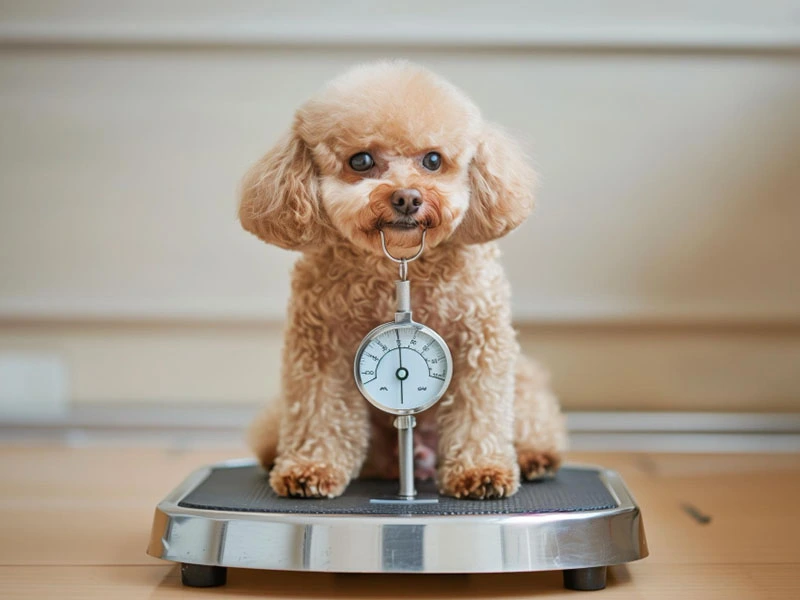
Table of Contents
Canine Nutrition & Portions · Clinical Feeding Guide
How much should you feed your dog each day? Feeding guidelines printed on commercial dog food bags are broad estimates that routinely overestimate caloric requirements by 20% to 30% for the average spayed or neutered indoor dog. Overfeeding by even 50 to 100 excess calories a day can lead to canine obesity, joint strain, and a shortened lifespan.
750–950
Average daily kcal for 30 lb adult dog
50–60 ml
Daily water need per kg body weight
10% Max
Strict limit on daily calories from treats
56%
Of domestic dogs are overweight or obese
±20% Error
Average cup error vs gram kitchen scale
1.6x RER
Standard neutered adult energy multiplier
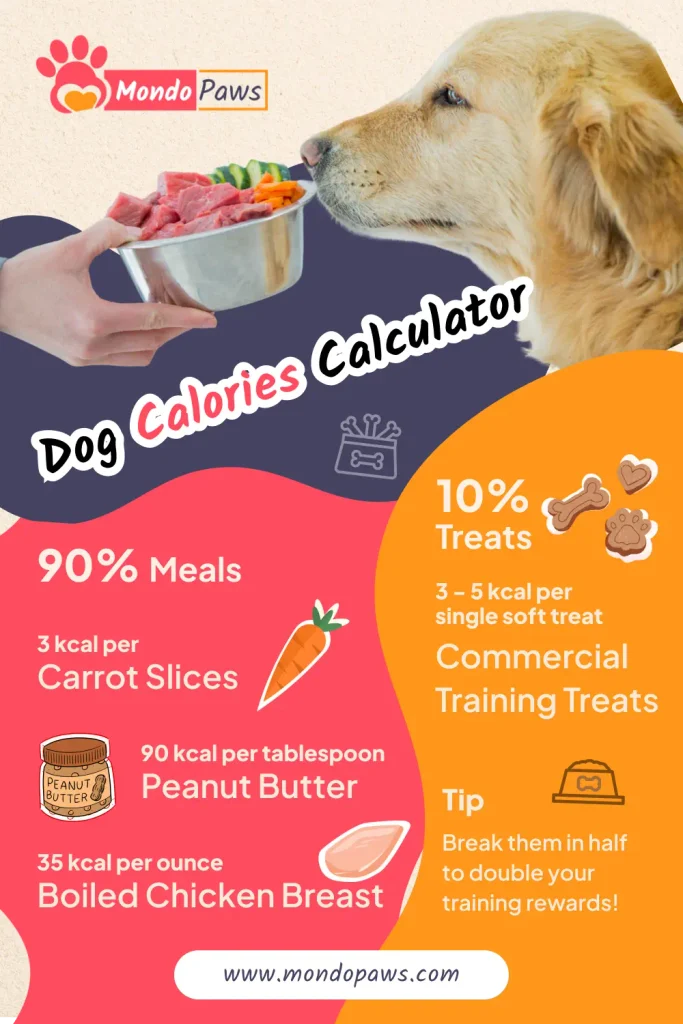
Whether you are feeding dry kibble, canned wet food, or a combination mixed diet, precision is paramount. Our interactive Dog Calorie Calculator below computes your dog’s exact Resting Energy Requirement (RER) and Daily Energy Requirement (DER) according to veterinary standards published by the World Small Animal Veterinary Association (WSAVA) and the National Research Council (NRC).
Interactive Dog Food Calculator
Select your dog’s weight, life stage, body condition, and feeding preferences below to calculate exact daily calories, dry cups/grams, wet cans, and water requirements in real time.
How Many Calories Does a Dog Need Daily?
Unlike cats, dogs are metabolically flexible omnivores, but their caloric requirement still swings widely based on breed, neuter status, age, and daily activity level. A working sled dog and a couch-companion Bulldog of the same body weight can have caloric needs that differ by a factor of three or more.
| Dog Weight (lbs / kg) | Senior / Less Active (1.4x RER) | Neutered Adult (1.6x RER) | Intact / Active (1.8x RER) | Growing Puppy (2.0x RER) |
|---|---|---|---|---|
| 10 lbs (4.54 kg) | 277 kcal | 317 kcal | 356 kcal | 396 kcal |
| 20 lbs (9.07 kg) | 465 kcal | 531 kcal | 598 kcal | 664 kcal |
| 30 lbs (13.61 kg) | 624 kcal | 713 kcal | 802 kcal | 891 kcal |
| 50 lbs (22.68 kg) | 922 kcal | 1,054 kcal | 1,186 kcal | 1,318 kcal |
| 70 lbs (31.75 kg) | 1,191 kcal | 1,361 kcal | 1,531 kcal | 1,701 kcal |
| 90 lbs (40.82 kg) | 1,440 kcal | 1,646 kcal | 1,851 kcal | 2,057 kcal |
Clinical Nutrition Tip: The large majority of pet dogs in North America and Europe are spayed or neutered. Neutering lowers a dog's basal metabolic rate by roughly 20% to 30% while often increasing appetite. Feeding an intact-adult portion size to a neutered, low-activity dog is one of the most common triggers for gradual, unnoticed weight gain.
The Veterinary Canine Calorie Formula Explained
Veterinary nutritionists calculate canine energy intake using a two-step formula recommended by the World Small Animal Veterinary Association (WSAVA):
Step 1: Calculate RER
Resting Energy Requirement (RER) represents the calories burned at complete rest to power organs, respiration, and circulation:
RER = 70 × (Weight in kg)^0.75
Step 2: Apply DER Factor
Daily Energy Requirement (DER) adjusts RER for activity, life stage, and physiological state:
DER = RER × Life Stage Factor
Life Stages and Growth Multipliers
A growing puppy's energy demands can be double or triple those of a sedentary senior dog of equal weight. Matching the correct multiplier, and adjusting it as large breeds grow more slowly than small breeds, protects healthy skeletal development without triggering juvenile obesity.
Puppies (0–4 Months)
Factor: 2.5x–3.0x RER
Rapid bone elongation and neural development require a nutrient-dense large- or small-breed puppy formula split into 3 to 4 small meals daily.
Puppies (4–12 Months)
Factor: 2.0x RER
Growth begins to stabilize. Transition to 2 to 3 meals daily. Large and giant breeds should stay on puppy or large-breed growth food until 15–24 months to control growth rate.
Senior Dogs (7+ Years)
Factor: 1.2x–1.4x RER
Metabolic rate and lean muscle mass decline with age. Joint-support nutrients and easily digestible, moderate-fat protein are recommended for senior formulas.
Dry Kibble vs. Wet Canned Food: Caloric Density & Hydration
The biggest difference between dry kibble and canned wet food for dogs is moisture content and caloric density. Dry kibble contains only 8% to 12% water and averages 300–450 kcal per cup, while wet canned food is 70% to 80% water and averages 350–450 kcal per standard 12.5–13 oz can.
| Metric | Dry Kibble Only | Wet Canned Food Only | Mixed Feeding (50/50) |
|---|---|---|---|
| Moisture Content | 8% – 12% (Low) | 70% – 80% (High) | ≈ 40% (Balanced) |
| Weight Management | Easy to over-pour by volume | Larger volume, low calorie density helps satiety | Moderate to High |
| Dental Stimulation | Some abrasive chewing action | Minimal (soft texture) | Moderate |
| Palatability for Picky Eaters | Lower aroma, less enticing | High aroma, often preferred | Excellent balance |
| Cost / Convenience | Most economical, shelf-stable | Higher cost, requires refrigeration after opening | Cost-effective combo |
Dog Breeds Calorie, Weight & Water Master Table
Below is our comprehensive reference table listing 38 popular dog breeds with their typical healthy adult weight, average daily caloric requirement (neutered adult baseline), daily water intake needs, and breed-specific dietary considerations.
| Breed | Adult Weight (lbs / kg) | Daily Calorie Range | Daily Water Need | Activity & Nutrition Focus |
|---|---|---|---|---|
| Akita | 70 – 130 lbs (31.8 – 59.0 kg) | 2,150 – 3,550 kcal | 1,850 – 3,000 ml | Powerful, independent breed; feed strictly to avoid excess weight. |
| Australian Cattle Dog | 30 – 50 lbs (13.6 – 22.7 kg) | 950 – 1,500 kcal | 780 – 1,300 ml | High-drive working breed; needs substantial daily activity to match intake. |
| Australian Shepherd | 40 – 65 lbs (18.1 – 29.5 kg) | 1,250 – 1,950 kcal | 1,050 – 1,650 ml | High-energy herder; thrives on structured exercise and measured feeding. |
| Basset Hound | 40 – 65 lbs (18.1 – 29.5 kg) | 1,250 – 1,950 kcal | 1,050 – 1,650 ml | Low to the ground scent hound; prone to obesity and back strain. |
| Beagle | 20 – 30 lbs (9.1 – 13.6 kg) | 650 – 950 kcal | 520 – 780 ml | Food-driven scent hound; strict portion control is essential. |
| Bernese Mountain Dog | 70 – 115 lbs (31.8 – 52.2 kg) | 2,150 – 3,400 kcal | 1,850 – 2,900 ml | Giant working breed with a short lifespan; avoid rapid puppy growth. |
| Border Collie | 30 – 45 lbs (13.6 – 20.4 kg) | 950 – 1,400 kcal | 780 – 1,180 ml | Extremely active herder; working dogs may need 2x–3x baseline calories. |
| Boston Terrier | 12 – 25 lbs (5.4 – 11.3 kg) | 430 – 780 kcal | 310 – 650 ml | Compact brachycephalic breed; moderate energy needs, avoid overheating. |
| Boxer | 50 – 70 lbs (22.7 – 31.8 kg) | 1,500 – 2,150 kcal | 1,300 – 1,850 ml | Muscular and energetic; smaller frequent meals reduce bloat risk. |
| Brittany | 30 – 40 lbs (13.6 – 18.1 kg) | 950 – 1,250 kcal | 780 – 1,050 ml | Tireless bird dog; needs a higher-calorie performance formula if hunting. |
| Bulldog (English) | 40 – 55 lbs (18.1 – 24.9 kg) | 1,250 – 1,700 kcal | 1,050 – 1,400 ml | Brachycephalic; very low exercise tolerance, easily overfed. |
| Cane Corso | 90 – 120 lbs (40.8 – 54.4 kg) | 2,650 – 3,500 kcal | 2,250 – 2,950 ml | Giant mastiff-type; joint-support nutrition is especially important. |
| Cavalier King Charles Spaniel | 13 – 18 lbs (5.9 – 8.2 kg) | 460 – 580 kcal | 340 – 470 ml | Gentle companion predisposed to heart disease; keep strictly lean. |
| Chihuahua | 3 – 6 lbs (1.4 – 2.7 kg) | 130 – 230 kcal | 70 – 160 ml | Tiny toy breed prone to hypoglycemia; needs frequent small meals. |
| Dachshund | 11 – 32 lbs (5.0 – 14.5 kg) | 400 – 950 kcal | 280 – 830 ml | Long spine; strict weight control helps prevent disc disease. |
| Doberman Pinscher | 60 – 100 lbs (27.2 – 45.4 kg) | 1,850 – 2,900 kcal | 1,550 – 2,450 ml | Lean athletic guardian breed; needs a high-protein diet. |
| English Springer Spaniel | 40 – 50 lbs (18.1 – 22.7 kg) | 1,250 – 1,500 kcal | 1,050 – 1,300 ml | Active sporting breed; prone to weight gain once neutered. |
| French Bulldog | 16 – 28 lbs (7.3 – 12.7 kg) | 530 – 870 kcal | 420 – 730 ml | Brachycephalic; low exercise tolerance, avoid overfeeding. |
| German Shepherd | 50 – 90 lbs (22.7 – 40.8 kg) | 1,500 – 2,650 kcal | 1,300 – 2,250 ml | Working breed with sensitive digestion; favor a consistent quality diet. |
| German Shorthaired Pointer | 45 – 70 lbs (20.4 – 31.8 kg) | 1,400 – 2,150 kcal | 1,180 – 1,850 ml | Tireless hunting companion; very high activity calorie needs. |
| Golden Retriever | 55 – 75 lbs (24.9 – 34.0 kg) | 1,700 – 2,300 kcal | 1,400 – 1,950 ml | Gentle sporting breed prone to weight gain in adulthood. |
| Great Dane | 110 – 175 lbs (49.9 – 79.4 kg) | 3,300 – 4,800 kcal | 2,850 – 4,050 ml | Giant breed; large-breed puppy formula helps prevent developmental joint disease. |
| Havanese | 7 – 13 lbs (3.2 – 5.9 kg) | 260 – 420 kcal | 180 – 340 ml | Playful lapdog; moderate exercise needs, monitor treats closely. |
| Labrador Retriever | 55 – 80 lbs (24.9 – 36.3 kg) | 1,700 – 2,450 kcal | 1,400 – 2,050 ml | Food-motivated; one of the most obesity-prone breeds, measure precisely. |
| Maltese | 4 – 7 lbs (1.8 – 3.2 kg) | 160 – 260 kcal | 90 – 190 ml | Small companion dog prone to dental disease; favor soft kibble or wet mix. |
| Miniature Schnauzer | 11 – 20 lbs (5.0 – 9.1 kg) | 400 – 650 kcal | 280 – 520 ml | Prone to pancreatitis; keep dietary fat content moderate. |
| Newfoundland | 100 – 150 lbs (45.4 – 68.0 kg) | 3,000 – 4,300 kcal | 2,600 – 3,800 ml | Massive gentle giant prone to bloat; feed smaller, frequent meals. |
| Papillon | 5 – 10 lbs (2.3 – 4.5 kg) | 190 – 330 kcal | 120 – 260 ml | Energetic toy spaniel with higher activity than its size suggests. |
| Pembroke Welsh Corgi | 22 – 30 lbs (10.0 – 13.6 kg) | 700 – 950 kcal | 570 – 780 ml | Long back, short legs; excess weight puts real strain on the spine. |
| Pomeranian | 3 – 7 lbs (1.4 – 3.2 kg) | 130 – 260 kcal | 70 – 190 ml | Fluffy toy breed; thick coat can hide gradual weight gain. |
| Rottweiler | 80 – 135 lbs (36.3 – 61.2 kg) | 2,350 – 3,600 kcal | 2,000 – 3,050 ml | Large guardian breed; a slow-growth puppy diet is critical for joint health. |
| Shih Tzu | 9 – 16 lbs (4.1 – 7.3 kg) | 330 – 530 kcal | 230 – 420 ml | Brachycephalic; feed in shallow bowls, prone to obesity if inactive. |
| Siberian Husky | 35 – 60 lbs (15.9 – 27.2 kg) | 1,100 – 1,850 kcal | 900 – 1,550 ml | Highly efficient metabolism; sled-line working dogs need far more when active. |
| St. Bernard | 120 – 180 lbs (54.4 – 81.6 kg) | 3,500 – 4,900 kcal | 2,950 – 4,150 ml | One of the heaviest breeds; joint supplements are often recommended. |
| Standard Poodle | 45 – 70 lbs (20.4 – 31.8 kg) | 1,400 – 2,150 kcal | 1,180 – 1,850 ml | Athletic and intelligent; portion by lean body condition, not coat volume. |
| Vizsla | 45 – 65 lbs (20.4 – 29.5 kg) | 1,400 – 1,950 kcal | 1,180 – 1,650 ml | High-endurance sporting breed; needs consistent high-quality protein. |
| Weimaraner | 55 – 90 lbs (24.9 – 40.8 kg) | 1,700 – 2,650 kcal | 1,400 – 2,250 ml | High-drive gun dog; substantial calorie needs when working regularly. |
| Yorkshire Terrier | 4 – 7 lbs (1.8 – 3.2 kg) | 160 – 260 kcal | 90 – 190 ml | High metabolism toy breed; free-feeding often leads to picky eating. |
How to Check Your Dog's Body Condition Score (BCS 1–9)
Because thick or long coats can disguise obesity or emaciation, veterinarians use the 9-point Body Condition Score (BCS) system based on touch and profile viewing:
BCS 1–3: Underweight
Ribs, spine, and pelvic bones are easily visible with no palpable fat cover. Obvious loss of muscle mass and a severe abdominal tuck.
BCS 4–5: Ideal Weight
Ribs easily felt with a slight fat cover. A visible waist and abdominal tuck when viewed from the side and above.
BCS 6–9: Overweight / Obese
Ribs difficult or impossible to feel under a fat layer. Broad, flat back, no visible waist, and a heavy, sagging abdomen.
A 7-Day Plan to Transition Dog Food Safely
Switching brands or protein sources too quickly can trigger gastrointestinal upset, vomiting, or diarrhea. Follow this 7-day veterinary transition protocol:
Days 1–2:
Feed 75% old food mixed with 25% new food. Watch for soft stools or hesitancy.
Days 3–4:
Feed 50% old food mixed with 50% new food. Digestion begins adapting to new protein and fiber sources.
Days 5–6:
Feed 25% old food mixed with 75% new food. Appetite and energy should remain steady.
Day 7 Onward:
Feed 100% new food at the calculated daily portion from our calculator.
Frequently Asked Questions
Bag guidelines are generalized averages that are often calculated for intact, highly active dogs. Because most household dogs are neutered and live a moderate-activity indoor lifestyle, bag charts frequently overestimate portion sizes by 20% to 30%. Using our calculator's WSAVA formula ensures personalized caloric accuracy.
Always weigh food with a digital kitchen scale in grams whenever possible. Kibble sizes and densities vary widely between brands; a standard measuring cup can vary by up to ±20%, which can translate to well over 50 accidental excess calories every day for a medium-sized dog.
Most healthy adult dogs do well on 2 measured meals per day. Puppies need 3 to 4 smaller meals daily to support growth and prevent hypoglycemia, while deep-chested large breeds often benefit from 2 to 3 smaller meals rather than one large one to help reduce the risk of bloat (GDV).
Working, herding, and sporting breeds can burn 2 to 5 times their Resting Energy Requirement (RER) during heavy activity, compared to roughly 1.4x to 1.6x RER for a typical companion dog. Sustained exercise dramatically increases muscle energy demand, which is why our breed table and life-stage selector both account for activity level separately from body weight.
Behind the Research: How We Built This Dog Food Calculator & Guide
At Mondo Paws, our mission is to empower pet owners with scientifically accurate, veterinary-reviewed nutrition tools. To create this calculator and canine feeding guide:
- Implemented WSAVA & NRC Mathematical Formulas: Calculations use the exponential Resting Energy Requirement formula (\(RER = 70 \times \text{Weight}_{\text{kg}}^{0.75}\)) rather than linear approximations, ensuring precision across dogs weighing from 3 lbs up to 180 lbs.
- Verified Canine Caloric Multipliers: Cross-referenced life-stage multipliers with clinical veterinary textbooks and publications from the WSAVA Global Nutrition Committee and the Association of American Feed Control Officials (AAFCO).
- Compiled Breed-Specific Baseline Data: Analyzed standard breed weights and metabolic energy variations across 38 recognized dog breeds to construct our comprehensive master nutrition table.
Final Thoughts
Calculating the exact daily portion for your dog is one of the single most impactful steps you can take to prevent obesity, joint disease, and pancreatitis. Rather than relying on guesswork or generic packaging guidelines, use our Dog Calorie Calculator to establish a baseline, weigh daily kibble with a digital gram scale, adjust for real-world activity level, and monitor your dog's Body Condition Score every two to four weeks.
Remember that every dog is an individual. If your dog is gaining or losing weight unintentionally, adjust their daily caloric intake by ±10% and consult your veterinarian for specialized bloodwork or a diet evaluation.
Written by the Mondo Paws Team
At Mondo Paws, we simply love pets! For this guide, we gathered and cross-checked veterinary clinical nutrition guidelines and real-world canine feeding protocols, organizing everything in the clearest, most practical way possible so you can care for your dog with confidence.