What size muzzle does your dog need? This free dog muzzle size calculator turns your dog’s snout circumference and snout length into a recommended muzzle size with room to pant, draws a live fit diagram, and adds a muzzle training planner, breed finder, type picker, fit test, and troubleshooter, so you buy the right muzzle once and your dog wears it comfortably.
6 Tools
Size calculator, training planner, breed finder, type picker, fit test, and troubleshooter
2 Measurements
Snout circumference and snout length, both taken with a soft tape
Room to Pant
A basket muzzle must let your dog pant, drink, and take treats
Half-Inch Gap
The nose should not touch the front of the muzzle
Train First
Positive, treat-based conditioning makes a muzzle safe and stress-free
Guides Only
Brands differ, so always check the maker’s own size chart
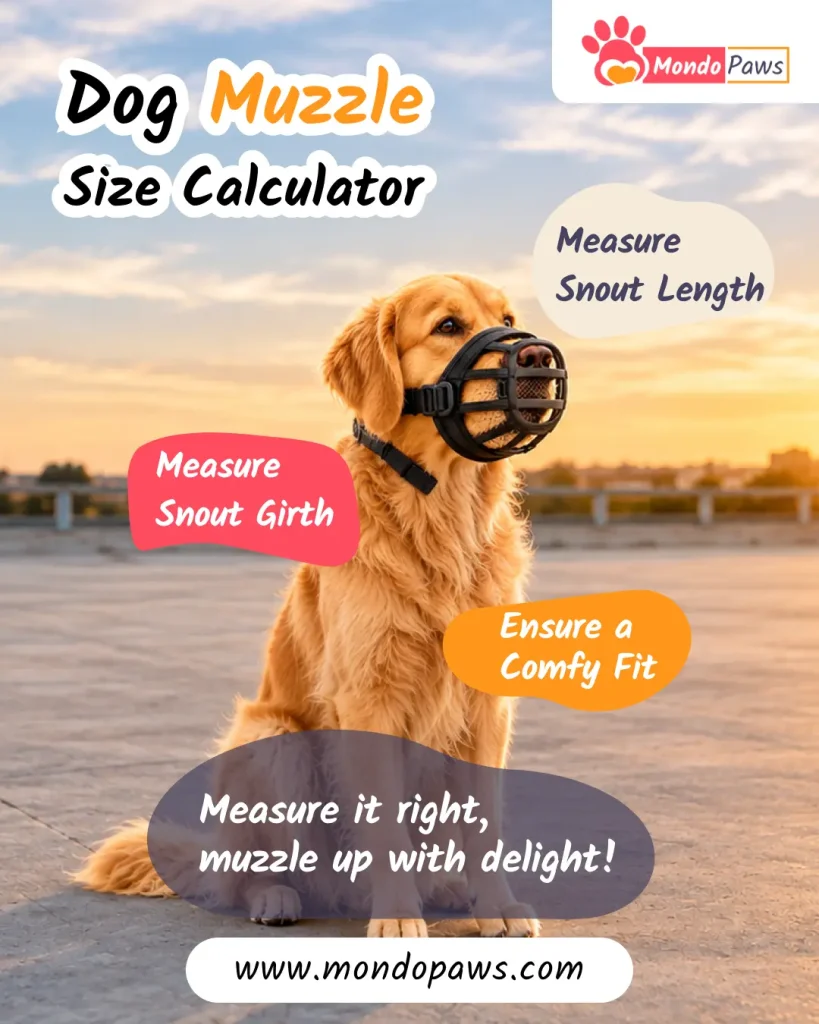
A muzzle is a safety tool used for vet visits, grooming, public-safety rules, and training reactive or scavenging dogs. A good muzzle fits well, never causes pain or fear, and, for any use beyond a few moments, lets your dog pant and drink. It is never a punishment and never a substitute for training. For general gear and training advice, the American Kennel Club and the ASPCA publish beginner-friendly guides.
Free Dog Muzzle Size Calculator
Enter your dog’s snout circumference and snout length, then choose a muzzle style. The calculator adds the right amount of room for that style, finds the size whose ranges fit best, lists other sizes that could also fit, and draws your dog’s head wearing the muzzle so you can see the fit.
Safety Note: Muzzle sizes are general guides, and manufacturers measure differently. Never leave a muzzle on an unsupervised dog, never use one in hot weather or during hard exercise unless it is a basket style that allows full panting, and remove it right away if your dog struggles to breathe, vomits, or panics. If your dog is aggressive or fearful, work with your veterinarian or a veterinary behaviorist.
Muzzle Training Planner: Help Your Dog Love the Muzzle
A muzzle that fits perfectly still fails if your dog dreads it. Pick where your dog is today, how confident your dog is, and how many short sessions you can do each week to see your next step and a realistic timeline. The Muzzle Up! Project offers free, step-by-step positive-reinforcement muzzle training guides.
Muzzle Size by Breed: Quick Finder
Not sure of your dog's snout size yet? Search a breed to see the usual adult snout circumference and length, a matching muzzle size, and the style that usually suits that head shape. Breed averages are a starting point, so measure your own dog and use the calculator above.
Dog Muzzle Size Chart by Snout, Weight, and Breed
This dog muzzle size chart lists typical size ranges for a basket muzzle, with the snout circumference and length they suit, typical weights, and example breeds. Use the snout measurements first and weight second, because two dogs of the same weight can have very different snout shapes.
| Size | Circumference (Incl. Room) | Length (Incl. Room) | Typical Weight | Example Breeds |
|---|---|---|---|---|
| XXS | 3–5 in (8–13 cm) | 1.25–2 in | Under 8 lbs | Teacup Yorkie, tiny Chihuahua |
| XS | 4.5–6.5 in (11–17 cm) | 1.75–2.5 in | 5–15 lbs | Maltese, Pomeranian, Yorkshire Terrier |
| S | 6–8 in (15–20 cm) | 2.25–3 in | 12–30 lbs | Jack Russell, Dachshund, Cavalier |
| M | 7.5–10 in (19–25 cm) | 3–3.75 in | 25–50 lbs | Beagle, Cocker Spaniel, Border Collie, Husky |
| L | 9.5–12 in (24–30 cm) | 3.5–4.5 in | 45–80 lbs | Labrador, Golden Retriever, German Shepherd, Doberman |
| XL | 11.5–14 in (29–36 cm) | 4–5 in | 70–110 lbs | Rottweiler, Bernese Mountain Dog |
| XXL | 13.5–17 in (34–43 cm) | 4.5–6 in | Over 100 lbs | Great Dane, Mastiff, Saint Bernard |
Flat-faced dogs and sighthounds do not follow this chart well. Pugs, Bulldogs, and Boston Terriers need short-snout styles, while Greyhounds, Whippets, and Poodles need long-snout baskets. Brands also list sizes differently, so check the maker's chart. Check our Dog Weight Calculator to see whether your dog is at a healthy weight, and our Dog Age Calculator for your dog's life stage.
How to Measure Your Dog for a Muzzle
You need a soft tape measure, a helper if possible, and plenty of treats. It takes a minute and is much more accurate than guessing from breed or weight. Keep it calm and stop if your dog is uncomfortable.
| Step | What to Do | Tip |
|---|---|---|
| 1. Use a Soft Tape | Use a sewing tape, or string you can lay against a ruler. | A rigid metal tape is awkward and can scare dogs. |
| 2. Measure Circumference | With the mouth closed, wrap the tape around the widest part of the snout, about 1 inch below the eyes. | Keep it snug but not tight, and do not squeeze the nose. |
| 3. Measure Length | Measure from the tip of the nose to just below the eyes. | Keep the tape straight along the top of the snout. |
| 4. Add Panting Room | For basket styles, add about 1 inch to circumference and 0.5 inch to length. | The calculator does this for you. |
| 5. Weigh Your Dog | Use a pet or bathroom scale and subtract your own weight. | Use weight only as a double-check. |
| 6. Match the Size | Pick the size whose circumference and length fit both numbers. | Use the calculator above. |
| 7. Test the Fit | Check panting, drinking, treats, and strap fit. | Use the Muzzle Fit Test below. |
For a puppy or a dog whose head is still growing, remeasure often. The American Veterinary Medical Association offers general pet-care guidance, and the Merck Veterinary Manual is a trusted reference for skull shape and airway topics, including flat-faced breeds.
Which Type of Muzzle Is Right for Your Dog?
Size is only half the decision. Basket, soft nylon, short-snout, and sighthound muzzles suit different dogs and jobs. Pick why you need the muzzle and your dog's snout shape.
Muzzle Fit Test: Is Your Dog's Muzzle the Right Size?
Already own a muzzle? Check your dog while wearing it, under supervision, and tick every statement that is true. The test tells you whether it is too tight, too loose, or about right.
Muzzle Fit Troubleshooter: Fix Common Problems
Pick the problem you are seeing and get the likely cause, a quick fix, and whether to change size or style.
Common Muzzle Sizing and Use Mistakes
Most muzzle problems come from a few easy-to-avoid errors. The Humane Society of the United States, the American Animal Hospital Association, and Fear Free Pets offer further guidance on low-stress handling. For fearful or reactive dogs, the American Veterinary Society of Animal Behavior and the Association of Professional Dog Trainers can help you find qualified professionals.
| Mistake | Why It Matters | Fix |
|---|---|---|
| Buying by Weight Only | Snout shape varies a lot between dogs of the same weight. | Measure circumference and length first. |
| Skipping Panting Room | A tight muzzle blocks panting, which is how dogs cool down. | Add about 1 inch to circumference and 0.5 inch to length for baskets. |
| Using a Soft Muzzle Too Long | It holds the mouth mostly closed, limiting panting and drinking. | Reserve it for very brief, supervised use, and use a basket otherwise. |
| Skipping Training | A dog that fears the muzzle may panic or fight it. | Use short, treat-based sessions with the Training Planner above. |
| Using It as Punishment | It builds fear and makes handling harder. | Keep it a positive, calm routine. |
| Using It to Stop Barking or Chewing | A muzzle is a safety tool, not a behavior fix. | Address the cause with training and your vet. |
| Ignoring Flat-Faced Breeds | Short snouts and delicate airways need special styles. | Ask your vet and choose a muzzle made for short snouts. |
| Leaving It On Unsupervised | Dogs can vomit, overheat, or get stuck on things. | Only use a muzzle while you are watching, and take it off in the heat. |
Weight changes affect fit too. Track it with our Dog Weight Calculator, and keep your dog active with the Dog Exercise Calculator. If your dog needs gear for walks, size a harness or collar as well. Talk to your veterinarian if your dog suddenly needs a muzzle, since pain or illness can cause sudden changes in behavior.
Frequently Asked Questions
Measure the snout circumference about one inch below the eyes with the mouth closed, then measure the snout length from the nose tip to just below the eyes. For a basket muzzle add about one inch to the circumference and about half an inch to the length so your dog can pant, drink, and take treats, then match both numbers to the maker's size chart.
A basket muzzle is a rigid cage that lets your dog pant, drink, and take treats, so it suits training and longer supervised wear. A soft nylon or sleeve muzzle holds the mouth mostly closed and limits panting, so it is generally meant only for very short, supervised use such as a quick vet or grooming task.
Most adult Labradors have a snout circumference of about 10 to 12.5 inches and a snout length of about 3.5 to 4.5 inches, which usually points to a large basket muzzle. Measure your own dog, because snout shape varies with breeding and build.
In a properly sized basket muzzle your dog should be able to open the mouth wide enough to pant, lap water, and take treats through the front. A soft nylon muzzle usually does not allow this, so it should be reserved for brief, supervised use.
Use short, positive sessions with treats: let your dog sniff the muzzle, then place the nose in for a treat, build up the time the nose stays in, fasten the strap for a second at a time, and only then add wear time and movement. Go at your dog's pace, and work with a certified trainer or veterinary behaviorist if your dog is fearful.
No. A muzzle is a safety tool for preventing bites or scavenging and should never be used as a punishment or to stop barking or chewing. Address those behaviors with training and your veterinarian or a qualified behavior professional.
Behind the Research: How We Built This Dog Muzzle Size Calculator & Guide
At Mondo Paws, our mission is to give pet owners practical, carefully researched tools. To create this calculator and muzzle guide:
- Built on the Standard Sizing Method: The calculator uses the widely taught approach of measuring snout circumference about one inch below the eyes and snout length from the nose tip, then adding room for panting and matching the result to common muzzle size ranges. Results are estimates and brands vary.
- Cross-Referenced Trusted Resources: Muzzle and pet-care guidance was checked against the American Kennel Club, the American Veterinary Medical Association, the ASPCA, the American Animal Hospital Association, the Merck Veterinary Manual, AVSAB, and the Muzzle Up! Project.
- Safety Context: Our advice emphasizes basket muzzles that allow panting, brief and supervised use of soft muzzles, positive-reinforcement conditioning, and veterinary input for flat-faced, fearful, or reactive dogs.
- Interactive Tools, Not Guesswork: Every widget runs in your browser and uses only the numbers you enter. Nothing is stored or sent anywhere.
Final Thoughts
The right muzzle fits the snout, leaves room to pant, drink, and take treats, and is introduced with patience and treats. Use our Dog Muzzle Size Calculator for the main answer, the training planner to build comfort, the style picker to choose the right design, and the fit test and troubleshooter every few weeks. Keep supporting your dog's overall health with our Dog Harness Size Calculator, Dog Collar Size Calculator, Dog Age Calculator, Dog Weight Calculator, Dog Exercise Calculator, and Dog Crate Size Calculator.
Remember that a muzzle is a safety tool, not a treatment. If your dog bites, growls, or seems fearful, talk to your veterinarian, since pain and illness can change behavior, and ask for a referral to a qualified behavior professional.