Table of Contents
Why do dogs put their paw on you? Because the paw is one of the few ways a dog can ask for something without barking. Most of the time it means “pay attention to me,” “keep petting,” or “I like you,” but it can also mean food, a potty break, worry, or, less often, discomfort. This page gives you five free interactive tools to decode what your own dog means.
Attention
The most commonly cited reason dogs paw at people
Soft & Relaxed
A resting paw on a loose body usually signals connection
Quick Taps
Fast, repeated pawing is more often a request or a need
It Works
Pawing repeats when it gets a reaction, even a cute one
10–30 Seconds
A common pause trainers use when pawing is a demand
Sudden Onset
New, constant pawing is worth a vet check
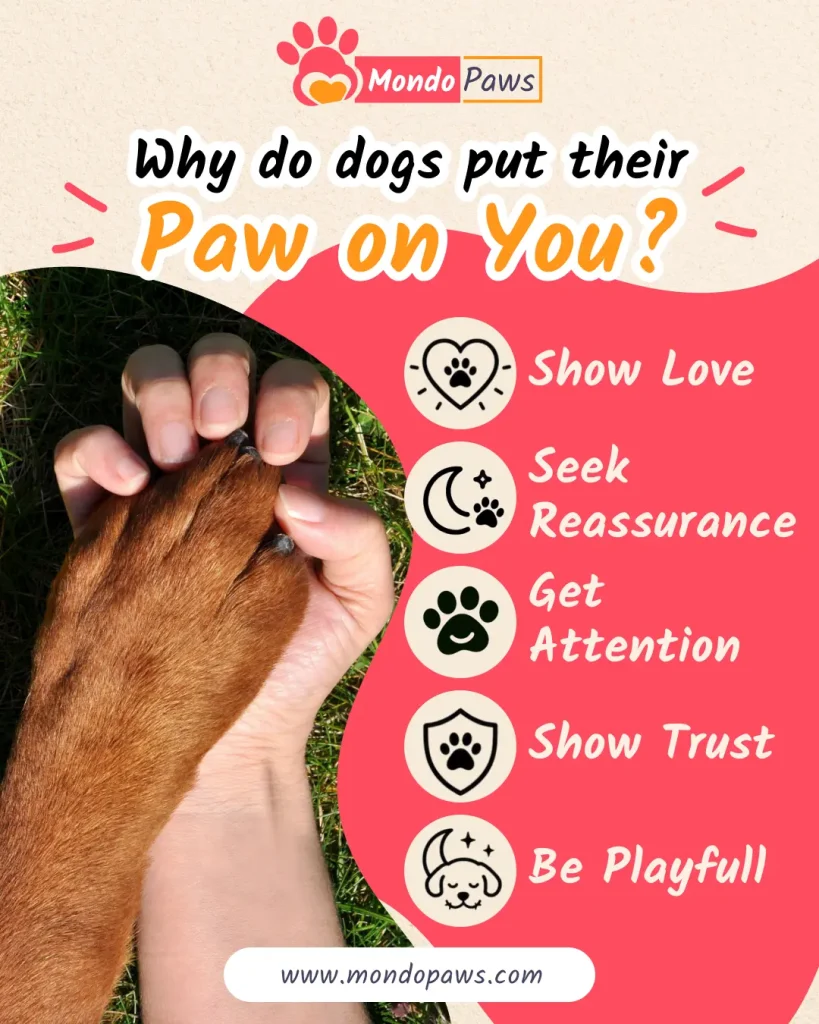
Quick answer: Dogs put a paw on you to communicate. A soft, resting paw usually means affection or “don’t stop,” quick taps usually mean “I want something” (attention, food, potty, play), a paw with trembling or panting can mean worry, and a paw that is new, sudden, or comes with limping or whimpering deserves a vet check. The same gesture can mean different things, so context and body language decide.
Board-certified veterinary behaviorist Dr. Amy Learn explains in an interview with Sundays for Dogs that dogs have only a few ways to ask for things, so when they are not barking or whining, the paw does the job. Certified applied animal behaviorist Mary Burch adds, in a piece on Kinship, that pawing does not always mean the same thing. That is exactly why the tools below ask about the situation, the style of paw, and your dog’s body language, not just the gesture.
Pawing also fits into your dog’s wider day. Check life stage with the dog age calculator, see whether boredom is a factor with the dog exercise calculator, plan time apart with the dogs alone time calculator, and check rest with the dog sleep calculator, since overtired dogs are often pushier.
Why Do Dogs Put Their Paw on You? Free Paw Meaning Decoder
Pick your dog’s age group, then describe when the paw shows up, what it looks like, and how your dog’s body looks. The decoder scores nine common reasons and shows the best matches, a suggested response, and whether a vet check is worth considering. It is a guide for reading context, not a diagnosis.
Paw Types Explorer: What Each Kind of Paw Means
Tap each paw style to see what it usually means, what to look for, and how to respond. The “typical lean” bars are a general guide drawn from behaviorist commentary, not a measurement, so always weigh your dog’s own habits and body language.
—
9 Common Reasons Dogs Put Their Paw on You
Veterinary and behavior sources, including PetMD and Trupanion, describe pawing as a way for a dog to communicate an unmet need. These are the nine reasons the decoder above scores, with the signs that separate them.
| Reason | Signs to Look For | What to Do |
|---|---|---|
| 1. Affection | Soft, resting paw; relaxed body; leaning in. | Enjoy it and return the affection calmly. |
| 2. Attention or "Keep Going" | Paw lands when you stop petting or look away; eye contact. | Reward calm, four-paws-down behavior with attention. |
| 3. Food | Pawing near mealtime, in the kitchen, or by the bowl. | Feed on a schedule; do not let the paw become the meal bell. |
| 4. Potty or Outing | Fast pawing, standing by the door, pacing, whining. | Take them out, then teach one consistent signal. |
| 5. Anxiety | Trembling, panting, clinging; storms, fireworks, or you leaving. | Stay calm, remove stressors, and ask your vet about persistent anxiety. |
| 6. Play or Boredom | Wiggly, bouncy, nose nudges, toy in mouth, quiet days. | Add exercise, sniffing, puzzle toys, and short training games. |
| 7. Comforting You | Paw arrives when you are upset; dog stays relaxed and close. | Accept the company; your dog may be responding to your mood. |
| 8. Learned Habit | Persistent pawing that stops the moment you respond; a rogue "shake." | Stop paying off demand pawing and teach an alternative. |
| 9. Discomfort or Illness | New or sudden pawing, limping, paw licking, whimpering, confusion. | See your vet before assuming it is behavior. |
What Is Your Dog Saying When It Happens? (Situation Guide)
Timing is the biggest clue. Here is how the most common moments usually read, together with a first step to try.
| When It Happens | Likely Meaning | First Thing to Try |
|---|---|---|
| You stop petting | "Please continue," often for a favorite spot. | Pet again only after a calm pause with paws on the floor. |
| You are on the phone or working | Attention bid, often a habit that has worked before. | Offer a chew or mat and reward settling. |
| Mealtime approaches | Food request. | Keep meal times steady and ask for a mat settle before prep. |
| By the door | Potty or walk request. | Take them out, then build a clear signal. |
| You seem sad or stressed | Comfort or reassurance, for you or for them. | Take a breath, keep your voice calm, and accept the contact. |
| Storms, fireworks, or you are about to leave | Reassurance seeking. | Reduce the trigger, provide a safe spot, and ask your vet if it is frequent. |
| In bed or waking up | Wake-up call for play, food, or a bathroom trip. | Check the need, then keep the routine predictable. |
| You arrive home or guests visit | Excited greeting that may have become a habit. | Teach a sit or nose touch as the greeting. |
| While relaxing together | Affection, often paired with a lean. | Soak it in. |
Love or Demand? Sweet Paw vs Pushy Paw
Not all pawing needs fixing. The aim is to keep the sweet kind and discourage the pushy kind. The map below shows where common situations tend to sit between affection and worry, and the table underneath compares the two styles side by side.
| Feature | Sweet Paw | Pushy Paw |
|---|---|---|
| Pressure | Light, resting, easy to move. | Hard swipes or scratching that can hurt or mark skin. |
| Speed | Slow and brief. | Fast, repeated, and escalating. |
| Body | Loose, soft eyes, relaxed mouth. | Stiff, intense stare, whining, or pacing. |
| If You Ignore It | Dog settles or tries a gentler request. | Dog tries harder or switches to a new move. |
| Best Response | Enjoy it. | Pause attention, then reward calm and an alternative behavior. |
Pawing Habit and Training Plan Calculator
Pawing sticks because it pays. A dog paws, you pet, laugh, or feed, and the dog learns to try it again. This calculator estimates how often your dog's paw is being "paid off" each week, rates the strength of the habit, and builds a short training plan around your dog's main trigger. The timeline is a rough planning estimate, not a guarantee.
Paw Diary: Find Your Dog's Biggest Triggers
Guessing is hard, counting is easy. For a day or two, tap the situation each time your dog paws you, and mark whether you gave in or stayed calm. The diary builds a live chart of your dog's top trigger and your response rate. Nothing is saved when you leave the page, so use the copy button to keep your results.
How to Stop a Dog From Pawing You (Without Losing the Cuddles)
Trainers consistently recommend the same approach: work out why your dog is pawing, stop paying off the demand version, and teach something better. A Vetstreet trainer suggests freezing, looking away, or walking off for roughly 10 to 30 seconds and giving attention only when the dog is calm with paws grounded. Embrace Pet Insurance adds that even saying "no" can be a form of attention. Use the training plan calculator above to tailor these steps.
Check the Need First:
Before treating pawing as a demand, rule out a potty break, water, or stress.
Pause the Payoff:
When the paw lands, freeze, look away, or step away for about 10 to 30 seconds. Skip scolding, since any reaction can still count as attention.
Reward Four Paws on the Floor:
Give attention, petting, or treats the moment your dog is calm and grounded, so that is what pays.
Teach an Alternative:
Cues such as sit, down, or "place" give your dog a polite way to ask. A nose touch works well as a greeting for guests.
Put Shake on Cue:
If your dog uses a rogue "shake," teach it only on request and reward it only when you ask.
Meet Needs on a Schedule:
Steady meal times and enough exercise reduce nagging. Pair them with the dog exercise calculator if boredom is a factor.
Skip Over-Exciting Games:
Fast chase or hand-wrestling can trigger more pawing. Switch to calmer games when it starts.
Dog Pawing by Life Stage
PetMD notes that pawing starts as an instinctive behavior in puppies and is kept up because it tends to get a response. Age changes what pawing is most likely to mean, so use this table with the decoder's age toggle. Not sure of your dog's stage? Try the dog age calculator.
| Life Stage | What Pawing Often Means | What to Do |
|---|---|---|
| Puppy | Instinct plus fast learning; play, attention, and potty requests. | Teach polite alternatives early and protect nap time; overtired puppies get pushy. |
| Adult | Mostly communication and learned habits: attention, food, affection. | Reward calm requests and keep needs on a schedule. |
| Senior | Attention and comfort, but also pain or age-related confusion if the behavior is new. | Mention new pawing, night restlessness, or confusion to your vet. |
Vet Red-Flag Checker: When Pawing Is Not Just Behavior
Most pawing is communication, but Trupanion and PetMD both note that it can signal injury, illness, or stress. Tick anything that matches your dog right now. The checker suggests a next step and builds a short list you can copy and show your vet. It cannot diagnose anything, and if you are worried, call your vet.
New or Sudden
Pawing that appears suddenly, or out of character, deserves a closer look.
Pain Signs
Whimpering, limping, flinching, or focused pawing can point to pain or an injury.
Emergency Signs
Drooling and gagging, a hard bloated belly, trouble breathing, or collapse need immediate veterinary care.
Frequently Asked Questions
Dogs put their paw on you to communicate. The most common reasons are asking for attention or more petting, showing affection, asking for food or a potty break, seeking reassurance when stressed, and repeating a habit that has worked before. Soft, relaxed pawing usually means connection, while fast or insistent pawing is usually a request. Sudden or unusual pawing can occasionally point to pain or illness. Try the paw meaning decoder for your own dog.
Often, yes. When your dog rests a paw on you and looks relaxed, it is commonly read as affection or a wish to keep contact, similar to holding hands. Context matters, though. The same gesture can also be a request for attention, food, or reassurance, so check your dog's body language and what was happening just before.
Most dogs paw when petting stops because they want it to continue. The pattern is simple: you pet, you stop, the dog paws, and you start again, which teaches the dog that pawing works. A little of this is harmless, but if it becomes pushy, pause and wait for all four paws to be on the floor before resuming.
It depends on the reason. Check for real needs first, such as a potty break, water, or signs of stress. If the pawing is a demand for attention or food, avoid rewarding it: freeze, look away, or step away for about 10 to 30 seconds, then give attention when your dog is calm with paws on the floor. Do not ignore pawing that comes with limping, whimpering, trembling, or a sudden change in behavior. The training plan calculator builds a plan around your dog's main trigger.
Sometimes. New or sudden pawing, pawing focused on one spot, or pawing with limping, paw licking, whimpering, loss of appetite, confusion, or night pacing can signal pain or illness, and senior dogs can show repetitive behavior with cognitive decline. If your dog paws at the face with drooling, gagging, or swelling, or shows trouble breathing or collapse, seek veterinary care right away. Use the vet red-flag checker to build notes for your appointment.
Dogs who paw at you in bed are usually trying to wake you for attention, play, breakfast, or a bathroom trip. Check for a real need first, then keep your morning routine predictable so waking you does not reliably get a reward. If it is a new behavior or comes with restlessness, mention it to your vet. If your dog is also restless at night, the dog sleep calculator can show whether their rest looks typical.
Work out why your dog is pawing, then stop paying off the demand version. Pause attention for about 10 to 30 seconds when the paw lands, reward calm behavior with all four paws on the floor, teach an alternative such as sit, place, or a nose touch, and meet real needs on a steady schedule with enough exercise. If you teach shake, reward it only when you ask. Stay consistent, and involve a positive-reinforcement trainer if the habit is strong or comes with anxiety.
Behind the Research: How We Built These Paw Tools & This Guide
At Mondo Paws, our mission is to give pet owners clear, research-based tools. To create this guide and its calculators:
- Reviewed Behaviorist and Veterinary Sources: Meanings, warning signs, and training steps were cross-checked against PetMD, Sundays for Dogs (featuring a board-certified veterinary behaviorist), Kinship, Trupanion, Vetstreet, and Embrace Pet Insurance.
- Context-Weighted Decoder: The paw meaning decoder scores nine common reasons using situation, paw style, body language, onset, and age. The weights are our own editorial model built from those sources, not a clinical test, and the "typical lean" bars are general guides, not measurements.
- Planning Estimates, Not Promises: The habit strength score and training timeline in the calculator are simple planning estimates. Every dog learns at a different pace, and no tool here can diagnose a medical or behavioral condition.
Final Thoughts
When your dog puts a paw on you, they are talking to you in one of the few ways they have. Use the Paw Meaning Decoder to read the moment, the Paw Diary to spot patterns, and the training plan calculator to keep the sweet pawing and gently retire the pushy kind. Round out the picture with the dog exercise calculator, the dogs alone time calculator, and the dog sleep calculator.
Remember that your dog's own normal is the best benchmark. If pawing is new, sudden, focused on one spot, or comes with limping, whimpering, confusion, drooling, or a change in appetite or energy, contact your veterinarian rather than waiting to see if it passes.