Table of Contents
Why do cats sleep so much? Mostly because cats are small predators built for short, explosive bursts of hunting, so they rest a lot between bursts to save energy. They are also most active around dawn and dusk, which leaves long stretches of the day and night for rest, and kittens and senior cats need even more. Occasionally, a big or sudden change in sleep points to pain, stress, or illness. This page gives you eight free interactive tools to work out what your own cat’s sleep means.
12 to 16 Hours
Typical sleep for a healthy adult cat
Predator Energy
Rest saves fuel for short hunting bursts
Dawn and Dusk
Cats are crepuscular, not truly nocturnal
Life Stage
Kittens and seniors sleep the most
Light Dozing
Much of it is short, light, alert rest
Sudden Means Vet
A lasting change deserves a health check
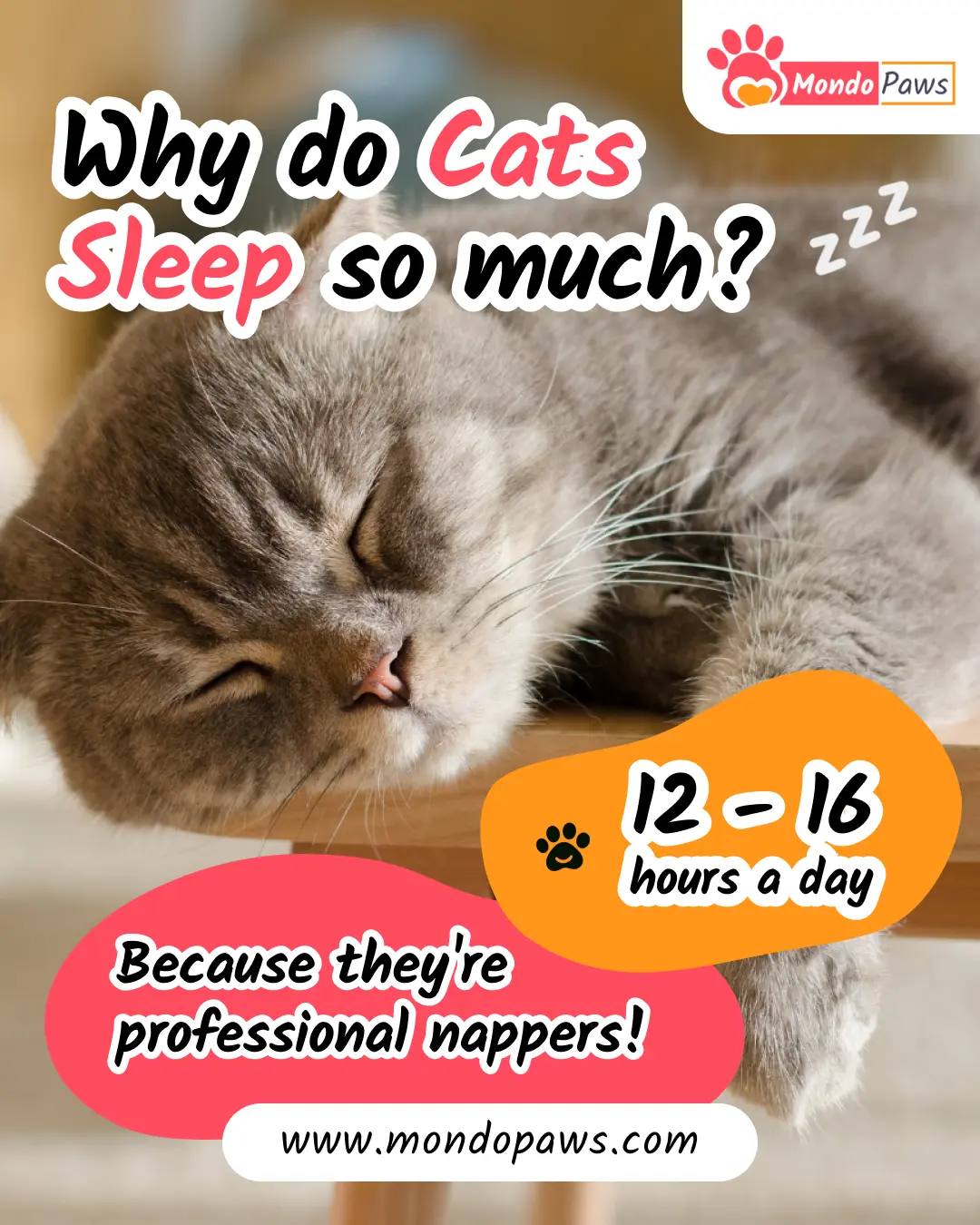
Quick answer: Cats sleep so much because they are predators that conserve energy between short, intense hunting bursts, because they are crepuscular and most active at dawn and dusk, and because kittens and older cats need extra rest. Most adults sleep about 12 to 16 hours a day, often in short light naps. See your vet if the change is sudden, comes with other symptoms such as hiding, appetite or litter box changes, or your cat is hard to wake.
PetMD’s guide to cat sleep puts a typical adult at 12 to 16 hours and kittens at up to about 20. Hill’s Pet explains the ambush-predator energy story and the dawn-and-dusk schedule, while WebVet and Purina cover how sleep rises again in senior cats. The PDSA notes that cats usually sleep in several short bursts rather than one long block. The tools below turn that guidance into something you can click through with your own cat in mind.
Sleep sits alongside other ways your pet communicates. See why dogs follow you everywhere, why dogs put their paw on you, and the stress signals visual guide. For time apart and enrichment, try the alone time calculator and the sleep calculator.
Why Does My Cat Sleep So Much? Free Sleep Reason Decoder
Choose your cat’s age group, then describe when your cat sleeps most, where, how your cat acts when awake, any other changes, your cat’s lifestyle, and how long this has been going on. The decoder scores nine common reasons and shows the best matches, a suggested response, and whether a vet check is worth considering. It is a guide for reading context, not a diagnosis.
😴 Sleep Reason Decoder
How Many Hours Do Cats Sleep? Daily Sleep Calculator
Enter your cat's age group and roughly how many hours a day your cat spends asleep or resting. The calculator compares it with typical ranges (about 12 to 16 hours for adults, with kittens and seniors higher), shows how much of your cat's life is spent asleep, and flags when a change deserves a vet call. Resting hours include light dozing, not only deep sleep, and individual cats vary.
⏱️ Cat Sleep Hours Calculator
Are Cats Nocturnal? Your Cat's 24-Hour Sleep Clock
Cats are not truly nocturnal. Hill's Pet describes them as crepuscular, with peak activity at dawn and dusk. Tap each two-hour slice of the clock to cycle between resting or sleeping, awake and calm, and active or playing. Midnight is at the top. The result shows your cat's total rest, how closely the pattern matches a dawn-and-dusk rhythm, and how much night activity there is. You can also load a typical adult or senior pattern.
🕒 24-Hour Sleep Clock
9 Reasons Cats Sleep So Much
These are the nine reasons the decoder above scores, with the signs that separate them. As Hill's Pet notes, an ambush predator needs short, intense bursts of energy, so rest between hunting attempts is part of the design. Rover adds that temperature, age, and health also shape how long cats sleep. Use the table as a checklist, not a verdict.
| Reason | Signs to Look For | What to Do |
|---|---|---|
| 1. Predator Energy Saving | Short bursts of play or "zoomies," then a crash. | Offer daily play, and let naps run undisturbed. |
| 2. Dawn and Dusk Rhythm | Most active early morning and evening; naps in between. | Schedule play and meals at twilight. |
| 3. Growth and Development | Kitten that plays hard, then falls asleep mid-play. | Allow rest; provide a safe, warm bed. |
| 4. Normal Aging | Older cat sleeping more, with slower movement. | Add supportive bedding, and keep vet checkups current. |
| 5. Boredom | Naps by default; little to do while you are out. | Add play, window perches, and puzzle feeders. |
| 6. Warmth and Comfort | Sleeps in sunny, warm spots; more in cold weather. | Offer a warm bed and a cool alternative. |
| 7. Household Schedule | Sleeps while you are out; wakes when you are home. | Plan play and attention for when you are home. |
| 8. Stress or Insecurity | Hiding, new sleep spots, jumpy when awake. | Add hideaways and keep routines steady. |
| 9. Health Problem | Sudden onset, low interest in food or play, litter box changes. | See your vet before assuming it is behavior. |
The Hunt, Eat, Groom, Sleep Cycle
Behaviorist Pam Johnson-Bennett, quoted by Hill's Pet, explains that hunting takes energy and that cats are both predator and prey, so sleep is how they recharge for the next hunt. Indoor cats rarely get the full natural sequence, which is why a short play session followed by a meal and a groom can settle them into a satisfying nap. The loop below shows the pattern and where you can step in.
What a Cat Nap Really Is: Light Sleep vs REM
A cat that "sleeps all day" is usually dozing on and off, not unconscious for sixteen straight hours. Discover Magazine reports that cats go through both REM and non-REM sleep like people do, and Rover describes naps of around 15 to 20 minutes per cycle with deep REM lasting only a few minutes. Published figures vary by source, so treat the numbers as rough.
| Stage | What It Looks Like | Why It Matters |
|---|---|---|
| Light dozing (cat nap) | Head up or loafed, ears swivel at sounds, easy to wake. | Keeps your cat ready to spring into action while still resting. |
| Deeper non-REM sleep | Relaxed body, slow breathing, often curled or sprawled. | Rest and recovery. Cats choose safe, quiet spots for it. |
| REM sleep | Whisker twitches, paw paddling, a flicking tail, eyes moving under the lids. | The stage linked to dreaming in people, and usually brief in cats. |
The practical takeaway: a quiet, safe sleeping area helps your cat reach the deeper stages, and it is kinder to let a twitching, dreaming cat sleep on.
How Much Sleep Cats Need by Age
Sleep follows a U shape across a cat's life. PetMD says kittens may need up to 20 hours while adults need 15 or fewer, and Purina notes that senior cats often sleep 16 to 20 hours compared with 12 to 15 in younger cats. A veterinarian quoted by Chewy puts seniors at up to about 18 hours, so ranges differ by source.
| Life Stage | Typical Sleep Per Day | What Is Going On | What to Do |
|---|---|---|---|
| Kitten | Up to about 20 hours | Fast growth, short bursts of play, then deep rest. | Let them sleep, and offer a safe, warm bed. |
| Adult (about 1 to 10 years) | About 12 to 16 hours | Energy saving, dawn-and-dusk activity, many short naps. | Offer daily play and a consistent routine. |
| Senior (10+ years) | About 16 to 20 hours | Lower energy, slower metabolism, stiffer joints. | Supportive bedding, easy access to food and litter, vet checkups. |
| Time of Day | What Cats Usually Do | Tip |
|---|---|---|
| Dawn | Peak activity: stalking, playing, asking for breakfast. | A pre-breakfast play session uses that energy. |
| Midday | Long naps, often in a warm or sunny spot. | Keep sleeping areas warm and quiet. |
| Dusk | Second activity peak, often the zoomies. | Play, then a meal. |
| Night | Longer rest, with some cats waking to roam. | A late-evening meal can reduce early-morning wake-ups. |
What Your Cat's Sleeping Position Says: Interactive Decoder
Tap the position that looks like your cat right now. The decoder shows how deeply your cat is likely sleeping and what the pose is commonly taken to mean. These readings come from common behavior interpretation rather than controlled studies, so use your cat's overall body language and context too.
🛏️ Sleep Position Decoder
Sleepy Cat or Something Wrong? The Balance Seesaw
A lot of sleep is normal, so the useful question is whether the sleep is a change and what else is going on. WebVet calls a sudden, lasting change in sleep, up or down, the real red flag, and Rover lists conditions such as diabetes, kidney disease, and excess weight among the things that can affect sleep. Tick what you see and watch the seesaw tip. This is a guide, not a diagnosis.
⚖️ Sleepy vs Something Wrong Seesaw
What Kind of Sleeper Is Your Cat? Take the Quiz
Answer six quick questions about your cat and find your cat's "sleeper type," with what it likely means and what to do next. It is a fun, practical way to read your own cat. It is not a clinical test.
🔮 Sleeper Type Quiz
How to Help Your Cat Sleep Better: Sleep Environment Score
Good sleep depends on feeling safe, warm, and comfortable, and good waking hours depend on enough to do. The Chewy senior cat guide suggests orthopedic bedding, less noise, and enrichment while your cat is awake. Tick what you already have and the score shows your biggest gaps. The weights are our own editorial planning numbers, not a clinical measure.
🛋️ Sleep Environment Score
Make a Safe, Quiet Spot:
Cats reach deeper rest in places that feel secure. Put a bed in a quiet corner or a covered hideaway, away from loud appliances and foot traffic.
Play Before Meals:
A few minutes of stalk-and-pounce play, then a meal, mimics the natural hunt, eat, groom, sleep sequence and tends to leave cats ready for a nap.
Support Older Joints:
Orthopedic or low-sided beds and easy access to food, water, and litter help senior cats rest comfortably. See Chewy's senior cat sleep guide.
Respect the Twitch:
Whisker twitches and paw paddling are signs of REM sleep. Let sleeping cats lie when you can, and avoid startling them out of deeper stages.
Track Your Cat's Normal:
Your cat's own baseline is the best benchmark. A quick note of sleep hours, appetite, and litter habits helps you and your vet spot real changes.
Is My Cat Sleeping Too Much? Vet Red-Flag Checker
WebVet flags a sudden, lasting change in sleep as the sign to act on, and Chewy's veterinary guide adds that even gradual changes can have a medical cause and that pain can disrupt a senior cat's rest. Tick anything that matches your cat right now. If an urgent sign is ticked, call a vet or emergency clinic.
🩺 Vet Red-Flag Checker
Sudden Change
A lasting jump or drop in sleep is the main thing to act on.
Older Cats
More sleep is common, but pain and cognitive changes can disrupt rest.
Emergency Signs
Hard to wake, labored breathing, or straining to urinate need immediate care.
Frequently Asked Questions
Cats are predators built for short, intense bursts of hunting, so they rest a lot to conserve energy between bursts. They are also crepuscular, meaning most active around dawn and dusk, which leaves daytime and night for resting. Kittens sleep more to grow and senior cats often sleep more as energy changes. A sudden change in sleep is worth a vet check. Try the sleep reason decoder for your own cat.
Most adult cats sleep about 12 to 16 hours a day. Kittens can sleep up to around 20 hours, and senior cats often sleep 16 to 20 hours. Much of that is light dozing in short bursts rather than one long deep sleep, and individual cats vary. Check yours with the sleep hours calculator.
It can be normal for kittens and older cats. For a healthy adult it is at the high end, so compare it with your own cat's usual pattern. If your cat suddenly sleeps much more than usual, or also eats less, hides, or changes litter box habits, talk to your vet.
Not exactly. Cats are crepuscular, meaning they are most active around dawn and dusk, when many of their natural prey are active. Cats also adjust their routine to fit their household, so many settle into a schedule close to their owners'. See your cat's pattern on the 24-hour sleep clock.
Cats have REM (rapid eye movement) sleep, the stage linked to dreaming in people. During it you may see whisker twitches, paw paddling, or a flicking tail. Researchers cannot say what cats dream about. Explore poses with the sleep position decoder.
Sudden or lasting increases in sleep can come from pain, illness, stress, boredom, or changes in the home. Conditions such as kidney disease, diabetes, or other health problems can affect energy. See your vet for any sudden change, and seek urgent care if your cat is hard to wake, struggling to breathe, or straining to urinate. Use the vet red-flag checker.
Older cats often have lower energy, slower metabolism, less muscle, and stiffer joints, so they rest more, commonly 16 to 20 hours a day. Pain, vision or hearing loss, and cognitive changes can also affect sleep, so ask your vet about any new change.
Offer a warm, quiet, comfortable sleeping spot, a hideaway, and a high perch. Add daily play sessions followed by a meal, keep sleeping areas away from noise, and use supportive bedding for older cats. Mention sudden changes in sleep to your vet. The sleep environment score shows your biggest gaps.
Behind the Research: How We Built These Sleep Tools & This Guide
At Mondo Paws, our mission is to give pet owners clear, research-based tools. To create this guide and its interactive tools:
- Reviewed Veterinary and Behavior Sources: Sleep ranges, reasons, life-stage changes, and warning signs were cross-checked against PetMD, WebVet, Hill's Pet, Purina, Chewy, PDSA, Rover, and Discover Magazine.
- Ranges Differ by Source: Published sleep figures vary, from roughly 12 to 16 hours for adults to 20 hours or more for kittens and seniors. We use the commonly cited ranges and label them as typical, not strict limits.
- Editorial Scoring Models: The decoder weights, the seesaw scores, the sleeper types, the environment score, and the sleep position readings are our own editorial models built from those sources and common behavior guidance. They are teaching aids, not clinical tests.
- Simplified Graphics: The 24-hour clock and the hunt cycle are simplified illustrations. Every cat and home is different.
- Not a Diagnosis: No tool here can diagnose any medical or behavioral condition. If your cat's sleep changes suddenly, or your cat shows other symptoms, see your veterinarian.
Final Thoughts
A cat that sleeps most of the day is usually just being a cat: a small predator saving energy for short bursts of action. Use the Sleep Decoder to read the reason, the Hours Calculator to see how your cat compares, the 24-Hour Clock to check the rhythm, the Position Decoder for a quick read of the pose, the Seesaw to separate sleepy from sick, the Quiz for your cat's sleeper type, and the Sleep Score to make the home more rest-friendly. Pair them with the exercise calculator, the alone time calculator, and the sleep calculator.
Remember that your cat's own normal is the best benchmark. If the sleep change is sudden, comes with physical symptoms, or your cat is hard to wake, contact your veterinarian rather than waiting to see if it passes.