Table of Contents
Dog stress signals show up in body language long before a dog barks, growls, or bolts. Lip licking, yawning, whale eye, pinned-back ears, a tucked tail, trembling, and sudden stillness are the most common early signs. This visual guide gives you six free interactive tools to read your own dog’s body language, score their stress right now, and decide what to do next.
Whale Eye
Head turned away, eyes still on the trigger, whites showing
Lick & Yawn
Early signals when your dog is not hungry or tired
Tucked Tail
Often fear: read it together with ears and posture
Freezing
Sudden stillness is a signal to give space immediately
Context First
One signal is a clue; clusters tell the story
Never Punish a Growl
It is a warning that keeps everyone safe
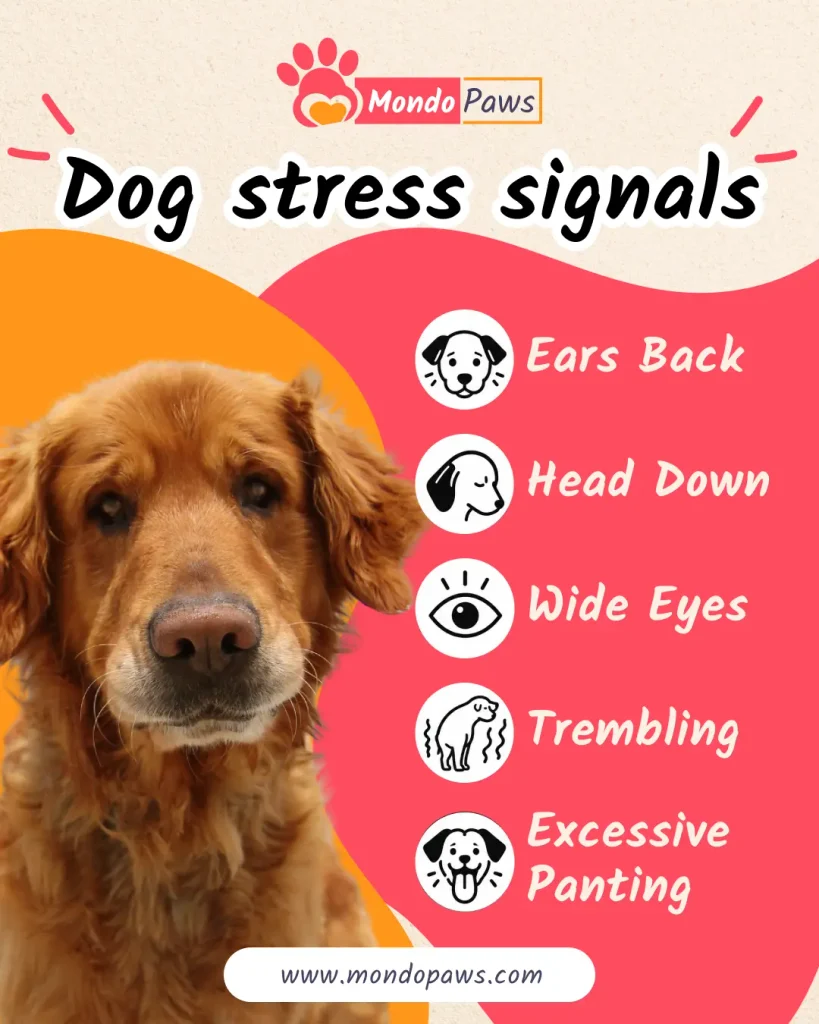
Quick answer: The main dog stress signals are lip or nose licking, yawning when not tired, whale eye, head turned away, ears pinned back, a tucked or stiff tail, panting when not hot, drooling without food, trembling, pacing, freezing, and leaving the situation. Read the whole dog and the context, give space when you see several signals together, and never punish a growl.
The ASPCA’s canine body language guide stresses reading the whole body, not one signal, and considering what happens before, during, and after it. The UK charity PDSA describes a ladder of communication that runs from a subtle yawn to a bite, and notes that dogs whose gentle signals keep being ignored may skip steps. The tools below turn that guidance into something you can click through with your own dog in mind.
Stress is part of your dog’s wider day. Check rest with the dog sleep calculator, outlets with the dog exercise calculator, and time apart with the dogs alone time calculator. If your dog is also pawing at you for reassurance, see our guide on why dogs put their paw on you.
Dog Stress Signals Body Language: Interactive Visual Map
Switch the dog between relaxed, stressed, and fearful and watch the ears, eyes, mouth, tail, and posture change. Then tap each body part to read what it means and what to do. The drawing is a simplified guide based on the ASPCA’s relaxed, anxious, and fearful descriptions. Breeds differ, so always compare with your own dog’s normal.
🐕 Dog Body Language Map
Ears
RelaxedThe Dog Stress Ladder: From a Yawn to a Bite
Dogs rarely go from calm to biting. They climb a ladder of signals, and the PDSA's canine ladder of communication lays out the steps. Tap a rung, or drag the slider, to see what your dog is saying at each level and what to do. Not every dog shows every step, and dogs whose early signals are ignored may skip rungs.
🪜 Stress Ladder Explorer
The key lesson from the ladder is that the quietest signals are the easiest to act on. If you step in at the yawn or the look-away, your dog never has to climb to a growl.
Dog Stress Meter: Score Your Dog's Signals Right Now
Tick every signal you can see in your dog right now. The meter adds them up, weighs how long it has lasted, and suggests a next step. The weights are our own editorial scoring based on the sources below. This is a guide, not a diagnosis, and it cannot replace a veterinarian or qualified behavior professional.
📊 Dog Stress Meter
Dog Stress Signals Cheat Sheet: Head to Tail
This first table follows the ASPCA's comparison of relaxed, anxious or stressed, and fearful dogs. The second is an A to Z of single signals with the context to check. Save or screenshot both.
| Body Part | Relaxed | Anxious or Stressed | Fearful |
|---|---|---|---|
| Eyes | Squinted, almond-shaped, no white showing. | Rounder, often whale eye, possibly dilated. | Wide open with large pupils. |
| Mouth | Open and loose, gentle panting, corners soft. | Tight or closed, rapid panting, lip licking, yawning, drooling without food. | Closed with lips pulled back at the corners, rapid panting. |
| Tail | Level with the spine or lower, loose sweeping wag. | Raised above the spine, held high, or short rapid strokes. | Tucked between the legs, held rigid against the belly, or stiff wag. |
| Posture | Loose and soft. | Tense, more shedding, hackles may rise. | Leans away, trembles, crouches, rolls over; may freeze, flee, or urinate. |
The ASPCA also describes aggressive body language: ears forward, a hard stare with whites showing, a wrinkled muzzle, lifted lips, growling, and a tall, tense, forward-weighted stance. If you see that combination, give your dog and the people around them distance. Teeth alone do not always mean aggression, since some happy dogs show a "submissive grin."
| Signal | What It May Mean | Check the Context |
|---|---|---|
| Lip or nose licking | Early stress or unease. | Is food nearby? Is someone approaching? |
| Yawning | Releasing tension in the jaw. | Is your dog tired, or is the moment tense? |
| Whale eye | Anxiety, stress, or fear. | Head turned away, eyes still on the trigger, whites showing. |
| Head turn-away | Asking to end the interaction. | Is something pressuring them? |
| Panting | Stress, or just cooling down. | Heat, exercise, and rest all matter. |
| Drooling | Stress when there is no food. | Is food or nausea possible? |
| Trembling | Fear or anxiety. | Cold, excitement, or pain are also possible. |
| Pacing | Anxiety or being unable to settle. | Needs such as potty or water; also check for pain. |
| Freezing | Deciding between flight and fight. | Give space immediately. |
| Tucked tail | Fear or very low confidence. | Combine with ears and posture. |
| Ears back | Worry or appeasement. | Breed ear shape can hide it. |
| Raised paw | Uncertainty. | Often paired with a lowered head. |
| Extra shedding | Stress response. | Also consider season and skin health. |
| Refusing treats | May be too stressed to eat. | Reduced appetite is a listed stress sign. |
| Hiding or leaving | Wants distance. | Let them go; do not block the way out. |
Stress or Normal? The Look-Alike Signal Decoder
Many stress signals also happen when a dog is tired, hot, wet, or happy. Pick a signal, then pick the situation that best matches what you saw, and the decoder tells you how to read it. This is the quickest way to avoid over-reading a normal stretch or under-reading a worried yawn.
🔍 Look-Alike Signal Decoder
The Stress Bucket Calculator: Is Your Dog Close to Overflowing?
Stress adds up. A vet visit, a noisy afternoon, and a missed walk can each be manageable alone, but together they can fill a dog's "bucket" until one small thing makes it spill over into barking, lunging, or snapping. This is often called trigger stacking. Tick what has happened in the last day or two, then tick what has helped your dog unwind, and watch the bucket. The weights are our own editorial estimates, meant as a planning aid.
🪣 Stress Bucket Calculator
What to Do When You See Dog Stress Signals
Advice from PetsRadar, PDSA, and PetMD points to the same core steps: spot the trigger, add distance, and help your dog feel safe, then build confidence slowly.
1. Spot the Trigger:
Look at what changed just before the signals began: a person, dog, noise, object, or place.
2. Add Distance:
Remove your dog from the situation, or remove the trigger. On a walk, cross the street or turn around.
3. Let Them Leave:
Do not block the exit. Walking away is a healthy choice that prevents escalation.
4. Stay Calm and Quiet:
Keep your voice low and your body loose. Do not stare, loom, or reach for your dog.
5. Offer a Safe Space:
A quiet room or den, with white noise to mask loud sounds, gives your dog somewhere to retreat.
6. Support the Basics:
Regular exercise and a steady routine are linked with lower fear and anxiety. Use the dog exercise calculator to check your dog's needs.
7. Build Confidence Gradually:
Behavior modification slowly changes your dog's emotional response to triggers. A qualified trainer or behaviorist can guide this.
| Do | Do Not |
|---|---|
| Heed the quiet signals: the yawn, lick, and look-away. | Punish a growl. It may teach your dog to skip straight to a snap or bite. |
| Let your dog leave and recover. | Block the escape route or force contact. |
| Keep a loose leash and calm voice when it is safe. | Stare, loom, or reach over your dog. |
| Reduce the trigger first, train second. | Push your dog closer to the trigger to "get over it." |
| Keep notes of signals and situations for your vet. | Ignore a sudden or lasting change in behavior. |
Common Dog Stress Triggers and How to Ease Them
PetMD lists meeting unfamiliar dogs or people, visitors at home, and loud noises such as fireworks and thunderstorms among the most common triggers. These are the usual suspects and a gentle first response for each. Use the stress meter and the bucket calculator to see how they stack up for your dog.
| Trigger | What You Might See | First Response |
|---|---|---|
| Unfamiliar dogs or people | Whale eye, stiffening, turning away, leaving. | Add distance, avoid forced greetings, and let your dog choose. |
| Visitors at home | Pacing, barking, hiding, lip licking. | Offer a quiet room with a chew before guests arrive. |
| Fireworks and thunderstorms | Trembling, tucked tail, panting, clinging. | Provide a safe space, use white noise, and stay calm. |
| Vet or groomer | Panting, drooling, freezing, refusing treats. | Short, positive practice visits and rewards. Ask about low-stress handling. |
| Being alone or routine changes | Pacing, whining, destructive behavior, not settling. | Build alone time gradually. See the dogs alone time calculator. |
| Crowds and new places | Staying close, ears back, avoiding eye contact. | Start with quiet places and short trips. |
| Hugging and handling | Lip licking, yawning, head turn, stiffening. | Watch for these signs and give your dog an easy way to say no. |
Spot the Signal Quiz: Can You Read Your Dog?
Six quick scenarios. Tap an answer to see the explanation straight away, and check your score at the top.
🧠 Spot the Signal Quiz
When to Get Help: Vet, Trainer, or Veterinary Behaviorist
PetMD advises seeing a veterinarian promptly for any change in behavior, so medical causes can be ruled out. If none is found, your vet can discuss treatment options or refer you to a board-certified veterinary behaviorist, who has completed at least three years of clinical behavior residency and passed a certification exam. Keep notes on the signals you see and the situations that prompt them, and bring your stress meter summary.
Rule Out Medical
Any sudden or lasting change in behavior deserves a vet check first.
Severe or Frequent
Your vet may discuss medication or refer you to a behavior specialist.
Freeze, Snap, or Bite
Seek professional help promptly and keep everyone at a safe distance meanwhile.
Frequently Asked Questions
Common dog stress signals include lip or nose licking, yawning when not tired, whale eye (head turned away while the eyes stay on the trigger and the whites show), ears pinned back, a tucked or stiffly held tail, panting when not hot, drooling without food, trembling, pacing, freezing, and turning away or leaving. One signal alone is a clue, not a diagnosis, so read the whole dog and the situation. Score your dog with the dog stress meter.
Whale eye is when a dog turns its head away from something but keeps its eyes on it, so the whites of the eyes show, often as a crescent. It usually signals stress, anxiety, or fear and often comes with other signs such as a stiff body, lip licking, yawning, a low tail, or a raised paw. Calmly give your dog space and remove the trigger.
Lip or nose licking and yawning are among the earliest stress signals on the canine ladder of communication. Yawning can help release tension in the jaw. Check what is happening around your dog, such as a stranger, a hug, or a vet visit, and reduce the pressure if the signals continue. The look-alike signal decoder helps you tell these from normal yawns and licks.
No. A loose, sweeping wag with a relaxed body usually means a comfortable dog, but a tail held high and moving in short rapid strokes can signal stress, and a stiff wag held low can signal fear. Always read the tail together with the ears, eyes, mouth, and posture. Switch states on the body language map to compare.
A tail tucked between the hind legs with ears flattened back is a classic fear signal, especially with trembling, a lowered body, or leaning away. Give your dog space, move them away from the trigger, and avoid forcing contact. If it happens often, talk to your veterinarian.
No. A growl is a clear signal of distress or fear that asks for space. Punishing it can teach a dog to skip the warning and go straight to snapping or biting. Calmly remove the trigger, give your dog distance, and ask a qualified professional for help if growling is frequent. See the stress ladder for where growling sits.
Identify and reduce the trigger, add distance, and let your dog leave the situation. Offer a quiet room or safe space, use background noise to mask loud sounds, keep up regular exercise and routines, and use gradual behavior modification to change your dog's response to triggers over time. Ask your vet about further options if anxiety is severe. The stress bucket calculator shows which unwinding activities to add.
See your veterinarian for any sudden or lasting change in behavior so medical causes can be ruled out. If no medical cause is found, your vet can discuss treatment options or refer you to a board-certified veterinary behaviorist. Seek professional help promptly if your dog freezes, growls, snaps, or has bitten.
Behind the Research: How We Built These Stress Tools & This Guide
At Mondo Paws, our mission is to give pet owners clear, research-based tools. To create this guide and its interactive tools:
- Reviewed Behavior and Veterinary Sources: Signals, ladder steps, and advice were cross-checked against the ASPCA canine body language guide, the PDSA's canine ladder of communication, PetMD, and PetsRadar.
- Editorial Scoring Models: The stress meter's weights, the stress bucket's point values, and the quiz are our own editorial models built from those sources. They are teaching and planning aids, not clinical tests.
- A Simplified Drawing: The body language map is a simplified illustration of the ASPCA's relaxed, anxious, and fearful descriptions. Breeds differ in ears, tails, and faces, so always compare against your own dog's normal.
- Not a Diagnosis: No tool here can diagnose a medical or behavioral condition. If your dog's behavior changes suddenly or lasts, see your veterinarian.
Final Thoughts
Your dog is almost always telling you how they feel, usually quietly and early. Use the body language map to learn the shapes of relaxed, stressed, and fearful, the stress ladder to catch the whisper before the growl, the stress meter to score a tough moment, and the stress bucket to plan calmer days. Pair them with the dog exercise calculator, the dogs alone time calculator, and the dog sleep calculator.
Remember that your dog's own normal is the best benchmark. If stress signals are sudden, constant, or escalating toward freezing, growling, or snapping, contact your veterinarian or a qualified behavior professional rather than waiting to see if it passes.