Table of Contents
What size crate does your dog need? This free dog crate size calculator turns your dog’s length, height, and weight into a recommended crate size, shows your dog inside it on a live diagram, and checks fit for puppies, airline travel, and your car, so you buy the right crate once.
6 Tools
Size calculator, puppy divider, breed finder, airline, car fit, and fit test
+2 to 4 Inches
Extra length and height to add to your dog’s measurements
18 to 48 Inches
Standard crate lengths from toy breeds to giant breeds
Stand, Turn, Lie
The three-move test every correctly sized crate should pass
Divider Tip
Buy for adult size and shrink the space while your puppy grows
Guides Only
Brands differ, so always check the maker’s interior dimensions
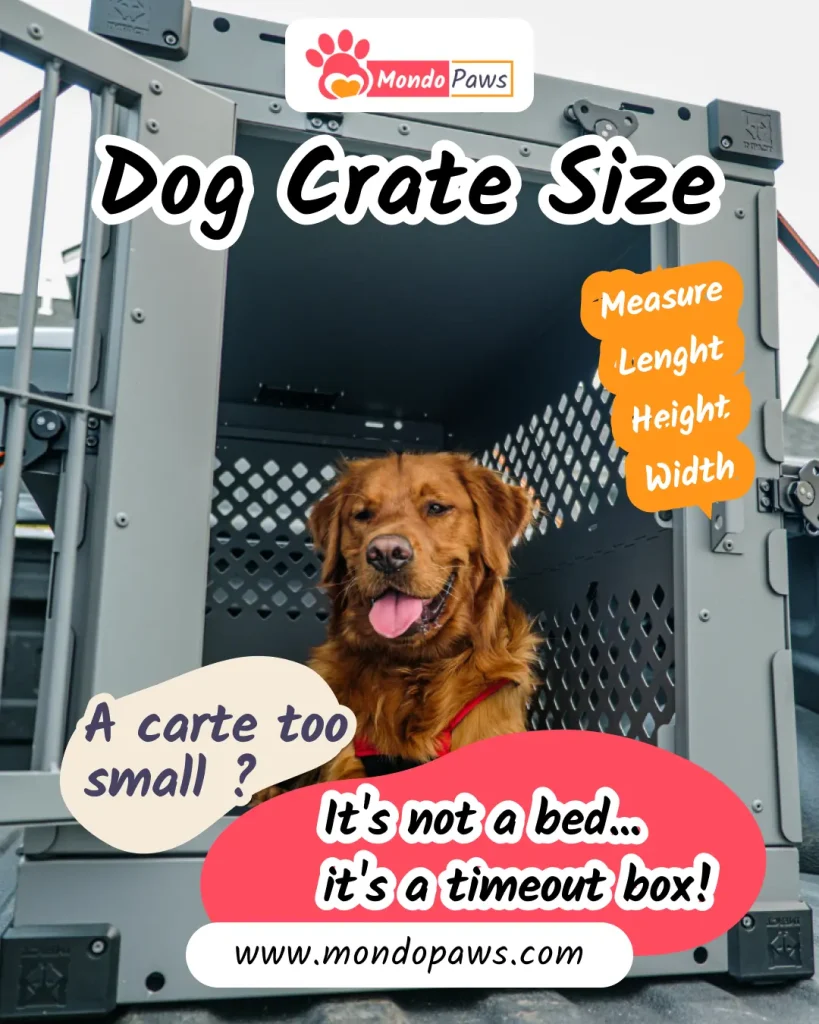
A crate should feel like a safe den: big enough to stand, turn around, and stretch out, but not so big that a puppy can sleep at one end and use the other as a toilet. Crate size also affects car safety and airline travel, so it is worth measuring properly. Pair your result with our Dog Age Calculator, Dog Weight Calculator, Dog Calorie Calculator, Dog Exercise Calculator, and Water Intake Calculator for Dogs. For general crate-training advice, the American Kennel Club and the ASPCA both publish beginner-friendly guides.
Free Dog Crate Size Calculator
Enter your dog’s length, height, and weight. The calculator adds your chosen room allowance, finds the smallest standard crate that fits on length, height, and weight, and draws your dog inside it so you can see the fit.
Clinical Note: Crate sizes and weight ranges are general guides, and manufacturers differ in how they measure. Always compare your dog’s measurements with the interior dimensions listed for the exact crate you plan to buy, and ask your veterinarian if your dog has orthopedic problems, breathing difficulty, or anxiety around confinement.
Puppy Crate Size and Divider Calculator
The most economical plan is to buy one crate for your puppy’s adult size and use a divider panel to shrink the space while your puppy grows. Choose the adult crate size from the calculator above, add your puppy’s age, and see where to set the divider and how long your puppy can reasonably stay crated.
Clinical Note: Puppy growth varies widely, even within a breed, so these divider positions are starting points. Resize the space whenever your puppy can no longer stand, turn, and lie down comfortably, and talk to your vet before leaving a young puppy crated for longer than the guide suggests.
Crate Size by Breed: Quick Finder
Not sure of your dog’s exact measurements yet? Search for a breed to see the usual adult crate size. Breed averages are a starting point, so use the calculator above once you have measured your own dog.
Dog Crate Size Chart by Weight and Breed
This dog crate size chart lists the standard wire-crate lengths, typical exterior dimensions, and the weights and breeds each one usually suits. Use weight as a quick check, but let your dog's measurements decide when the two disagree, because long, low dogs and tall, narrow dogs do not follow weight charts neatly.
| Crate Length | Typical Size (L × W × H) | Dog Weight | Example Breeds |
|---|---|---|---|
| 18 in (46 cm) | 18 × 12 × 14 in | Up to 12 lbs | Chihuahua, Yorkshire Terrier, Pomeranian, Maltese |
| 22 in (56 cm) | 22 × 13 × 16 in | 13–25 lbs | Shih Tzu, Pug, Miniature Poodle, Miniature Schnauzer |
| 24 in (61 cm) | 24 × 18 × 19 in | Up to 30 lbs | French Bulldog, Boston Terrier, Cavalier King Charles Spaniel, Jack Russell Terrier |
| 30 in (76 cm) | 30 × 19 × 21 in | 31–40 lbs | Beagle, Cocker Spaniel, Pembroke Welsh Corgi |
| 36 in (91 cm) | 36 × 23 × 25 in | 41–70 lbs | Border Collie, Australian Shepherd, Siberian Husky, Standard Poodle, English Bulldog |
| 42 in (107 cm) | 42 × 28 × 30 in | 71–90 lbs | Labrador Retriever, Golden Retriever, German Shepherd, Boxer, Doberman Pinscher |
| 48 in (122 cm) | 48 × 30 × 32 in | 91–110 lbs | Rottweiler, Akita, Bernese Mountain Dog, Newfoundland, Great Pyrenees |
| XXL / Heavy-Duty | Often 48 in or more, check the maker | Over 110 lbs | Great Dane, Mastiff, Saint Bernard, Irish Wolfhound |
Brands list sizes slightly differently, and soft-sided, plastic, and furniture-style crates have thicker walls that reduce interior space. Always read the interior dimensions. Not sure whether your dog is still growing into a size? Check our Dog Age Calculator for your dog's life stage and our Dog Weight Calculator to see whether your dog is at a healthy weight, since weight change can shift the right crate size.
How to Measure Your Dog for a Crate
You only need a soft tape measure and a treat to keep your dog still. Measuring takes about two minutes, and it is more accurate than guessing from breed or weight.
| Step | What to Do | Tip |
|---|---|---|
| 1. Stand Your Dog | Have your dog stand square on a flat, hard floor. | A treat held at nose height keeps most dogs still. |
| 2. Measure Length | Run the tape from the tip of the nose to the base of the tail. | Do not include the tail itself, or the crate will be too long. |
| 3. Measure Height | Measure from the floor to the top of the head, or to the ear tips if the ears stand upright. | Use the highest point of the head while your dog stands naturally. |
| 4. Add Room | Add 2 to 4 inches to both numbers. | Add less for small dogs and more for large dogs. |
| 5. Check Weight | Compare your dog's weight with the crate's weight guide. | For puppies, use the expected adult weight. |
| 6. Test the Fit | Make sure your dog can stand, turn around, and lie down naturally. | Use the Crate Fit Test below. |
For measuring a puppy that has not finished growing, ask your veterinarian to estimate adult size, or compare the puppy's weight with breed averages. The American Veterinary Medical Association is a good starting point for general pet-care guidance.
Airline and Travel Crate Size Calculator
Airline kennels follow stricter rules than a living-room crate. Industry guidance, based on the IATA Live Animals Regulations, calls for a kennel in which your dog can stand, turn around, and lie down naturally. A common method uses four measurements. Enter them below to estimate the minimum interior size.
Clinical Note: Flat-faced breeds such as Pugs, Bulldogs, and French Bulldogs can have breathing difficulty, and many airlines restrict them in cargo. Talk to your veterinarian and your airline before booking, and review the pet-travel guidance on the USDA APHIS website if you are traveling internationally.
Will the Crate Fit in My Car? (Car Fit Checker)
A crate that is perfect for your dog is no help if it will not fit in your vehicle. Pick a starting vehicle type, edit the cargo space to match your car, choose a crate size, and see whether it fits in either direction. Measure the width between the wheel wells and the height under the cargo cover.
Which Type of Crate Is Right for Your Dog?
Size is only half the decision. Wire, plastic, soft-sided, heavy-duty, and furniture-style crates each suit different situations. Pick how you plan to use the crate to see what to look for.
Crate Fit Test: Is Your Current Crate the Right Size?
Already own a crate? Watch your dog in it, then tick every statement that is true. The test tells you whether the crate is too small, too big, or about right.
Common Crate Sizing Mistakes and How to Fix Them
Most crate problems come from a few easy-to-avoid sizing errors. A crate is a tool for safety and rest, never a punishment, so it should always feel comfortable. The Humane Society of the United States and the American Animal Hospital Association offer additional pet-care guidance if you have concerns about confinement.
| Mistake | Why It Matters | Fix |
|---|---|---|
| Buying by Weight Only | Long, low dogs and tall, lean dogs break the weight rules. | Measure length and height, then check weight second. |
| Including the Tail | Measuring to the tail tip makes the crate too long. | Measure to the base of the tail. |
| Forgetting Height | Ears or head can touch the roof, so the dog cannot stand comfortably. | Add 2 to 4 inches to your dog's standing height. |
| Choosing a Crate That Is Too Big | Puppies may use a corner as a toilet, which slows house training. | Use a divider panel and move it back as your puppy grows. |
| Choosing a Crate That Is Too Small | Your dog cannot turn or stretch out, which is uncomfortable and stressful. | Size up and recheck with the Crate Fit Test. |
| Ignoring Interior Dimensions | Plastic, soft, and furniture crates have thicker walls than wire crates. | Compare inside dimensions on the product page. |
| Crating for Too Long | Dogs need exercise, bathroom breaks, and company during the day. | Follow age-based limits and ask your vet. See our Dog Exercise Calculator for activity guidance. |
| Not Rechecking as Your Dog Changes | Growth, weight gain, or senior stiffness changes what fits comfortably. | Recheck with the Dog Age Calculator and Dog Weight Calculator each year. |
Hydration and nutrition matter too, especially for dogs that spend long stretches in a crate. Use our Water Intake Calculator for Dogs and Dog Calorie Calculator to keep routines on track, and talk to your veterinarian about the best schedule for your dog.
Frequently Asked Questions
Measure your dog from nose to the base of the tail and from the floor to the top of the head or ears, then add 2 to 4 inches to each number. Choose the smallest standard crate that is at least that long and tall, and check that your dog's weight falls within the crate's recommended range. Most dogs under 12 pounds fit an 18-inch crate, 13 to 25 pounds a 22-inch, 26 to 40 pounds a 24 to 30-inch, 41 to 70 pounds a 36-inch, 71 to 90 pounds a 42-inch, and 91 pounds or more a 48-inch or larger crate.
With your dog standing, measure length from the nose to the base of the tail (not the tail tip) and height from the floor to the top of the head, or to the ear tips if the ears stand up. Add 2 to 4 inches to each measurement. The crate's interior must be at least that long and tall.
A good rule is 2 to 4 inches longer and taller than your dog. Your dog should be able to stand without ducking, turn around easily, and lie stretched out. A crate much larger than that gives a puppy room to use one end as a bathroom, which can slow house training.
Most adult Labrador Retrievers fit a 42-inch crate. Smaller females around 55 to 65 pounds may be comfortable in a 36-inch crate, but measure your own dog because individual Labradors vary.
Buy a crate that fits your puppy's expected adult size and use a divider to shrink the usable space while the puppy is small. Move the divider back as the puppy grows so there is always room to stand, turn around, and lie down, but not enough to use one end as a toilet. Our puppy divider calculator above shows where to set it by age.
Not usually. A crate that is too large undermines house training and can feel less secure, while a crate that is too small is uncomfortable. The goal is a snug but comfortable den, with enough room to stand, turn, and stretch out.
Airline crates generally follow IATA-style guidance: your dog must be able to stand, turn around, and lie down naturally. A common method sets minimum interior length at the nose-to-tail-base length plus half the elbow-to-floor height, width at twice the shoulder width, and height at your dog's standing height. Always confirm the exact requirements with your airline.
It depends on age. Many trainers suggest about 1 hour for puppies under 10 weeks, 2 hours at 10 to 12 weeks, 3 hours at 13 to 16 weeks, and about 4 hours until 6 months. Healthy adults can usually manage 6 hours or less during the day, and no dog should spend most of the day crated. Ask your vet about your individual dog.
Behind the Research: How We Built This Dog Crate Size Calculator & Guide
At Mondo Paws, our mission is to give pet owners practical, carefully researched tools. To create this calculator and crate guide:
- Built on the Standard Sizing Rule: The calculator uses the widely taught method of measuring nose to base of tail and floor to head, adding 2 to 4 inches, then matching the result to standard crate lengths and weight guidance. Results are estimates and brands vary.
- Cross-Referenced Trusted Resources: Crate-training and pet-care guidance was checked against the American Kennel Club, the American Veterinary Medical Association, the ASPCA, and the American Animal Hospital Association.
- Travel and Safety Context: The airline calculator reflects the stand, turn, and lie down principle in the IATA Live Animals Regulations, and the car section points readers to independent crash testing from the Center for Pet Safety.
- Interactive Tools, Not Guesswork: Every widget runs in your browser and uses only the numbers you enter. Nothing is stored or sent anywhere.
Final Thoughts
The right crate is snug but comfortable: your dog can stand, turn around, and lie down, with just a few inches to spare. Use our Dog Crate Size Calculator for the main answer, the puppy divider tool while your dog grows, and the travel and car tools before any trip. Keep supporting your dog's overall health with our Dog Age Calculator, Dog Calorie Calculator, Dog Weight Calculator, Dog Exercise Calculator, and Water Intake Calculator for Dogs.
Remember that a crate should be a calm, positive space and never a place for punishment or long hours of isolation. Introduce it gradually with treats and praise, and contact your veterinarian if your dog shows signs of distress, panting, or injury in the crate.