Table of Contents
Cat Age Calculator · Human Years & Life Stage Guide
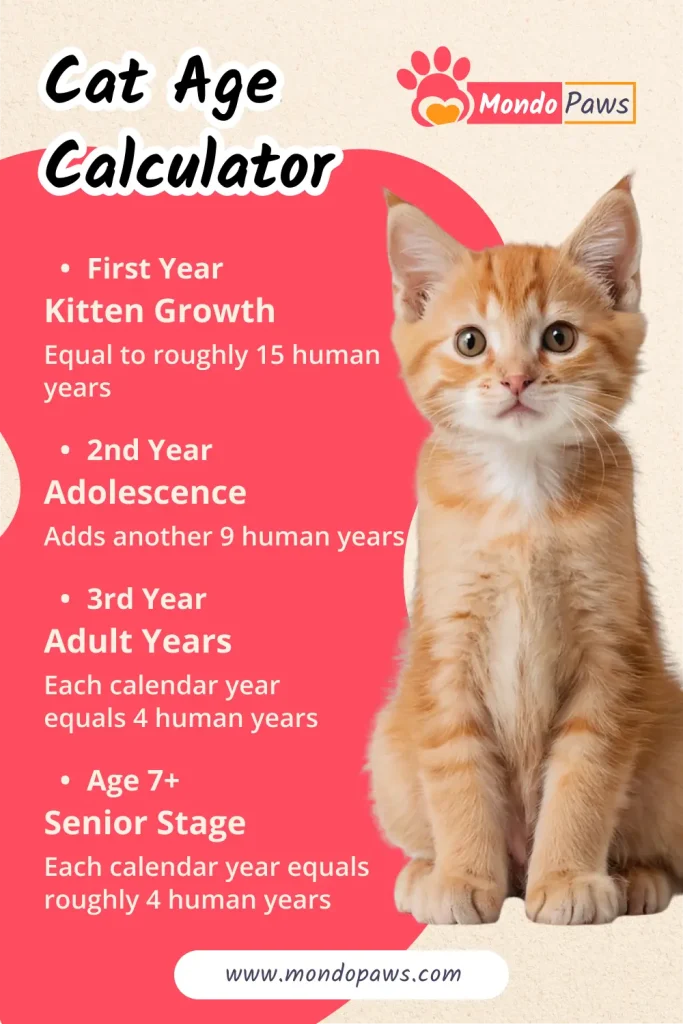
How old is your cat really, in human years? Cats age far faster than people in their first two years of life, then settle into a slower, steadier pace. A one-year-old cat is roughly equivalent to a 15-year-old human, a two-year-old cat is close to 24, and each year after that adds about four more human years. Knowing where your cat sits on that curve helps you time wellness exams, adjust nutrition, and catch age-related changes early.
15 Years
Human-year equivalent of a cat’s 1st year
24 Years
Human-year equivalent by a cat’s 2nd birthday
+4 Yrs
Added per cat-year after age two
11 Years
Typical age a cat is classified as “senior”
6 Stages
Feline life stages from kitten to geriatric
13–17 Yrs
Typical lifespan range for indoor cats
Whether you know your cat’s exact birth date or only her approximate age, our interactive Cat Age Calculator below converts her age into human years, identifies her current life stage, and flags the next recommended wellness-visit milestone.
Interactive Cat Age Calculator
Enter your cat’s birth date (or her approximate age in years and months) below to calculate her age in human years, her current life stage, and the next recommended wellness milestone in real time.
How Cat Years Convert to Human Years
The old “multiply by seven” rule doesn’t hold up for cats — feline development is front-loaded, with most physical and sexual maturity reached within the first two years. After that, aging slows to a steadier pace, as reflected in life-stage guidelines from the American Association of Feline Practitioners (AAFP).
| Cat’s Age | Human-Year Equivalent | Why This Range |
|---|---|---|
| 1 Year | ~15 years | Kittens reach most physical and sexual maturity within their first 12 months. |
| 2 Years | ~24 years | The second year adds roughly 9 more human years as growth finishes tapering off. |
| 4 Years | ~32 years | From here, each additional cat-year adds about 4 human years. |
| 7 Years | ~44 years | Marks the start of the “Mature” life stage under AAFP guidelines. |
| 11 Years | ~60 years | Widely used threshold for classifying a cat as a senior. |
| 15 Years | ~76 years | Enters the “Geriatric” life stage, where wellness visits are typically twice yearly. |
Clinical Note: According to feline life-stage guidelines published by the American Animal Hospital Association (AAHA), chronological age alone doesn’t determine a cat’s health status. A well-managed 12-year-old cat can be in better physical condition than a poorly managed 8-year-old, which is why regular wellness exams matter more than the number itself.
Early and Later Signs of Feline Aging
Cats are skilled at masking discomfort, so age-related changes often show up as subtle shifts in behavior long before anything looks clinically obvious. Tracking these changes against your cat’s calculated life stage helps you know when a vet visit is worth moving up.
Ages 7–10: Subtle Signs
Slightly reduced activity, a bit more sleep, and the first hints of dental tartar or mild weight change.
Ages 11–14: Noticeable Signs
Stiffness jumping onto furniture, coat that looks less groomed, increased thirst, and changes in litter box habits.
Ages 15+: Pronounced Signs
Noticeable muscle loss, disorientation or nighttime vocalizing, cloudy eyes, and reduced appetite or mobility.
The Six Feline Life Stages
Veterinary organizations commonly divide a cat’s life into six stages, each with distinct developmental milestones and different care priorities.
Kitten (0–6 Months)
Rapid Growth. Vaccine series, deworming, and socialization windows fall here. Free-feed a kitten-formula diet to support growth.
Junior (6 Months–2 Years)
Maturity & Spay/Neuter. Most physical growth completes by 12 months; spaying or neutering is typically done in this window.
Prime (3–6 Years)
Peak Adult Health. Annual wellness exams, dental care, and weight management set the pattern for healthy aging.
Mature (7–10 Years)
Preventive Focus. Baseline bloodwork is recommended to catch early kidney, thyroid, or metabolic changes.
Senior (11–14 Years)
Twice-Yearly Visits. Blood pressure checks, dental monitoring, and joint support become routine care priorities.
Geriatric (15+ Years)
Comfort & Monitoring. Focus shifts to managing chronic conditions, mobility support, and quality-of-life assessments.
Nutrition and Care by Life Stage
| Life Stage | Diet Focus | Feeding Frequency | Key Focus |
|---|---|---|---|
| Kitten (0–1 Year) | High-calorie kitten formula | 3–4 small meals/day | Support rapid growth and skeletal development. |
| Junior–Prime (1–6 Years) | Balanced adult maintenance diet | 2 meals/day | Maintain lean body condition; avoid overfeeding indoor cats. |
| Mature–Senior (7–14 Years) | Moderate-calorie senior formula | 2–3 smaller meals/day | Watch weight trends closely; adjust protein and joint support as needed. |
| Geriatric (15+ Years) | Highly digestible, palatable senior diet | Small, frequent meals | Support appetite and kidney health; monitor for unintended weight loss. |
Cat Breed Lifespan & Aging Reference Table
Below is our reference table listing 30 popular cat breeds with their typical lifespan and breed-specific aging considerations, including which breeds tend toward earlier or later onset of age-related conditions.
| Breed | Adult Weight (lbs / kg) | Typical Lifespan | Aging Considerations |
|---|---|---|---|
| Abyssinian | 7 – 10 lbs (3.2 – 4.5 kg) | 9 – 15 years | Prone to early-onset kidney issues; annual bloodwork from age 7 is worthwhile. |
| American Shorthair | 8 – 15 lbs (3.6 – 6.8 kg) | 15 – 20 years | Generally hardy; watch for weight gain in the mature years. |
| Bengal | 8 – 15 lbs (3.6 – 6.8 kg) | 12 – 16 years | High energy into the senior years; monitor for heart conditions. |
| Birman | 8 – 12 lbs (3.6 – 5.4 kg) | 12 – 16 years | Generally ages gracefully; routine dental care recommended. |
| British Shorthair | 9 – 18 lbs (4.1 – 8.2 kg) | 14 – 20 years | Prone to weight gain; watch heart health in the mature years. |
| Burmese | 8 – 12 lbs (3.6 – 5.4 kg) | 16 – 18 years | One of the longer-lived breeds; monitor blood sugar with age. |
| Chartreux | 7 – 16 lbs (3.2 – 7.3 kg) | 12 – 15 years | Generally robust; routine senior bloodwork still recommended. |
| Cornish Rex | 6 – 10 lbs (2.7 – 4.5 kg) | 11 – 15 years | Thin coat means extra warmth support as metabolism slows with age. |
| Devon Rex | 6 – 9 lbs (2.7 – 4.1 kg) | 9 – 15 years | Monitor for hereditary heart conditions in the mature years. |
| Egyptian Mau | 6 – 14 lbs (2.7 – 6.4 kg) | 12 – 15 years | Active breed; joint support becomes useful in the senior stage. |
| Exotic Shorthair | 7 – 14 lbs (3.2 – 6.4 kg) | 12 – 15 years | Brachycephalic build; monitor breathing and dental crowding with age. |
| Himalayan | 7 – 12 lbs (3.2 – 5.4 kg) | 9 – 15 years | Prone to kidney disease; earlier bloodwork screening is advisable. |
| Japanese Bobtail | 6 – 10 lbs (2.7 – 4.5 kg) | 15 – 18 years | Generally long-lived and hardy through the senior years. |
| Maine Coon | 10 – 25 lbs (4.5 – 11.3 kg) | 12 – 15 years | Large breed prone to heart and joint conditions; monitor closely after age 7. |
| Manx | 8 – 12 lbs (3.6 – 5.4 kg) | 8 – 14 years | Spinal conditions linked to the breed’s tail gene warrant monitoring. |
| Norwegian Forest Cat | 9 – 20 lbs (4.1 – 9.1 kg) | 14 – 16 years | Generally hardy; watch for heart conditions in the mature years. |
| Ocicat | 6 – 15 lbs (2.7 – 6.8 kg) | 12 – 18 years | Active and lean; typically ages well with routine preventive care. |
| Oriental Shorthair | 6 – 10 lbs (2.7 – 4.5 kg) | 12 – 15 years | Prone to dental issues; regular cleanings help through the senior years. |
| Persian | 7 – 12 lbs (3.2 – 5.4 kg) | 10 – 17 years | Brachycephalic build; monitor breathing, eyes, and kidney function with age. |
| Ragdoll | 10 – 20 lbs (4.5 – 9.1 kg) | 12 – 17 years | Prone to heart conditions; cardiac screening recommended from mid-life. |
| Russian Blue | 7 – 12 lbs (3.2 – 5.4 kg) | 15 – 20 years | Generally long-lived; watch for weight gain as activity slows. |
| Savannah | 8 – 20 lbs (3.6 – 9.1 kg) | 12 – 20 years | Athletic breed; maintaining muscle tone helps through the senior years. |
| Scottish Fold | 6 – 13 lbs (2.7 – 5.9 kg) | 11 – 15 years | Cartilage-related joint stiffness can appear earlier; monitor mobility. |
| Siamese | 6 – 14 lbs (2.7 – 6.4 kg) | 12 – 20 years | Often long-lived; prone to dental and respiratory issues with age. |
| Siberian | 8 – 17 lbs (3.6 – 7.7 kg) | 11 – 18 years | Generally hardy; routine heart screening recommended in mature years. |
| Singapura | 4 – 8 lbs (1.8 – 3.6 kg) | 11 – 15 years | Small breed; monitor weight closely to avoid age-related joint strain. |
| Sphynx | 6 – 12 lbs (2.7 – 5.4 kg) | 9 – 15 years | Prone to heart conditions; cardiac screening recommended from mid-life. |
| Tonkinese | 6 – 12 lbs (2.7 – 5.4 kg) | 12 – 16 years | Generally hardy; routine dental care recommended through the senior years. |
| Turkish Angora | 6 – 10 lbs (2.7 – 4.5 kg) | 12 – 18 years | Generally ages well; monitor hearing in cats with the white coat gene. |
| Turkish Van | 7 – 20 lbs (3.2 – 9.1 kg) | 12 – 17 years | Active and athletic; typically maintains mobility well into the senior years. |
Signs Your Cat Is Entering Senior Years
Around age 11, begin watching more closely for the subtle behavioral and physical shifts below. These three signs, especially in combination, are worth bringing up at your next wellness visit:
Reduced Mobility
Hesitating before jumping, using lower perches, or stiffness after resting can signal early arthritis.
Weight or Thirst Changes
Unexplained weight loss and increased water intake are classic early markers of kidney or thyroid changes.
Behavior Shifts
Increased vocalizing, nighttime restlessness, or reduced grooming can point to discomfort or cognitive changes.
A Senior Cat Care Timeline
Use the years leading into your cat’s senior stage to build a proactive wellness routine rather than reacting to problems once they appear:
Around Age 7:
Establish baseline bloodwork and a dental exam so future changes are easy to spot against a known normal.
Around Age 9:
Begin tracking weight and water intake at home between visits to catch gradual changes early.
Around Age 11:
Shift to twice-yearly wellness exams, including blood pressure checks and thyroid screening.
Age 15 Onward:
Focus on comfort, mobility support, and quality-of-life conversations with your veterinarian at every visit.
Frequently Asked Questions
A cat’s first year is roughly equal to 15 human years, the second year adds about 9 more (24 total), and each year after that adds about 4 human years. Our calculator applies this curve automatically once you enter a birth date or approximate age.
Most veterinary guidelines classify cats as senior starting around 11 years old, with cats aged 15 and older considered geriatric. Individual health can vary, so twice-yearly wellness exams are recommended from the senior stage onward regardless of exact age.
Yes — indoor cats typically live 13 to 17 years on average, while cats with regular outdoor access face higher risks from traffic, predators, and disease, which generally shortens their typical lifespan considerably.
The human-year conversion itself is fairly consistent across breeds, but typical lifespan and the age at which certain health conditions appear can vary. Larger breeds like the Maine Coon and flat-faced breeds like the Persian often need closer monitoring starting a bit earlier than average.
Common early signs include reduced jumping or activity, changes in weight or thirst, a duller coat, and shifts in litter box habits or vocalization. Because cats mask discomfort well, gradual changes noticed at home are often the first clue something is worth a vet visit.
Behind the Research: How We Built This Cat Age Calculator & Guide
At Mondo Paws, our mission is to empower pet owners with scientifically accurate, veterinary-reviewed tools. To create this calculator and feline aging guide:
- Applied Standard Feline Aging Curves: Human-year conversions follow the widely cited 15-9-4 model (15 human years for year one, +9 for year two, +4 per year after), consistent with veterinary life-stage guidance.
- Cross-Referenced Life-Stage Literature: Life-stage boundaries and wellness-visit milestones were checked against guidelines shared by the American Association of Feline Practitioners (AAFP) and the American Animal Hospital Association (AAHA).
- Compiled Breed-Specific Lifespan Data: Analyzed typical lifespan ranges and age-related health considerations across 30 recognized cat breeds.
Final Thoughts
Knowing where your cat sits on the human-year curve gives you a practical framework for wellness care — annual exams through her Prime years, baseline bloodwork by age 7, and twice-yearly visits once she reaches the Senior stage. Use our Cat Age Calculator to check her current life stage and see which milestone is coming up next.
Remember that every cat ages differently. If you notice sudden weight loss, mobility changes, or shifts in appetite or behavior at any age, contact your veterinarian rather than waiting for the next scheduled visit.