Table of Contents
Companion Breed · Iran (Persia)
The Persian Cat originated in the region of Persia (modern-day Iran) and was brought to Europe in the 1600s, where it was refined into the long-haired, flat-faced breed known today. Over time, the breed became famous worldwide for its calm nature, luxurious coat, and doll-like face.
7–12 lbs
Weight
10–15″
Height
12–17 years
Lifespan
5–10 mph
Top Speed
1600s
Origin Era
Rank #22
Intelligence
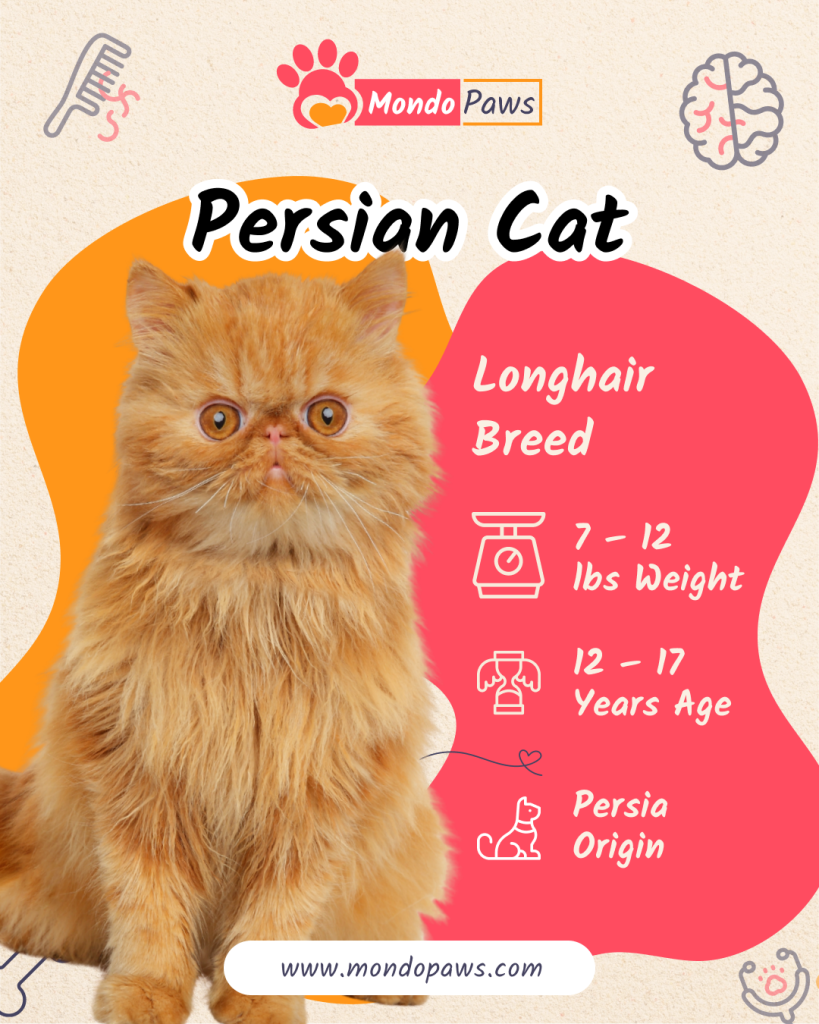
Persians have a stocky, low-slung body with a dense double coat and a distinctive flat, round face. Their elegant appearance combined with a gentle, quiet personality makes them one of the most iconic companion cat breeds.
They are calm, affectionate, and undemanding with their owners. While they are not especially active, they are loyal and enjoy quiet companionship with family members.
Temperament & Personality
Persians are gentle, docile, and sweet-natured cats. Their temperament combines low energy with strong affectionate instincts.
Core Performance Metrics
Breed comparison data breakdown — Persian Cat vs. standard breed benchmark.
With Family
Calm & Affectionate
Forms deep bonds with owners
With Strangers
Reserved & Gentle
Shy at first, warms up quickly
Energy Level
Low
Needs 20–30 mins daily play
Trainability
Moderate
Learns routines but not commands quickly
Despite their aloof, glamorous appearance, well-socialized Persians are gentle lap cats that crave quiet companionship.
Calm, positive routines are highly recommended. Resources from American Society for the Prevention of Cruelty to Animals emphasize low-stress handling for best results.
Trait Ratings
Personality Traits
Care Requirements
Persian Cat Summary Table
| Category | Verdict | Best for |
|---|---|---|
| Families with kids | Good | Older, gentle children |
| First-time owners | Moderate | Requires daily grooming commitment |
| Apartment living | Excellent | Low energy suits small spaces well |
| Allergy sufferers | Not Suitable | Heavy shedder, not hypoallergenic |
| Guard / watchfulness | Poor | Not alert or vocal by nature |
| Quiet indoor lifestyles | Excellent | Lounging, window-watching, gentle play |
| Multi-pet households | Good | Peaceful with calm dogs and cats |
| Budget-conscious owners | Moderate | Grooming and vet costs are ongoing |
Persian Cat Living Needs
Persians thrive in environments where they can stay calm and comfortably indoors.
Space
Indoor Living
Not suited to outdoor or high-activity homes
Children
Good Match
Gentle with calm, respectful kids
Cold Tolerance
Moderate
Thick coat offers some insulation
Other Pets
With Socialization
Best introduced slowly and gently
Training and Exercise Needs
Persians are not among the most trainable cats, but they do adapt well to calm, consistent routines. They respond best to gentle encouragement rather than repetitive drills — pushing too hard leads to disengagement. Aim for at least 20–30 minutes of light daily play.
Exercise Allocation Profile (Weekly Ideal)
With Family
Calm & Affectionate
Forms deep bonds with owners
With Strangers
Reserved & Gentle
Shy at first, warms up quickly
Grooming & Coat Care
The Persian’s defining feature is also its biggest responsibility: their grooming needs are extensive. The long, dense double coat requires significant daily upkeep compared to most cat breeds.
Coat Type
Long & Dense
Daily brushing required
Coat Colors
30+ Variations
Solid, tabby, bicolor, and pointed patterns
Shedding
Heavy
Year-round, requires frequent grooming
Other Needs
Face & Eyes
Daily face wrinkle cleaning, tear stain care
Despite their aloof, glamorous appearance, well-socialized Persians are gentle lap cats that crave quiet companionship.
Calm, positive routines are highly recommended. Resources from American Society for the Prevention of Cruelty to Animals emphasize low-stress handling for best results.
Health & Common Concerns
Like all breeds, Persians carry certain genetic predispositions. Awareness and proactive screening — especially for kidney and respiratory conditions — are essential for a long, healthy life.
Polycystic Kidney Disease
Renal · High Priority
Brachycephalic Airway Syndrome
Respiratory · Structural
Progressive Retinal Atrophy
Eyes · Degenerative
Dental Malocclusion
Dental · Structural
Relative Health Risk by Condition
Regular veterinary checkups and responsible breeding help reduce these risks.
Nutrition & Feeding
Persians require a balanced diet suited to a low-activity, indoor lifestyle.
High-quality protein
Moderate healthy fats
Hairball-control nutrients
Kitten-formula food is recommended during growth to support healthy development.
A balanced diet is essential for indoor, low-energy breeds. According to PetMD, controlled-calorie diets support healthy weight and coat quality.
you can also check average weight with our weight calculator checker
Ownership Cost Calculator
Adjust the inputs below for a personalised annual estimate. All figures are in USD and reflect US market averages.
Pros & Cons
Strengths
- Extremely affectionate and calm companion
- Quiet, low-vocalization personality
- Well suited to apartments and indoor life
- Beautiful, luxurious long coat
- Gentle with respectful children and other pets
Challenges
- Requires daily grooming to prevent matting
- Prone to certain genetic health issues
- Not suited to very active households
- Needs regular face and eye cleaning

History of the Persian Cat
The Persian Cat’s origins trace back to Persia (modern-day Iran), around the 1600s, when long-haired cats were first documented in the region.
European traders and travelers are believed to have brought the breed’s ancestors from:
Persia, Turkey, Afghanistan, Central Asia
Persians later became popular as show cats and beloved household companions because of their calm temperament and striking appearance. Today, they remain one of the most recognized and cherished cat breeds worldwide.
Here is a brief timeline of the Persian Cat’s history:
1600s
Long-haired cats resembling Persians are brought from Persia to Italy and Europe.
1871
The Persian Cat is featured at the first major cat show at London’s Crystal Palace.
1906
The breed becomes officially recognized by early cat fancier associations in the United States.
1950s–1980s
Selective breeding refines the modern flat-faced Persian look.
Today
Persians are prized as show cats, therapy companions, and gentle family pets worldwide.
Today:
Persians later became popular as show cats and beloved household companions because of their calm temperament and striking appearance. Today, they remain one of the most recognized and cherished cat breeds worldwide.
The Persian Cat’s modern form was refined largely in Britain and the United States during the 20th century. Historical records confirm the breed was developed for companionship and exhibition.
Fun Facts
Rank #22
Ranked among the calmer, less command-driven cat breeds by working intelligence studies
10mph
Top running speed — modest compared to more athletic breeds, reflecting a relaxed lifestyle
Crystal Palace
Debuted at one of the earliest organized cat shows in history, back in 1871
30+ Colors
Recognized coat colors and patterns one of the widest ranges of any cat breed
1600s
Brought to Europe centuries ago one of the oldest documented long-haired cat breeds
Frequently Asked Questions
Yes, Persians are generally good with calm, gentle children who respect their quiet nature.
Yes. Their long, dense coat requires daily brushing to prevent matting and tangles.
No. Persians are known for being quiet and rarely meow excessively.
Persians need about 20–30 minutes of light daily play to stay healthy and engaged.
Yes, their low energy and calm temperament make them well suited to apartment living.
Final Thoughts
The Persian Cat is a graceful yet gentle companion known for its calm nature, affectionate personality, and luxurious coat. While they require significant grooming and gentle handling, they reward their owners with quiet devotion and companionship.
For individuals or families who want a calm, elegant, and loving cat, the Persian can be an incredible companion.