
Table of Contents
Sighthound Breed · Sahel (Mali, Niger, Burkina Faso)
The Azawakh is a tall, extremely lean African sighthound bred for centuries by the Tuareg, Fula and other nomadic peoples of the Sahel to guard camps and course gazelle across open desert. Elegant, deeply loyal to its own family, and famously aloof with strangers, it is a hunting dog and a livestock guardian in one lightweight frame.
33–55 lbs
Weight
23–29″
Height
12–15 years
Lifespan
40 mph
Top Speed
Ancient
Origin Era
Independent
Intelligence Style
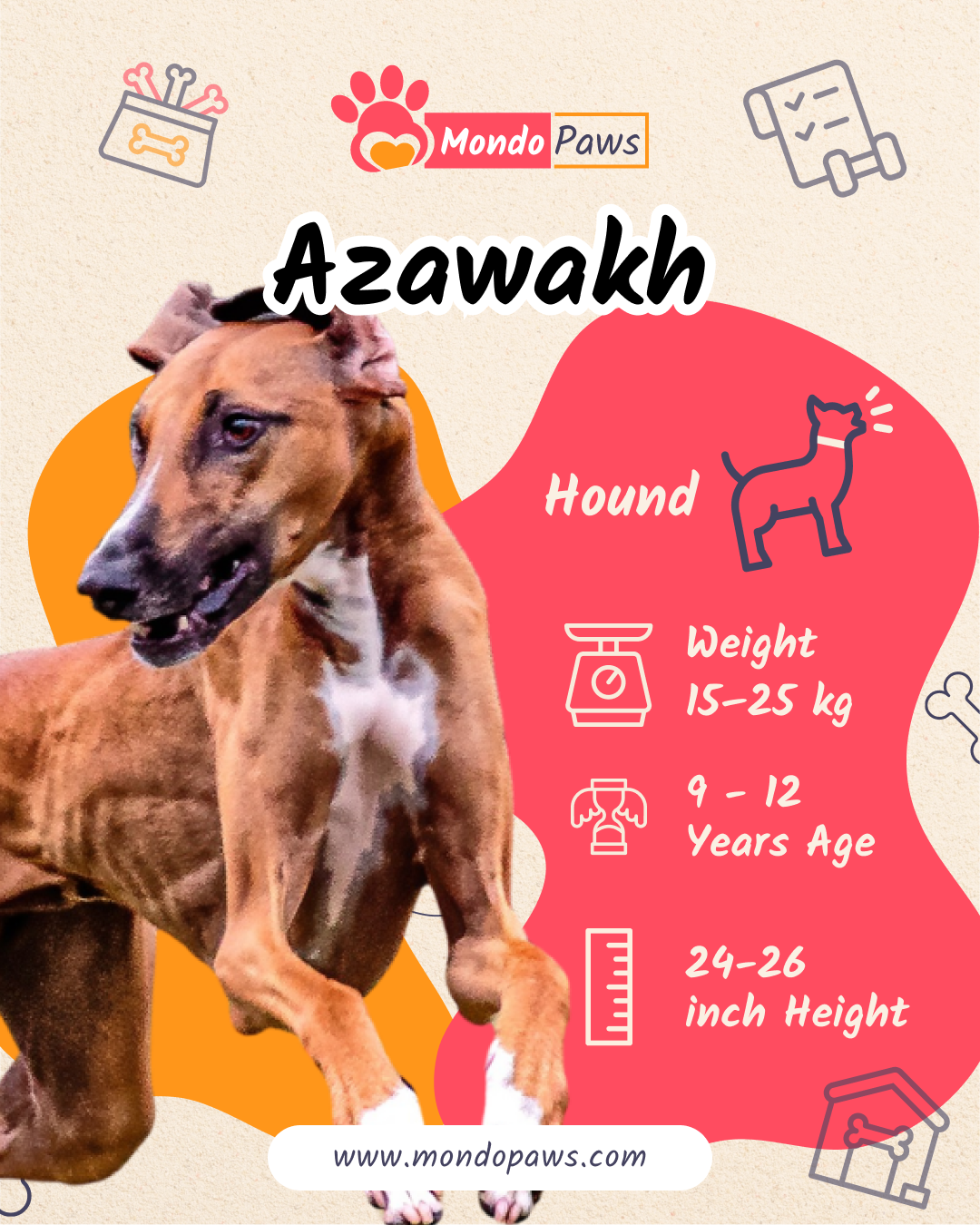
The Azawakh’s build is unlike any other sighthound: a bone-dry, almost vertical frame with a deep but narrow chest, a high-set croup, long flat muscles, and skin stretched tight enough that the hip bones and ribs are meant to show. It moves with a distinctive high-stepping, floating gait.
Emotionally, the breed is a study in contrasts — velvet-soft and physically affectionate inside the home with its chosen people, and formal, watchful and reserved with everyone else. It is a guardian first and a racer second, and it never stops noticing who has walked through the door.
Temperament & Personality
The Azawakh temperament is loyal, dignified, and deeply territorial. Within the household it bonds intensely — often to one or two people — and asks for constant physical closeness, leaning, and shared sofa space. Outside that circle it is naturally reserved: not aggressive when well socialised, but unwilling to be petted by strangers and quick to alarm-bark at anything approaching its home.
Real Owner Insights: What Daily Life with an Azawakh Is Actually Like
“People expect a greyhound and get a guard dog. Our girl ‘Tamesna’ will body-slam into me for cuddles all evening, then stand at the window growling at a neighbour she has met fifty times. Socialising from eight weeks old wasn’t optional — it was the whole job.”
— As shared by an Azawakh owner on r/dogs on Reddit
“They are cold-blooded in the literal sense. Below about 50°F ours refuses to leave the house without a coat, and he owns more blankets than I do. Recall off-lead in an unfenced field? Never. One rabbit and he’s a quarter mile away in twelve seconds.”
— Shared by an Azawakh owner in a sighthound group on Facebook
Core Performance Metrics
Breed comparison data breakdown — Azawakh vs. standard breed benchmark.
Personality Traits
Care Requirements
Azawakh Summary Table
| Category | Verdict | Best for |
|---|---|---|
| Families with kids | Moderate | Devoted at home, but needs respectful older children |
| First-time owners | Not Suitable | Primitive, independent breed needing experienced handling |
| Apartment living | Moderate | Quiet and clean indoors if given daily hard running |
| Allergy sufferers | Good | Very short single coat with minimal shedding |
| Guard / watchfulness | Excellent | Natural camp guardian with strong territorial instinct |
| Cold climates | Poor | Almost no body fat or undercoat; needs coats and heating |
| Homes with small pets | Not Ideal | Extreme prey drive toward cats, rabbits and small dogs |
| Active runners & lure coursers | Excellent | Built for sprinting, coursing and long-distance trotting |
Azawakh Living Needs
An Azawakh needs three things above all: secure high fencing, a warm soft place to sleep, and a daily chance to run flat out.
Space
Fenced Run Needed
Six-foot fencing minimum; never off-lead in open ground
Children
Older Kids Best
Dislikes grabbing, rough play, and visiting children’s noise
Cold Tolerance
Very Low
Desert breed: needs coats, blankets and warm rooms
Other Pets
Careful Matching
Excellent with fellow sighthounds; risky with small animals
An Azawakh does not need a big house — it needs a safe place to sprint, a warm bed, and a family it can shadow all day.
Training and Exercise Needs
Azawakhs are intelligent but not biddable. They decide whether a request is worth answering, shut down under harsh correction, and have essentially no reliable recall once a prey animal moves. Training works through calm repetition, food, and relationship — plus relentless early socialisation so that natural wariness never becomes fear. Expect 60–90 minutes of daily exercise for an adult, including at least one chance to gallop safely.
Exercise Allocation Profile (Weekly Ideal)
With Family
Deeply Devoted
Physically affectionate and rarely more than a room away
With Strangers
Aloof & Watchful
Polite if ignored; dislikes being touched by visitors
Grooming & Coat Care
Grooming is the easiest part of Azawakh ownership. The coat is short, fine and almost undercoat-free, so a weekly rubber-mitt or hound-glove session and the occasional bath is enough. Warmth management, thin skin protection, and nail care matter far more than brushing.
Coat Type
Short & Fine
Weekly hound glove; almost bare on the belly
Coat Colors
Sand to Brindle
Red, sand, fawn, brindle, blue, black and parti-colour
Shedding
Very Low
Minimal hair and very little natural dog odour
Other Needs
Skin & Warmth
Thin skin tears easily; winter coats, padded bedding, dental care
You will spend more on dog coats and orthopaedic bedding than you ever will on grooming.
Calm, positive routines are highly recommended. Resources from the American Society for the Prevention of Cruelty to Animals emphasize low-stress handling for best results — particularly important with a primitive breed that resents being restrained.
Health & Common Concerns
The Azawakh remains a functional landrace and is generally robust and long-lived, with few of the structural problems seen in heavily engineered breeds. The important watch-points are sighthound anaesthesia sensitivity, seizure disorders, bloat, and thyroid/autoimmune issues.
Anaesthesia Sensitivity
Metabolic · Sighthound-Specific
Idiopathic Epilepsy
Neurological · Line-Dependent
Bloat (GDV)
Digestive · Emergency Risk
Thyroid & Autoimmune
Endocrine · Screening Advised
AKC & FCI Breed Standards
According to the official standards published by the American Kennel Club and the Fédération Cynologique Internationale (FCI), the Azawakh is a tall, leggy sighthound of extreme leanness, with a long narrow head, high-set croup above the withers, visible bone structure, and a distinctive light, elastic gait.
Veterinary Notes & Sighthound Anaesthesia
Veterinary resources including PetMD note that sighthounds carry very little body fat and metabolise certain anaesthetic and sedative drugs differently, so procedures should be planned with a vet familiar with the breed group. Baseline bloodwork is also worth interpreting against sighthound-specific reference ranges, since normal Azawakh values for red cell count and thyroid hormones can differ from the standard canine average.
to find out more about daily calories visit Dog Calorie Calculator.
Relative Health Risk by Condition
Regular veterinary checkups and responsible breeding help reduce these risks.
Nutrition & Feeding
Azawakhs burn energy fast and carry almost no fat reserve, so quality calories, sensible meal timing, and bloat prevention matter more than volume.
High-quality lean protein
Two smaller daily meals
Omega-rich fats
A healthy Azawakh looks alarmingly thin to the untrained eye the last two or three ribs, the hip bones, and the spine should be visible. Resist the urge to “fill them out”; extra weight strains a frame designed for sprinting.
Split the daily ration into two meals, avoid hard exercise for an hour either side of eating to reduce bloat risk, and keep fresh water constantly available. According to PetMD, deep-chested sighthounds benefit from measured meals, slow feeding, and calm rest after eating.
to find out more about dogs weight visit Dog Weight Calculator.
Ownership Cost Calculator
Azawakh puppies are rare outside specialist circles and typically cost $2,000–$4,000, often with a waiting list and an import or travel fee on top. Running costs are moderate the real spend is secure fencing, winter clothing, and breed-aware veterinary care. Adjust the inputs below for a personalised annual estimate. All figures are in USD and reflect US market averages.
Pros & Cons
Strengths
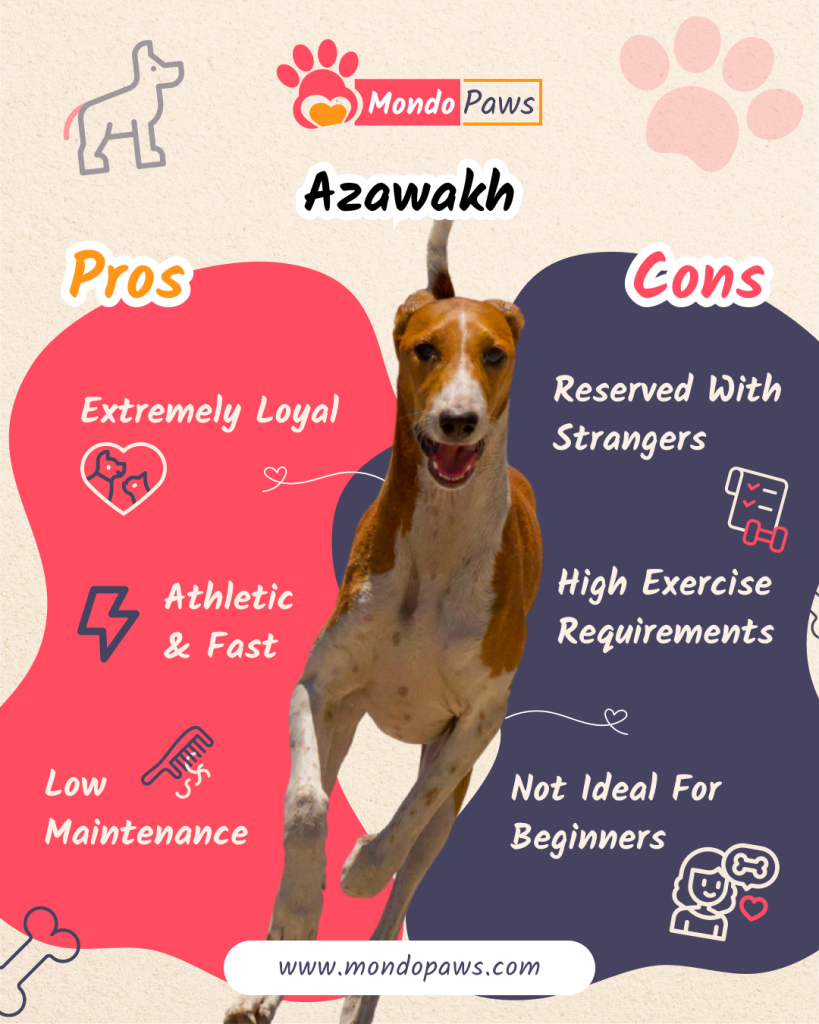
- Intensely loyal and physically affectionate with its own family
- Near-zero grooming and very little doggy odour
- Naturally clean, quiet and calm inside the house
- Genetically robust landrace with a 12–15 year lifespan
- Outstanding natural watchdog without trained aggression
Challenges
- Extreme prey drive and unreliable recall lead or fenced space only
- Reserved with strangers; needs heavy early socialisation
- Very poor cold tolerance and thin, easily torn skin
- Rare breed: long waiting lists and few experienced local vets
History of the Azawakh
The Azawakh takes its name from the Azawagh valley, a dry basin spanning Mali, Niger and Algeria, where the breed has lived alongside nomadic herding peoples for many centuries as a hunting dog, camp guardian and status animal.
Unlike Western show breeds, the Azawakh was shaped by function and environment rather than a stud book. Traditional owners include:
The Tuareg, Fula (Peulh), Hausa and Dogon peoples of the Sahel
Dogs were never sold in their homeland they were given as gifts of honour, and the best hunters were kept close to the tents, sleeping among the family for warmth and protection.
Here is a brief timeline of the Azawakh’s history:
Antiquity
Lean African sighthounds appear in Saharan rock art, hunting gazelle alongside herders across what is now the Sahel.
1970s
The first Azawakhs reach Europe, largely through Yugoslav and French diplomats given dogs as gifts in Burkina Faso and Mali.
1981
The FCI officially recognises the Azawakh as a distinct breed, separate from the Sloughi.
1980s–2000s
American and European breeders import further Sahelian stock to widen a very small gene pool.
2019
The American Kennel Club grants full recognition, placing the Azawakh in the Hound Group.
Today:
The Azawakh remains one of the rarest sighthounds in the Western world, with a few hundred registered dogs in most countries.
Serious breeders continue to work with African-bred imports to preserve the landrace’s genetic diversity, temperament and desert-hardened function rather than exaggerating its show appearance.
Fun Facts
Gifted, Not Sold
In their homeland Azawakhs were traditionally presented as gifts of honour rather than traded for money
Pack Hunters
Unusually for sighthounds, they hunt cooperatively in groups, encircling gazelle rather than chasing alone
AKC 2019
One of the newest AKC-recognised breeds despite being one of the oldest dog types alive
Built Upright
Its hip bones sit higher than its withers a silhouette unique among recognised sighthounds
Desert Thermostat
Comfortable in Saharan heat, yet shivering below 50°F the breed’s body has almost no insulating fat
Frequently Asked Questions
Expect $2,000–$4,000 from a reputable breeder, plus possible transport or import costs, since litters are rare and usually spoken for in advance. Annual running costs typically land between $1,800 and $3,000 once food, insurance, coats and veterinary care are included.
They are devoted to their own household and often extremely cuddly at home, but they suit calm families with older, respectful children. They dislike rough handling, sudden noise, and being swarmed by visiting kids, and they are not a casual first dog.
All three are desert sighthounds, but the Azawakh is the leanest and most vertically built, with longer legs relative to body depth, a croup set higher than the withers, and a stronger guarding instinct. The Sloughi is heavier-bodied and North African; the Saluki is Middle Eastern and often feathered.
Visible ribs, hip bones and spine are correct and required by the breed standard. A healthy Azawakh carries dry, flat muscle over a light frame; adding weight to make the dog “look normal” harms its joints and stamina. If in doubt, ask a vet familiar with sighthounds to assess body condition.
Sometimes, if raised with them from puppyhood and always supervised — but the breed’s prey drive is extreme, and a running cat or small dog can trigger a chase instinct that overrides training. Many experienced owners simply do not mix Azawakhs with small animals.
Behind the Research: How We Created This Azawakh Guide
At Mondopaws, we believe pet guides should be grounded in both hard science and real-world care. To compile this Azawakh breed profile, our editorial team:
- Cross-referenced official breed standards: Analyzed documentation and care guidelines directly from the American Kennel Club, the Fédération Cynologique Internationale (FCI), and dedicated Azawakh breed clubs preserving Sahelian bloodlines.
- Consulted veterinary & clinical research: Verified breed-relevant issues (sighthound anaesthesia sensitivity, idiopathic epilepsy, bloat risk, and thyroid screening) using clinical guidance from the ASPCA, PetMD, and published sighthound veterinary literature.
- Gathered authentic owner experiences: Evaluated real feedback on socialisation, recall, and cold tolerance shared by verified Azawakh owners across active sighthound forums and social media communities.
Final Thoughts
The Azawakh is a breathtaking, ancient sighthound that gives its heart completely to one household and remains politely unavailable to everyone else. It is clean, quiet indoors, easy to groom, genetically sound, and utterly beautiful in motion but it is also a primitive guardian with a hair-trigger prey drive, a real need to run, and almost no tolerance for cold.
For an experienced, patient owner with secure fencing, a warm home, and a commitment to lifelong socialisation, the Azawakh is one of the most rewarding and unforgettable dogs in the world.