What size ramp does your dog need? Tap how high your dog needs to climb, enter your dog’s weight and mobility, and get the right ramp length, angle, width and weight rating instantly. No sign-up, and nothing is stored.
Free Dog Ramp Size Calculator
Three quick steps: pick the height, enter your dog’s weight, and choose how mobile your dog is. The ramp length updates as you type.
🐾 Dog Ramp Size Calculator
1. How high does your dog need to climb?
2. About your dog
How do I measure?
Height: measure from the floor to the top of the bed, couch or car cargo floor where the ramp will rest. For a car, measure the top of the bumper or the seat height. Width: measure across your dog’s shoulders and hips and use the larger number.
Important: These are planning guides, not medical advice. If your dog has arthritis, a spinal condition or is recovering from surgery, ask your veterinarian which ramp angle and setup is safest.
Dog Ramp Sizing at a Glance
15 to 25°
Typical dog ramp angles, from recovering dogs to healthy ones
2 Tools
A ramp size calculator and a ramp angle checker
3 Inputs
Height, dog weight, and your dog’s mobility
Height ÷ sin(angle)
The formula behind every ramp length
2× Weight
Choose a ramp rated for at least twice your dog’s weight
Grippy
Rubber or textured carpet keeps paws from slipping
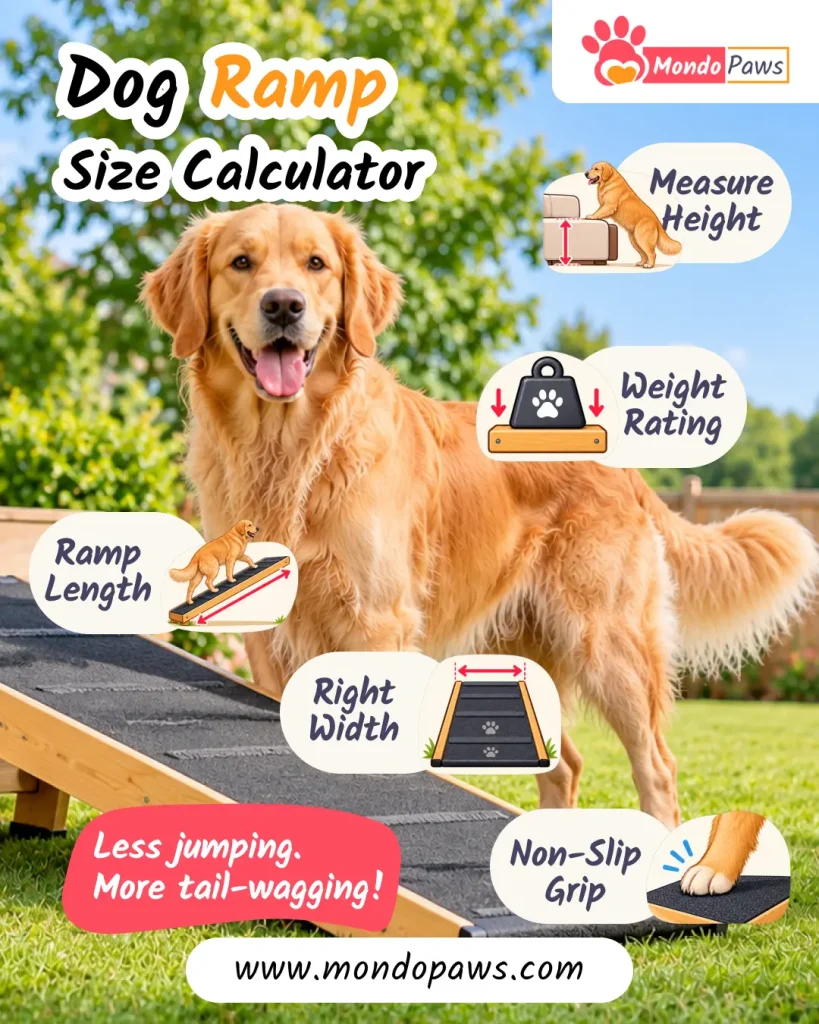
A good dog ramp is long enough to be gentle, wide enough to feel safe, strong enough to stay steady, and grippy enough to stop slips. Pair your result with our Dog Harness Size Calculator, Dog Crate Size Calculator, Dog Weight Calculator and Dog Age Calculator. For more on helping older dogs, see the American Kennel Club and the American Veterinary Medical Association.
Dog Ramp Length Chart by Height and Angle
These lengths use the standard ramp formula, length = height ÷ sin(angle). Find your surface height, then pick the angle that fits your dog. Common heights are shown, and the calculator above handles any height.
| Surface | Height | 25° (Healthy) | 18° (Senior) | 15° (Recovering) |
|---|---|---|---|---|
| Couch | 18 in | 3 ft 7 in (43 in) | 4 ft 10 in (58 in) | 5 ft 10 in (70 in) |
| Bed | 24 in | 4 ft 9 in (57 in) | 6 ft 6 in (78 in) | 7 ft 9 in (93 in) |
| Car (rear seat or low cargo floor) | 27 in | 5 ft 4 in (64 in) | 7 ft 3 in (87 in) | 8 ft 8 in (104 in) |
| SUV (cargo floor) | 33 in | 6 ft 6 in (78 in) | 8 ft 11 in (107 in) | 10 ft 8 in (128 in) |
Most commercial ramps are built at about 18 to 22 degrees, and a gentler angle needs a longer ramp. See the Whole Dog Journal ramp guide and Ramp People dog ramp FAQ for more on choosing a length and angle.
Dog Ramp Angle Checker
Already own a ramp, or short on floor space? Enter the height and either the ramp length or the floor space to see the angle and whether it suits your dog.
📐 Ramp Angle Checker
Already have a ramp, or limited space? Check the angle.
Dog Ramp Width, Weight Rating and Surface
Length is only half of a safe ramp. Width, weight rating and grip matter just as much.
| Dog Size | Weight | Minimum Width | Weight Rating |
|---|---|---|---|
| Small | Under 25 lbs | 12 in | 50 lbs or more |
| Medium | 25 to 50 lbs | 16 in | 100 lbs or more |
| Large | 50 to 90 lbs | 20 in | 180 lbs or more |
| Giant | Over 90 lbs | 24 in | 250 lbs or more |
A ramp should be at least a few inches wider than the widest part of your dog’s shoulders and hips. Choose a weight rating of at least twice your dog’s weight, since a ramp that cannot hold your dog can wobble or collapse. Rubber, textured carpet or other grippy surfaces give the best traction, and side edges help keep paws on the ramp.
Dog Ramp Types Compared: Which One Fits Your Dog?
The right type depends on where you will use it and how often you need to move it.
| Ramp Type | Best For | Typical Size | Watch Out For |
|---|---|---|---|
| Telescoping or Folding | Cars and SUVs, and travel | About 60 to 72 in long, and some reach heights up to about 3 ft | Check the weight rating and that the surface is grippy |
| Wooden Bed Ramp | Beds and tall furniture, for indoor use | About 70 in long for a bed of 25 to 35 in | Takes floor space, and a steeper angle may be hard on seniors |
| Pillow or Foam Steps | Couches and low beds, for small dogs | Steps of about 7 in, or 13 to 22 in total height | Not for tall surfaces, and large dogs may outgrow them |
| Rubber or Outdoor Ramp | Decks, steps and pools | About 67 to 72 in long, with strong weight ratings | Heavier and bulkier to store |
The Rover ramp guide and Whole Dog Journal ramp roundup describe common designs and weight ratings in more detail.
How to Measure for a Dog Ramp
You need a tape measure and a few minutes. Measure twice, then enter the numbers in the calculator.
| Step | What to Do | Why It Matters |
|---|---|---|
| 1. Measure the Height | From the floor to the top of the bed, couch or car entry where the ramp will rest. For a car, use the seat height or the top of the bumper. | Height sets the ramp length. |
| 2. Check Floor Space | Measure the flat distance in front of the surface. | Tells you how long a ramp fits, and what angle you will get. |
| 3. Weigh Your Dog | Use a home or vet scale and use the heaviest realistic weight. | Sets the width and weight rating. |
| 4. Measure Your Dog’s Width | Measure across the shoulders and hips and use the larger number. | The ramp should be a few inches wider. |
| 5. Pick the Angle | About 25 degrees for healthy dogs, 18 for seniors, and 15 for injured or recovering dogs. | A gentler angle is easier on joints. |
If you are short on floor space, use the angle checker above. Ask your veterinarian if your dog has joint or spine problems.
Which Dogs Benefit Most From a Ramp?
Many dogs can use a ramp, but some benefit the most.
| Dog | Why a Ramp Helps | Suggested Angle |
|---|---|---|
| Senior dogs | Less jumping and gentler on stiff joints | About 18° |
| Arthritic or injured dogs | Reduces joint strain on every climb | About 15° to 18°, ask your vet |
| Long-backed breeds | Dachshunds and Corgis avoid full-height jumps | About 18°, ask your vet |
| Small dogs and puppies | They cannot reach tall furniture or cars | About 20° to 25° |
| Large or heavy dogs | Too heavy to lift into a car | About 18° to 25° |
| Dogs after surgery | Need controlled, low-strain movement | About 15°, follow your vet |
Veterinary guidance comes first for any dog with a spinal condition or recent surgery. The AVMA and your own vet can help you decide.
Common Dog Ramp Mistakes and How to Fix Them
Most ramp problems come from a handful of avoidable mistakes.
| Mistake | Why It Matters | Fix |
|---|---|---|
| Ramp Too Short and Steep | A steep ramp is hard on joints and scary for dogs. | Use the calculator length for your dog’s angle. |
| Too Narrow | Dogs can step off the edge. | Choose a width a few inches wider than your dog. |
| Weak Weight Rating | A weak ramp can wobble or collapse. | Pick a rating of at least twice your dog’s weight. |
| Slippery Surface | Paws slide, and dogs lose confidence. | Choose rubber or textured carpet. |
| Unsecured Ramp | A ramp that slides can cause a fall. | Use non-slip feet and brace it against the surface. |
| Skipping Training | Dogs may refuse a ramp that feels strange. | Introduce it flat, use treats, and go slowly. |
Frequently Asked Questions
Ramp length equals the height you need to climb divided by the sine of the ramp angle. For a 24 in bed at 18 degrees, that is about 78 in (6 ft 6 in). The taller the surface and the gentler the angle, the longer the ramp. Use the calculator above to get the exact length for your dog.
For a healthy dog, up to about 25 degrees works. Senior dogs and dogs with stiff joints do better at about 18 degrees, and injured or post-surgery dogs at about 15 degrees. Most commercial ramps are built at 18 to 22 degrees, and one UK guide gives a maximum gradient of 1 in 3.3 (about 17 degrees). Gentler is easier on joints.
A ramp should be at least a few inches wider than the widest part of your dog’s shoulders and hips. As a planning guide, use about 12 in for small dogs, 16 in for medium, 20 in for large, and 24 in for giant dogs. The calculator adds 3 in to your dog’s measured width when you enter it.
Choose a ramp rated for at least twice your dog’s weight, because walking and bounding put more load on a ramp than standing still. A ramp that is too weak can wobble or collapse, so check the manufacturer’s rating.
Both work. Ramps suit larger dogs and cars, where steps would be too tall, and they let a dog walk up smoothly. Soft pillow steps can suit small dogs on couches and beds. Dogs with back problems, disc disease or recent surgery should follow your vet’s advice on which one is safest.
Measure the height of the spot where your dog will enter. For a rear seat, measure the seat height. For a cargo area, measure to the top of the bumper where the ramp will rest. Then enter that height in the calculator, or tap the Car or SUV button.
Start with the ramp flat on the floor and reward your dog with treats for stepping on it. Raise it a little at a time, keep sessions short and positive, and stay close. Never force a nervous dog onto a ramp, and ask a trainer for help if your dog is fearful.
Ramps can reduce the strain of jumping for older dogs, dogs with arthritis, and long-backed breeds such as Dachshunds and Corgis. If your dog has been diagnosed with disc disease or is recovering from surgery, ask your veterinarian for the right ramp angle and setup.
Behind the Research: How We Built This Dog Ramp Size Calculator & Guide
At Mondo Paws, our mission is to give pet owners practical, carefully researched tools. To create this calculator and ramp guide:
- Formula: Ramp length is the height divided by the sine of the ramp angle, which is the standard ramp formula. A 24 in rise at 18 degrees needs about 78 in.
- Angles: We use about 25 degrees for healthy dogs, 18 for seniors and 15 for injured or recovering dogs, which matches published ramp calculators. Guidance such as the Whole Dog Journal ramp guide suggests 18 to 27 degrees, and the Ramp People FAQ cites a maximum gradient of 1 in 3.3.
- Measuring: Vehicle measuring steps follow the PetSafe ramp sizing article, and common product sizes were checked against the Rover ramp guide.
- Safety Context: Widths, weight ratings and angles are planning guides, not medical advice. Ask your veterinarian about dogs with spinal conditions, arthritis or recent surgery.
- Interactive Tools, Not Guesswork: Both tools run in your browser and use only the numbers you enter. Nothing is stored or sent anywhere.
Final Thoughts
The right dog ramp is long enough to be gentle, wide enough to feel safe, and strong enough to stay steady. Use our Dog Ramp Size Calculator for length, width and weight rating, then the angle checker to test any ramp you already own. Keep supporting your dog’s comfort with our Dog Harness Size Calculator, Dog Crate Size Calculator, Dog Fence Size Calculator and Dog Weight Calculator.
Check the ramp for wear and wobble, keep the surface clean and grippy, supervise early trips, and contact your veterinarian if your dog struggles with stairs, jumping or movement.