What size are your dog’s paws? Enter your dog’s paw width to get a boot size, or enter a puppy’s paw width and age to estimate the adult paw size. No sign-up, and nothing is stored.
Free Dog Paw Size Calculator
Pick a mode, enter the paw width, and the results update as you type.
🐾 Dog Paw Size Calculator
About the paw
How do I measure the paw?
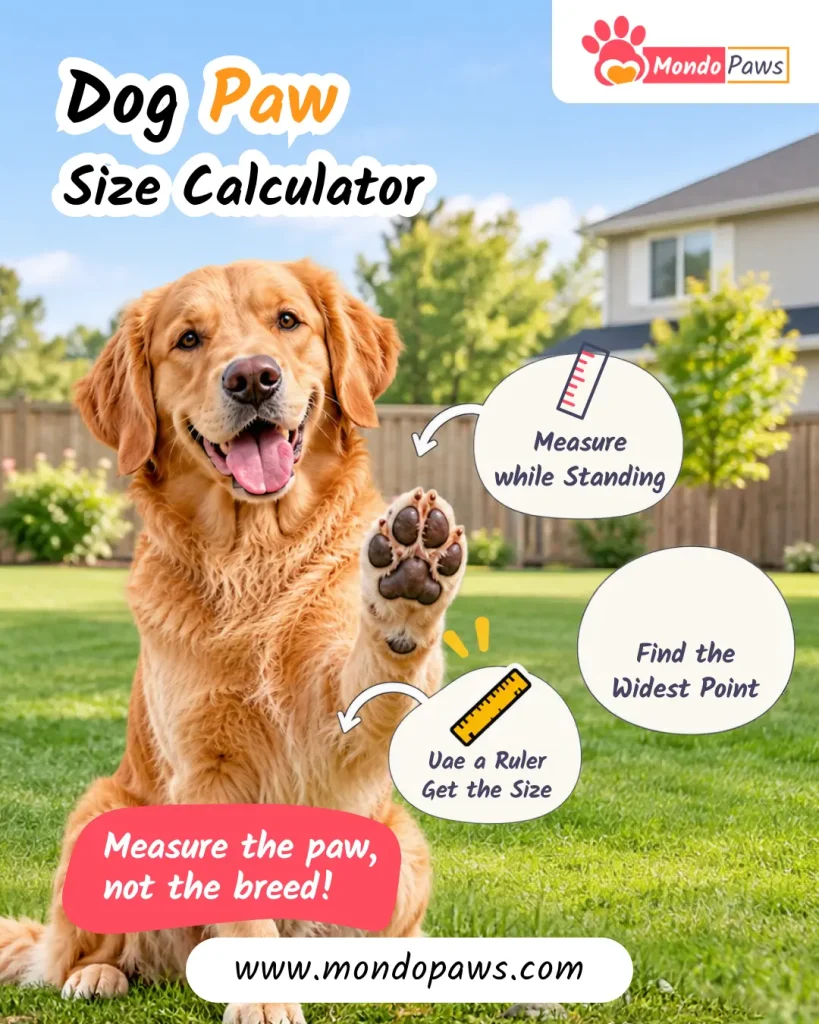
Stand your dog on a sheet of paper with full weight on a front paw. Mark the widest left and right edges of the paw, then measure between the marks. Use the larger front paw.
Important: These are planning guides, not medical advice. Boot and product sizes vary by brand, so always check the manufacturer’s size chart. If your dog has a paw injury, limping or swelling, see your veterinarian.
Dog Paw Sizing at a Glance
1.5 to 4 in
Typical front paw widths, from small dogs to giant breeds
2 Modes
Boot size for adult dogs and a growth estimate for puppies
1 Number
Paw width is the main measurement most boot charts use
Size Up
When your dog is between two sizes, most brands suggest the larger one
Front Paws
Front paws are usually wider, so measure those first
Puppies
Paws grow fast, so re-measure every few weeks
A well-sized paw measurement helps you pick boots that stay on, socks that do not bunch, and paw wax or casting kits that fit. Pair your result with our Dog Harness Size Calculator, Dog Collar Size Calculator, Dog Weight Calculator and Dog Exercise Calculator. For general paw care, the American Kennel Club and the ASPCA publish beginner-friendly guides.
Dog Paw Size Chart by Width
Use this chart as a generic reference, then compare your dog’s width with the chart of the brand you plan to buy. Every brand cuts its sizes a little differently, so treat this as a starting point.
| Boot Size | Paw Width (in) | Paw Width (cm) | Typical Dogs |
|---|---|---|---|
| XS | Up to 1.5 | Up to 3.8 | Toy breeds, small puppies |
| S | 1.5 to 2.0 | 3.8 to 5.1 | Small breeds |
| M | 2.0 to 2.5 | 5.1 to 6.4 | Small to medium breeds |
| L | 2.5 to 3.0 | 6.4 to 7.6 | Medium to large breeds |
| XL | 3.0 to 3.5 | 7.6 to 8.9 | Large breeds |
| XXL | 3.5 to 4.0 | 8.9 to 10.2 | Large and giant breeds |
| 3XL | Over 4.0 | Over 10.2 | Giant breeds |
Breeds with broad or webbed feet, such as Newfoundlands and Labradors, may sit between sizes. Dogs with narrow feet, such as Greyhounds, may need a longer, narrower cut. Always check the brand’s fit notes.
How to Measure Your Dog’s Paw
You need a sheet of paper, a pen, a ruler and a few treats. Measure when your dog is calm, and keep the session short and positive.
| Step | What to Do | Why It Matters |
|---|---|---|
| 1. Prepare the Paper | Place a sheet of paper on a flat, hard floor. | Gives you a clean surface to mark. |
| 2. Stand Your Dog | Ask your dog to stand with full weight on a front paw. | The paw spreads wider under weight, so the number is realistic. |
| 3. Mark the Edges | Mark the widest left and right edges of the paw. Skip the dewclaw. | Width is the key boot measurement. |
| 4. Measure | Measure between the marks with a ruler. Repeat for the other front paw. | Paws can differ slightly, so use the larger number. |
| 5. Enter and Compare | Type the width into the calculator, then check the brand’s chart. | Brand sizing varies, so confirm before you buy. |
If your dog will not stand still, press a paw gently onto an ink-free surface such as a pad of paper and trace around it while a helper offers treats. The American Veterinary Medical Association and the Humane Society of the United States offer general guidance on keeping dogs safe and comfortable.
Do Big Puppy Paws Mean a Big Dog?
Large paws on a young puppy often suggest a larger adult, but it is a loose guide at best. Breed, genetics, age and body proportions all matter, and some puppies simply grow into their feet later than others. Our puppy mode scales the current paw width by a rough growth factor for each age and shows a range, so you can plan boot sizes and gear. Re-measure every few weeks, and ask your vet about expected adult size.
| Puppy Age | Planning Share of Adult Paw Width | Re-Measure |
|---|---|---|
| 8 weeks | About 60% | Every 2 weeks |
| 12 weeks | About 70% | Every 2 to 3 weeks |
| 16 weeks | About 80% | Every 3 to 4 weeks |
| 20 weeks | About 90% | Monthly |
| 24 weeks | About 95% | Monthly |
These shares are our own planning assumptions, not a published veterinary standard, and large breeds keep growing past 6 months. Use our Dog Weight Calculator alongside this tool for a fuller picture.
Common Paw Sizing Mistakes and How to Fix Them
| Mistake | Why It Matters | Fix |
|---|---|---|
| Measuring a Lifted Paw | The paw is narrower when it carries no weight. | Measure with full weight on the paw. |
| Using Weight Alone | Dogs of the same weight can have very different paws. | Always measure the paw itself. |
| Ignoring Brand Charts | Sizes differ between brands. | Compare your width with the brand’s own chart. |
| Boots Too Tight | They can rub and restrict circulation. | Size up when between sizes and check the toes after wear. |
| Boots Too Loose | They twist, trip your dog and fall off. | Fasten the straps snugly above the wrist without squeezing. |
| Skipping Puppy Re-Measures | Puppy paws outgrow boots quickly. | Re-measure every few weeks during growth. |
Paw size is only one part of gear fit. See our Dog Harness Size Calculator and Dog Crate Size Calculator for the rest of your dog’s setup.
Frequently Asked Questions
Stand your dog on a sheet of paper with full weight on a front paw, mark the widest left and right edges of the paw, and measure between the marks. Use the larger of the two front paws. Width is the number most boot size charts ask for.
Width is the main measurement for most dog boot charts, because the paw spreads under weight. Some brands also ask for length, so check the chart of the brand you plan to buy and measure what it asks for.
Not always. Front paws are usually wider than back paws, and some brands sell different sizes for each. Measure both and size boots by the wider front paw unless the brand says otherwise.
Only roughly. Big paws on a young puppy often point to a larger adult, but growth rates vary by breed and by dog. Our puppy mode gives a planning range, not a promise. For a better estimate, ask your vet, who can use breed, age and weight together.
Most brands suggest going up a size when your dog falls between two sizes, then using the straps or closures to snug the fit. Boots that are too tight can rub and restrict circulation, and boots that are too loose twist and fall off.
Start with a few minutes indoors and build up slowly. Check the paws and skin after every wear for redness or rubbing. If your dog has a paw injury, ask your veterinarian what protection and how long is right.
Behind the Research: How We Built This Dog Paw Size Calculator & Guide
At Mondo Paws, our mission is to give pet owners practical, carefully researched tools. To create this calculator and paw guide:
- Boot Sizes: The size chart groups paw widths into common XS to 3XL steps seen across dog boot size guides. It is a generic reference, and every brand differs, so always confirm with the manufacturer’s chart.
- Measuring Method: Measuring the widest point of a standing front paw is the approach most boot makers describe.
- Puppy Estimate: The age-based growth shares are our own rough planning assumptions, not a published veterinary standard. Treat the result as a range for gear planning only.
- Safety Context: Paw care tips follow general guidance from sources such as the American Kennel Club and the AVMA. Ask your veterinarian about injuries, limping or skin problems.
- Interactive Tool, Not Guesswork: The calculator runs in your browser and uses only the numbers you enter. Nothing is stored or sent anywhere.
Final Thoughts
The right paw measurement makes boots, socks and paw gear fit better and stay on. Use our Dog Paw Size Calculator for a boot size or a puppy growth range, then confirm with the brand’s size chart. Keep supporting your dog with our Dog Harness Size Calculator, Dog Collar Size Calculator, Dog Crate Size Calculator and Dog Weight Calculator.
Check your dog’s paws after walks for cuts, cracks or redness, trim nails regularly, and contact your veterinarian if your dog limps, licks a paw constantly or shows swelling.