Table of Contents
Why does my dog lick me? Mostly because licking is how dogs bond, greet, explore, and ask for attention. Your skin can also taste salty or like lotion or food, and some dogs lick to soothe themselves when they feel uneasy. Occasionally, constant or sudden licking points to stress or a health problem. This page gives you six free interactive tools to work out what your own dog means.
Affection
Licking releases good feelings and echoes puppyhood
Taste
Salty sweat, lotions, and food smells are tempting
Attention
A lick can mean “play with me” or “love me”
Stress Relief
Licking can soothe an uneasy dog
Health Clues
One-spot, constant, or sudden licking deserves a vet check
Safety
Not on the mouth, and never on open wounds
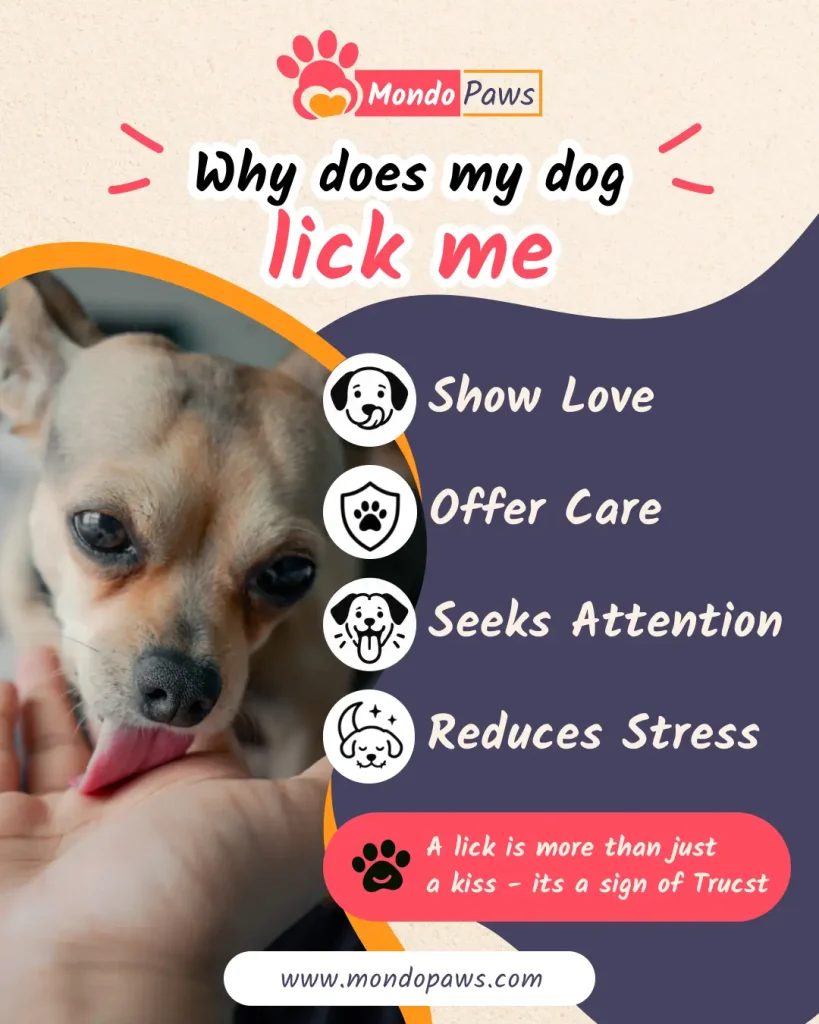
Quick answer: Dogs lick you for affection and bonding, as a greeting, because you taste interesting (salt, lotion, food), to explore by taste and scent, to ask for attention or play, and to soothe themselves when uneasy. See your vet if the licking is constant, focused on one spot, damages the skin, comes with drooling or pacing, or starts suddenly.
WebMD’s guide to why dogs lick you lists affection, exploration, attention, taste, and stress as the main reasons, and Wisdom Panel’s explainer adds instinct from puppyhood and medical causes. Licking is also the one dog behavior with a real hygiene question attached, so we cover that too, using a review in The Conversation.
Licking sits alongside other ways your dog talks to you. If your dog also paws at you, read why dogs put their paw on you. If the licking looks anxious, check the dog stress signals visual guide. For boredom, try the dog exercise calculator and the dogs alone time calculator.
Why Does My Dog Lick Me? Free Lick Meaning Decoder
Choose your dog’s age group, then describe where the licking happens, when it happens, how it looks, and what your dog’s body is doing. The decoder scores nine common reasons and shows the best matches, a suggested response, and whether a vet check is worth considering. It is a guide for reading context, not a diagnosis.
👅 Lick Meaning Decoder
Why Does My Dog Lick My Face, Hands, and Feet? Interactive Body Map
Where your dog licks changes the likely reason, and it changes the safety advice too. Tap a zone on the figure, or use the buttons, to see why dogs go there, what to keep in mind, and what to do.
🧍 Where They Lick: Body Map
Face and mouth
Why Dogs Lick: From Puppy Instinct to Adult Habit
Licking starts in the den. Wisdom Panel notes that wild puppies lick their mother's mouth to get her to regurgitate food, and that dogs may keep this habit from their ancestors. WebMD adds that licking echoes puppyhood, when mothers groomed and comforted their litter. Over time, dogs learn that licking people gets a reaction.
9 Reasons Dogs Lick People
These are the nine reasons the decoder above scores, with the signs that separate them. Context and body language decide, so use the table as a checklist, not a verdict.
| Reason | Signs to Look For | What to Do |
|---|---|---|
| 1. Affection & Bonding | Slow, gentle licks; loose body; licks while cuddling. | Enjoy it in moderation and reply with calm petting. |
| 2. Greeting | Quick licks, wiggly body, when you arrive. | Teach a sit or nose touch as the hello. |
| 3. Taste | Licks salty skin after exercise, or skin with lotion or food on it. | Wash up, wipe off products, keep them from licking anything not meant to be eaten. |
| 4. Attention or Play | Licking paired with nudges, bows, or a toy; stops when you respond. | Give attention for calm behavior and add exercise. |
| 5. Learned Habit | Persistent licking that stops the moment you react. | Stop paying it off and redirect. |
| 6. Comfort or Stress Relief | Licking with tension, lip licking, yawning, or panting. | Reduce the stressor and see the stress signals guide. |
| 7. Exploring | Sniffing and licking new people, objects, and places; common in puppies. | Offer sniffy walks and food toys. |
| 8. Health Issue | Licking one spot, skin damage, drooling, nausea signs, or a sudden change. | See your vet before assuming it is behavior. |
| 9. Compulsive Licking | Repetitive licking of you, themselves, or objects that is hard to interrupt. | Call your vet for a full workup and ask about a veterinary behaviorist. |
What Your Dog's Lick Style and Timing Mean
Timing is the biggest clue to the reason, and the style of the lick is the second. Use these two tables side by side.
| When It Happens | Likely Meaning | First Thing to Try |
|---|---|---|
| You arrive home | Excited greeting. | Ask for a sit before the hello. |
| While cuddling | Affection and bonding. | Enjoy it, and keep it off your mouth. |
| After exercise | Taste of salty sweat. | Wipe down and offer a chew. |
| You are upset | Comfort-seeking or soothing themselves. | Stay calm and offer a calm routine. |
| Left alone or about to leave | Self-soothing or anxiety. | Give a lick mat and check the dogs alone time calculator. |
| At night | Settling, boredom, or discomfort. | Check comfort and ask your vet if it is new. |
| Around meals | Food smells and hunger cues. | Keep a steady schedule and wash up after cooking. |
| Lick Style | Likely Meaning | Check This |
|---|---|---|
| Quick, light licks | Greeting or excitement. | Is your dog wiggly and bouncy? |
| Slow, gentle licks | Affection or comfort. | Is the body loose and relaxed? |
| Lip or air licking | Possible stress or nausea. | Any yawning, panting, or drooling? |
| Intense and persistent | Attention or a learned habit. | Does it stop when you react? |
| Repetitive and hard to stop | Stress, compulsive licking, or a health issue. | Has it changed lately? See your vet. |
Is My Dog Licking Too Much? The Lick-O-Meter
Wisdom Panel lists the signs that licking may be excessive: repeatedly licking one area, skin damage or hot spots, a noticeable change in how often your dog licks, licking with disorientation or pacing, and licking that looks like a compulsive response to stress. The Lick-O-Meter turns those signs into a score. The scoring is our own editorial model, so use it as a guide and talk to your vet if you are worried.
🌡️ Lick-O-Meter
Is It Safe to Let Your Dog Lick You? Lick Safety Planner
For most healthy people, an occasional lick is probably low risk with good hygiene. But a review in The Conversation notes that dog saliva can carry microbes that are usually harmless but occasionally cause serious infection, including Capnocytophaga canimorsus, which is found in the mouths of up to three-quarters of healthy dogs and cats, and Pasteurella multocida. Serious cases are rare, and the article lists the people at higher risk: those who are immunocompromised, very young children, older adults, pregnant women, anyone with open wounds, and owners of dogs that eat feces. Tick what applies in your home to get a personal set of rules.
🛡️ Lick Safety Planner
Not on the Mouth
A simple rule everyone in the house can follow.
Never on Wounds
No evidence licking helps healing, and it adds infection risk.
Wash Up
Wash hands after contact and before eating, and keep surfaces clean.
How to Stop a Dog Licking You: Custom Plan Builder
WebMD's advice is to check for medical causes first, then ignore the licking by calmly standing up and leaving, reward calm behavior such as lying quietly, redirect to puzzles or tricks, add exercise and toys, and stay consistent, and it warns that deterrents can worsen the underlying cause. A positive training guide on licking adds that excessive licking can be a learned behavior that has worked for the dog in the past and suggests stuffed food toys, chews, and games as outlets. The builder below turns that into a plan around how you usually respond.
📈 Licking Reduction Plan Builder
Dog Licking Quiz: How Well Do You Read the Lick?
Six quick scenarios. Tap an answer to see the explanation straight away.
🧠 Dog Licking Quiz
When Licking Needs a Vet
Occasional licking is rarely a problem. Wisdom Panel says to see a veterinarian if licking persists, even when you find no obvious cause, and the positive-training guide above says to get licking checked if it is excessive, lasts for minutes or hours, causes wounds, or targets unusual surfaces. Possible causes include gastrointestinal issues, pain, allergies, anxiety, and acral lick dermatitis. In older dogs, licking with disorientation, pacing, or indoor accidents can signal cognitive decline. If stress is the driver, your vet may suggest a board-certified veterinary behaviorist. Take your Lick-O-Meter notes with you.
New or Sudden
A noticeable change in how much your dog licks deserves a check.
Skin Problems
One-spot licking, redness, or hot spots need attention early.
Drooling or Nausea
Lip smacking, gulping, or licking surfaces can point to stomach upset.
Frequently Asked Questions
Dogs lick people for affection and bonding, to greet you, because your skin tastes salty or like lotion or food, to explore by taste and scent, to ask for attention or play, and to soothe themselves when uneasy. Licking that is constant, focused on one spot, or comes with skin damage, drooling, pacing, or a sudden change can signal stress, boredom, or a health problem, so check with your vet. Try the lick meaning decoder for your own dog.
Often, yes. Licking releases good feelings for dogs and echoes puppyhood, when mothers groomed and comforted them. It can also be a friendly greeting or a request for attention. Read the body language: a loose, wiggly dog is usually expressing affection, while a tense or restless dog may be soothing stress.
Face licking is commonly a greeting or a sign of affection, and it can also be about taste, since food smells or lotion on skin can attract dogs. Puppies also lick their mother's mouth by instinct. Face and mouth licks are also where the hygiene concern is greatest, so an academic review in The Conversation recommends a not-on-the-mouth rule, especially around higher-risk people. See the lick safety planner.
Salty sweat, lotions, and lingering smells make skin interesting, and dogs explore the world by taste and scent. It can also be affection or a bid for attention. Keep medicated foot creams and other products that are not meant to be eaten away from your dog. Tap "Feet" on the body map for more.
Dogs often lick to soothe themselves when they feel uneasy, and licking is also a bonding behavior. Your mood may make your dog uneasy or draw them closer. Stay calm, and if the licking becomes constant or looks anxious, ask your vet. The dog stress signals guide shows what worry looks like.
For most healthy people an occasional lick is probably low risk with good hygiene. Dog saliva can carry microbes that occasionally cause serious infections, although serious cases are rare. Higher-risk people, such as those who are immunocompromised, very young children, older adults, pregnant women, and anyone with open wounds, should avoid licks. Never let a dog lick an open wound.
Check with your vet for medical causes first. Then stop rewarding the licking by calmly standing up and leaving, reward calm behavior such as lying quietly, redirect to a lick mat, stuffed toy, chew, or puzzle, add exercise, and stay consistent. Avoid deterrents, which can worsen the underlying cause. The plan builder tailors these steps to your dog.
See your vet if licking is excessive, lasts for minutes or hours, targets one spot, damages the skin, targets unusual surfaces, comes with drooling or lip smacking, or starts suddenly. Possible causes include stomach upset, pain, allergies, itchy skin, anxiety, and, in older dogs, cognitive decline. Check your dog with the Lick-O-Meter.
Behind the Research: How We Built These Lick Tools & This Guide
At Mondo Paws, our mission is to give pet owners clear, research-based tools. To create this guide and its interactive tools:
- Reviewed Veterinary and Research Sources: Reasons, warning signs, safety advice, and training steps were cross-checked against WebMD, Wisdom Panel, The Conversation, and Positively.
- Editorial Scoring Models: The lick decoder weights, the Lick-O-Meter score, the payoff meter, and the planning timelines are our own editorial models built from those sources. They are teaching and planning aids, not clinical tests.
- Safety Information: Infection risks are described as reported in the sources, where serious cases are rare. This page is not medical advice for people. Talk to your doctor if you are immunocompromised, pregnant, or worried.
- Not a Diagnosis: No tool here can diagnose a medical or behavioral condition. If your dog's licking changes suddenly or persists, see your veterinarian.
Final Thoughts
Most dog licking is a mix of love, taste, and habit, and it is usually harmless. Use the Lick Decoder to read the moment, the Body Map to see why your dog picks certain spots, the Lick-O-Meter to check for excess, the Safety Planner to set house rules, and the Plan Builder to dial it back kindly. Pair them with the dog exercise calculator, the dogs alone time calculator, and the dog sleep calculator.
Remember that your dog's own normal is the best benchmark. If licking is new, sudden, focused on one spot, or comes with skin damage, drooling, pacing, or confusion, contact your veterinarian rather than waiting to see if it passes.