Table of Contents
Working Breed · Germany
The Doberman Pinscher originated in Germany in the late 19th century and was bred by a tax collector named Karl Friedrich Louis Dobermann who wanted a loyal protection dog. Over time, the breed became famous worldwide for its courage, alertness, and loyalty.
60–100 lbs
Weight
24–28″
Height
10–12 years
Lifespan
30–35 mph
Top Speed
1890s
Origin Era
Rank #5
Intelligence
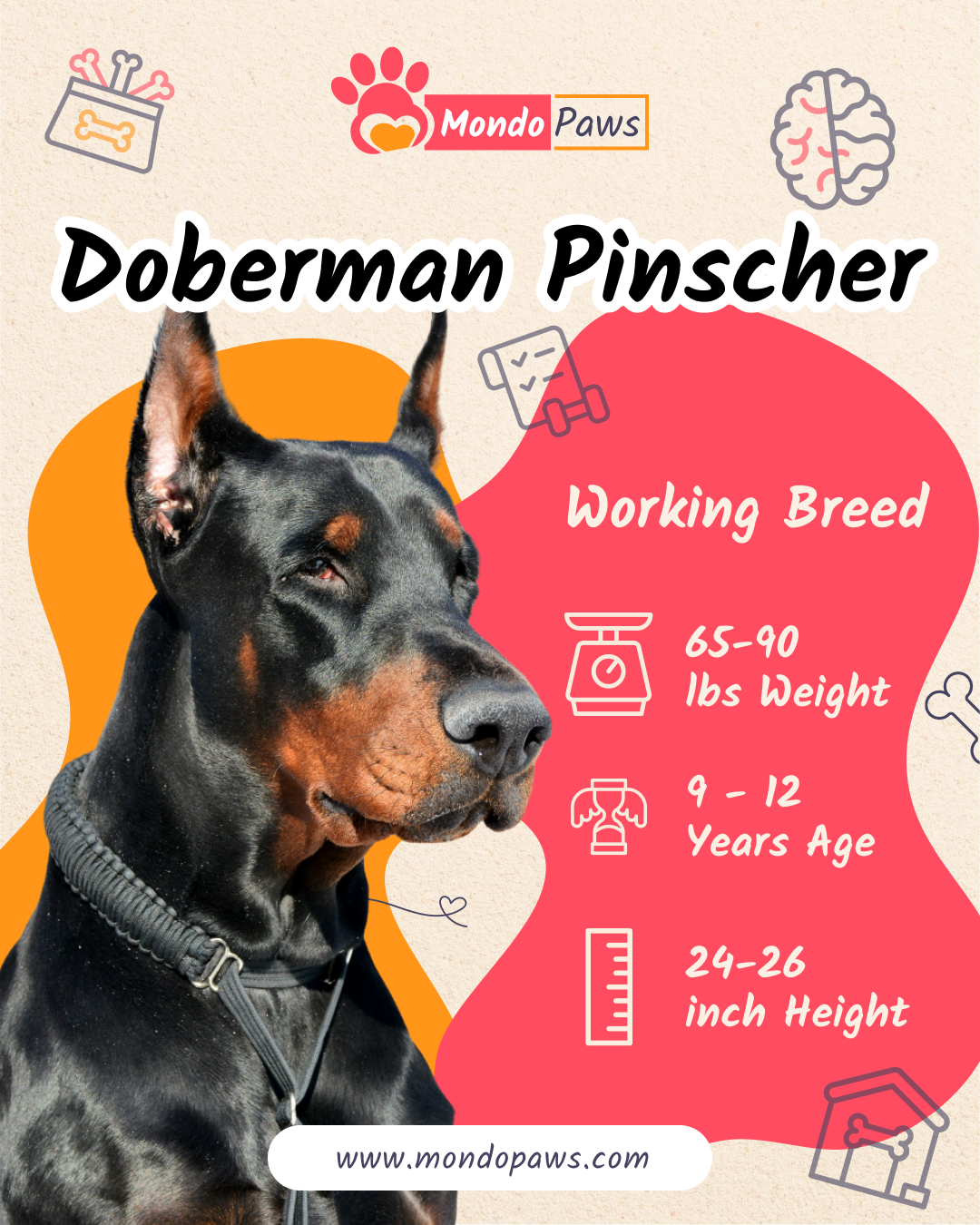
Dobermans have a muscular, square-shaped body with a short coat and distinctive rust-colored markings. Their elegant appearance combined with their alert personality makes them one of the most iconic working dog breeds.
They are energetic, intelligent, and extremely loyal to their owners. While they can be reserved around strangers, they are affectionate and playful with family members.
Temperament & Personality
Dobermans are confident, alert, and fearless dogs. Their temperament combines intelligence with strong protective instincts.
With Family
Loyal & Affectionate
Forms deep bonds with owners
With Strangers
Alert & Watchful
Reserved but not aggressive
Energy Level
Very High
Needs 1–2 hrs daily activity
Trainability
Exceptional
Learns commands very quickly
Despite their reputation as aggressive guard dogs, well-socialized Dobermans are gentle and loving companions.
Positive reinforcement training methods are highly recommended. Resources from American Society for the Prevention of Cruelty to Animals emphasize reward-based training for best results.
Trait Ratings
Doberman Pinscher Summary Table
| Category | Verdict | Best for |
|---|---|---|
| Families with kids | Excellent | Any age group, any family size |
| First-time owners | Excellent | Forgiving of inexperience, eager to please |
| Apartment living | Not Ideal | House with garden strongly preferred |
| Allergy sufferers | Not Suitable | Heavy shedder, not hypoallergenic |
| Guard / protection | Poor | Will greet intruders enthusiastically |
| Active outdoor lifestyles | Excellent | Hiking, swimming, fetch, camping |
| Multi-pet households | Excellent | Generally peaceful with dogs and cats |
| Budget-conscious owners | Moderate | Food and grooming costs are ongoing |
Doberman Pinscher Living Needs
Dobermans thrive in environments where they can stay active and mentally stimulated.
Space
House + Yard
Can adapt to apartments with enough outdoor time
Children
Great Match
Excellent with kids when raised together
Cold Tolerance
Low
Short coat = cold-weather sensitive
Other Pets
With Socialization
Best introduced early
Training and Exercise Needs
Dobermans are among the most trainable dogs in the world. They learn commands quickly and thrive on mental stimulation. Positive reinforcement is key repetitive sessions lead to boredom. Aim for at least 1–2 hours of vigorous daily activity.
With Family
Loyal & Affectionate
Forms deep bonds with owners
With Strangers
Alert & Watchful
Reserved but not aggressive
Grooming & Coat Care
One of the Doberman’s most owner-friendly attributes: their grooming needs are minimal. The short, smooth coat requires very little upkeep compared to most large breeds.
Coat Type
Short & Smooth
Weekly brushing sufficient
Coat Colors
4 Variations
Black, red, blue, fawn all with rust markings
Shedding
Moderate
Year-round, manageable
Other Needs
Nails & Teeth
Regular nail trims, ear cleaning, dental hygiene
Despite their reputation as aggressive guard dogs, well-socialized Dobermans are gentle and loving companions.
Positive reinforcement training methods are highly recommended. Resources from American Society for the Prevention of Cruelty to Animals emphasize reward-based training for best results.
Health & Common Concerns
Like all breeds, Dobermans carry certain genetic predispositions. Awareness and proactive screening especially for cardiac conditions are essential for a long, healthy life.
Dilated Cardiomyopathy
Cardiac · High Priority
Von Willebrand Disease
Blood Clotting Disorder
Hip Dysplasia
Joint · Mobility
Wobbler Syndrome
Spinal · Neurological
Regular veterinary checkups and responsible breeding help reduce these risks.
Nutrition & Feeding
Dobermans require a balanced diet suitable for large, active dogs.
High-quality protein
Healthy fats for energy
Joint-support nutrients
Large-breed puppy food is recommended during growth to prevent overly rapid development.
A balanced diet is essential for large active breeds. According to PetMD, high-protein diets support muscle development and energy levels.
you can also check average weight with our weight calculator checker
Ownership Cost Calculator
Adjust the inputs below for a personalised annual estimate. All figures are in USD and reflect US market averages.
Pros & Cons
Strengths
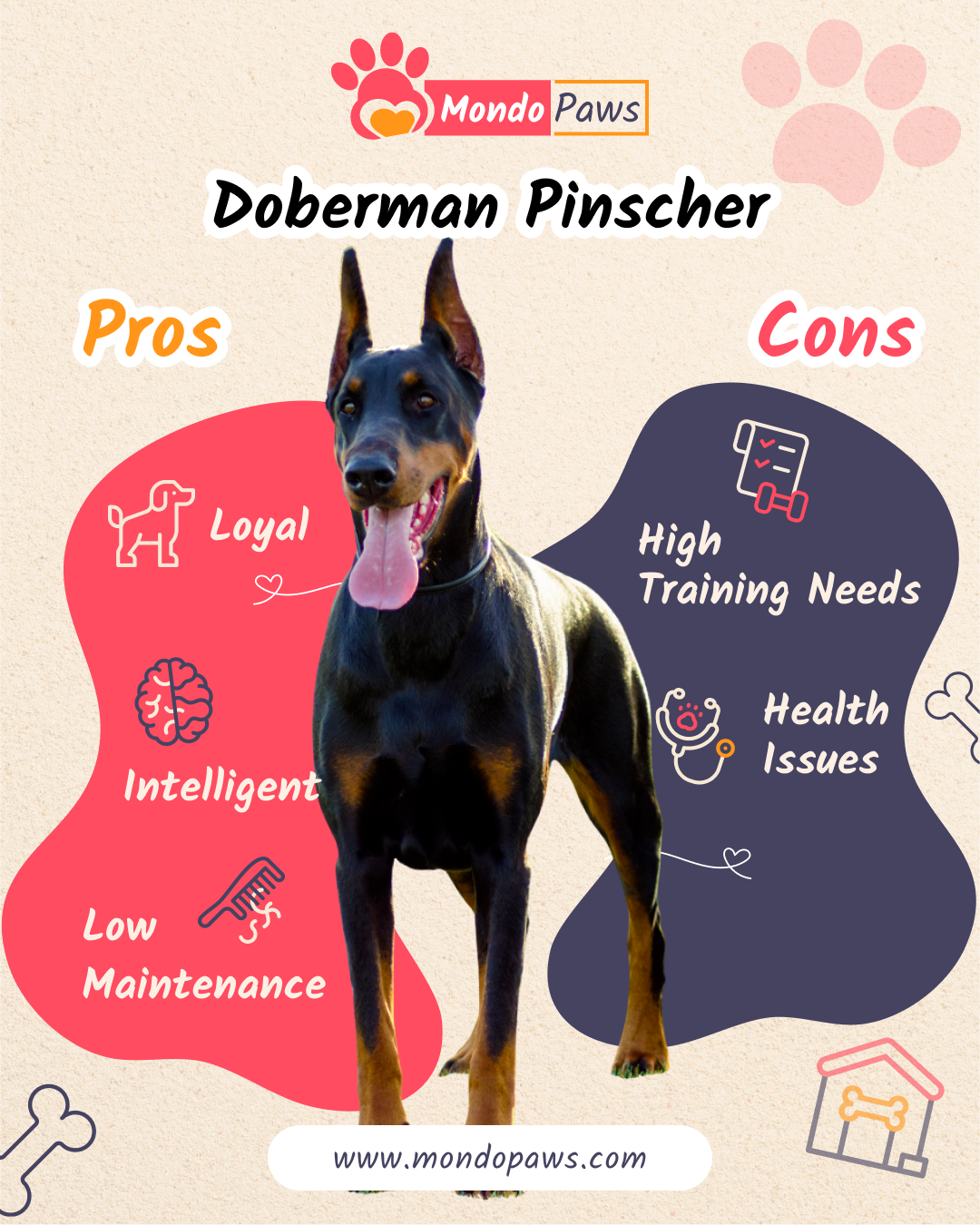
- Extremely loyal and protective of family
- Highly intelligent and trainable
- Natural guard dog with strong instincts
- Low grooming and drool maintenance
- Athletic, elegant, and energetic
Challenges
- Requires significant daily exercise
- Needs consistent, early training
- Can be reserved with strangers
- Prone to certain genetic health issues
History of the Doberman Pinscher
The Doberman Pinscher was developed in Apolda, Germany, around the late 1800s. The breed’s creator, Karl Friedrich Louis Dobermann, wanted a protective dog to accompany him during his work as a tax collector.
He crossed several breeds believed to include:
German Pinscher, Rottweiler, Weimaraner, Greyhound
Dobermans later became popular as police, military, and guard dogs because of their loyalty and trainability. Today, they are also cherished family companions and working dogs worldwide.
Here is a brief timeline of the Doberman Pinscher’s history:
1890s
The Doberman Pinscher is developed in Germany by Karl Friedrich Louis Dobermann.
1900
The breed becomes officially recognized in Germany.
1908
The American Kennel Club officially recognizes the Doberman Pinscher.
World War II
Dobermans serve as military and messenger dogs.
1970s–1990s
The breed becomes widely popular as both a guard dog and family companion.
Today
Dobermans are used as police dogs, service dogs, therapy dogs, and loyal family pets worldwide.
Today:
Dobermans later became popular as police, military, and guard dogs because of their loyalty and trainability. Today, they are also cherished family companions and working dogs worldwide.
The Doberman Pinscher was developed in Germany in the late 1800s. Historical records from AKC history confirm the breed was created for protection and companionship.
Fun Facts
Rank #5
Ranked among the world’s most intelligent dog breeds by obedience and working intelligence
35mph
Top running speed faster than most humans can even dream of sprinting
WWII
Served as military and messenger dogs some of the most decorated war canines in history
4 Colors
Recognized coat colors: black, red, blue, and fawn each always paired with rust markings
1890s
Created in under a generation one of the few breeds designed intentionally with a clear purpose from day one
Frequently Asked Questions
Dobermans are not naturally aggressive. When properly trained and socialized, they are loyal, gentle, and affectionate family dogs.
Yes. Their alertness, intelligence, and protective nature make them excellent guard dogs.
They are usually quiet but will bark to alert their owners when something unusual happens.
Dobermans require at least 1–2 hours of daily exercise to stay healthy and happy.
Yes, many Dobermans are excellent with children when raised and trained properly.
Final Thoughts
The Doberman Pinscher is a powerful yet elegant dog known for its intelligence, loyalty, and protective nature. While they require proper training, exercise, and socialization, they reward their owners with unmatched loyalty and companionship.
For active families or individuals who want a smart and devoted dog, the Doberman Pinscher can be an incredible companion.